
Leading spare parts exhibition center
2026-07-17
- Leading Parts Exhibition Center: Why Physical Remains Critical for B2B Purchasing in 2026
- Criteria for assessing reliability: what distinguishes a leading exhibition center for spare parts from an ordinary showroom
- Visit Strategy: How to Make the Most of Your Visit to a Leading Parts Exhibition Center
- Technology trends 2025–2026: how the leading exhibition center for spare parts is changing
- Comparative Analysis: Online Purchasing vs Leading Parts Exhibition Center
- Typical mistakes of buyers when working with exhibition venues
- Practical example: how quality control works with reliable suppliers
- Frequently Asked Questions
- Conclusion: Investing in Reliability
Leading Parts Exhibition Center: Why Physical Remains Critical for B2B Purchasing in 2026
The digitalization of logistics and procurement has created the illusion that physical sites are a thing of the past. However, in the segment of industrial components, heavy engineering and specialized equipmentleading exhibition center for spare partsremains not just a meeting place, but the only space where it is possible to verify the quality of the metal, the accuracy of the geometry of the parts and the real competence of the supplier. In our practice of working with Russian and international industrial enterprises, we have repeatedly encountered a situation where “ideal” specifications on paper resulted in downtime of the production line due to hidden casting defects or non-compliance of the alloy with the stated GOST/ISO standards.
This article is not a promotional brochure. This is a practical guide for chief engineers, heads of procurement departments and technical directors who make purchasing decisions for amounts of more than 5 million rubles. We will look at how to use exhibition spaces to reduce risks, what parameters to check “live” and why the integration of online catalogs with offline exhibitions will become the new industry standard in 2025–2026.
Criteria for assessing reliability: what distinguishes a leading exhibition center for spare parts from an ordinary showroom
Not every site that calls itself an exhibition center is able to provide the required level of technical expertise. The market is oversaturated with commercial spaces focused on retail trade or presentation of finished products, but not components. For a professional buyer, infrastructure that allows for instrumental control is key.
In our work, we identify four fundamental features that truly characterizeleading exhibition center for spare parts. If the site does not meet at least two of them, the risk of making an erroneous purchase increases by 40–60%.
1. Availability of a certified measuring laboratory on site
The professional center must provide access to mobile or stationary measuring systems. We are not talking about simple rulers, but about portable spectrometers for analyzing the chemical composition of steel, ultrasonic flaw detectors for identifying internal cracks in cast parts, and coordinate measuring machines (CMMs) for checking geometric tolerances.
Why is this important? The supplier may provide a quality certificate for the batch, but he does not guarantee that the specific part you are holding in your hands belongs to that particular batch. In one of our cases, the client planned to purchase a batch of shafts for pumping equipment. Visual inspection and documents were in order. However, express analysis of metal hardness directly on the stand showed a deviation of 15 units on the HRC scale from the declared values. This meant that after 3 months of operation the shafts would fail due to wear. The exhibition center made it possible to identify defects before signing the contract.
Recommendation:Before visiting, check whether the site has an accredited laboratory or partner non-destructive testing services. Request a sample of the test report they issue.
2. Depth of technical expertise of exhibitors
The leading center eliminates the intermediaries. There are either manufacturers or official distributors with engineering staff. A standard indicator of the quality of such a center is the presence at the stands not of sales managers, but of designers and technologists who can answer questions about fit tolerances, heat treatment and material compatibility.
We are seeing a trend: in 2025, more than 70% of major deals in the industrial parts sector will be initiated after on-site technical advice. The buyer brings a drawing or a broken sample, and the supplier’s engineer immediately offers a solution or an analogue. If at the stand they can only tell you the price and delivery time, this is not the level of expertise that should provideleading exhibition center for spare parts.
3. Reverse logistics and warehouse integration
Modern exhibition complexes are being transformed into hubs. The best sites are integrated with Class A warehouse terminals. This means that the samples displayed at the exhibition are often part of the actual stock available for shipment. Or the site allows you to organize test operation of the equipment in the adjacent demo room.
For the buyer, this reduces the “selection-test-purchase” cycle from several months to several days. The ability to take a part off a bench, install it on a test bench in the same location, and obtain vibration and heat data is a competitive advantage that saves millions in accident prevention.
4. Compliance with international and national certification standards
The site must strictly regulate the participation of exhibitors. The presence of mandatory ISO 9001 (quality management system), EAC (for the EAEU market) or CE (for Europe) certificates is an entrance ticket. The leading center conducts a preliminary audit of participants' documents. This protects the buyer from counterfeit products, which are often disguised as original spare parts.
Source:Federal Agency for Technical Regulation and Metrology (Rosstandart)emphasizes the importance of verifying product compliance with technical regulations at all stages of the life cycle, including demonstration of samples.
Visit Strategy: How to Make the Most of Your Visit to a Leading Parts Exhibition Center
Most specialists make the same mistake: they come to the exhibition “to look”. An effective buyer comes with a clear algorithm of actions. Below is a step-by-step strategy based on our experience in supporting more than 200 industrial purchases.
- Preparation of a technical dossier (7 days before the visit).
Don't go to the exhibition empty-handed. Create a package of documents: drawings of worn-out components, photographs of markings, specifications of materials (if known), data on operating modes (temperature, pressure, load cycling). Print this data in a compact format. When you approach the bench, you must be prepared to show the engineer not just a “broken part,” but the context of its failure. This instantly increases your status in the eyes of the supplier and shifts the conversation from price to technical solution.
- On-site instrumental verification.
Use the center's resources. If you are interested in a large batch of bearings, gears or hydraulic cylinders, please request measurements directly at the bench. Check surface roughness, presence of microcracks, and dimensional conformity. Feel free to use your portable instrument. Professionalleading exhibition center for spare partswelcomes this approach, as it is a filter for unscrupulous sellers. If a supplier denies the ability to measure a part, that's a red flag.
- Comparative analysis of analogues (Benchmarking).
Never stop at the first sentence. One center usually represents 3–5 manufacturers of the same type of product. Collect samples or technical data sheets from each. Compare not only the price, but also the weight of the part (may indicate material savings), the quality of packaging, and the presence of protective coatings. Pay attention to the little things: how are the markings applied? Deep engraving indicates the durability of the identification; the paint may be erased during installation.
- Negotiations on post-warranty service and stock availability.
The exhibition addresses not only issues of current supply, but also long-term partnerships. Ask a direct question: “What safety stock of this item do you keep in your warehouse in the Russian Federation/EAEU?” and “What is the average response time to a complaint?” Receive written confirmation of these commitments in the form of a sealed quotation. Verbal promises at the exhibition have no legal force.
- Recording contacts of technical specialists, not just managers.
Take business cards not only from the sales department, but also from the chief engineer or technical director of the exhibiting company. In the event of a complex non-standard situation, it is these people who will make decisions about replacing the batch or technical support. A direct line with an engineer saves weeks of correspondence through managers.
Important warning:Avoid impulsive decisions. The exhibition atmosphere is designed to create a sense of urgency (“special exhibition-price”). Always take a break of at least 24 hours to internally check the supplier using contractor databases and reviews in industry communities.
Technology trends 2025–2026: how the leading exhibition center for spare parts is changing
The industry does not stand still. The format of exhibition centers is evolving under the influence of digital twins, additive technologies and sustainable development requirements. Understanding these trends will help you stay ahead of your competitors in finding reliable partners.
Hybrid displays and digital twins
Modernleading exhibition center for spare partsincreasingly equipped with AR/VR zones. This is not entertainment, but an engineering analysis tool. By wearing augmented reality glasses, you can “take apart” a complex assembly, see the inner workings of a part that cannot be cut, or apply a digital wear layer to a real sample. This allows you to evaluate the repairability of the unit before purchasing it.
Additionally, integration with online platforms allows you to scan a QR code on a sample and instantly access a 3D model of the part for uploading to your CAD system. This speeds up the process of agreeing to replace imported components with domestic or Asian analogues.
Additive manufacturing on demand
More and more exhibition venues are incorporating rapid prototyping zones into their infrastructure. If the required spare part is not available, but there is a drawing, some exhibitors can produce a prototype using metal 3D printing directly on the center’s premises in 24–48 hours. This changes the procurement logic for rare, discontinued equipment. You can check the geometry and fit of the printed sample before running the series in casting or machining.
Focus on import substitution and localization
In the context of sanctions pressure and the rupture of supply chains, the Russian market is being reoriented. Leading centers now actively represent not only European brands, but also manufacturers from China, India, Turkey and, most importantly, Russian factories that have mastered the production of complex components.
According to analytics for the first quarter of 2025, the share of Russian manufacturers of industrial spare parts at major industry exhibitions increased by 35%. This creates new competition and lowers prices. However, expertise is critical here: not all localized products meet the original characteristics. That is why the role of the exhibition center as a platform for comparative testing is increasing.
Source:Ministry of Industry and Trade of the Russian Federationnotes an increase in the number of enterprises introducing modern quality standards to replace imported components.
Comparative Analysis: Online Purchasing vs Leading Parts Exhibition Center
Many managers ask the question: why waste time traveling if everything is on the Internet? Below is an objective comparison of two supply channels for complex industrial components.
| Evaluation criterion | Online platforms / B2B marketplaces | Leading spare parts exhibition center |
|---|---|---|
| Quality verification | Only based on photos and documents. High risk of material texture mismatch and hidden casting defects. | Visual and instrumental control. Possibility to carry out spectroscopy, measurements, hardness tests. |
| Technical consultation | Chat with a manager, often without deep technical knowledge. Long correspondence. | Personal communication with engineers and designers. Instant solution to technical contradictions. |
| Decision speed | A quick search, but a long check of the supplier’s reliability (days/weeks). | High concentration of proven players. The decision to cooperate is made over hours of communication. |
| Fraud risk | Medium/High. The risk of receiving counterfeit or “dummy” products. | Short. Exhibitors undergo pre-selection and bear reputational risks. |
| Contact cost | Low (search time). | High (logistics, tickets, employee time), but pays off by reducing the risk of accidents. |
| Search for non-standard solutions | It's difficult. Search algorithms work based on exact matches of article numbers. | High. Engineers can offer customization or an analogue from a different material on site. |
Conclusion:For consumables (bolts, standard filters), online purchasing is effective. For critical components (rolling bearings, hydraulics, transmission elements, housing parts) visitleading exhibition center for spare partsis a mandatory risk management procedure.
Typical mistakes of buyers when working with exhibition venues
Over 15 years of work in the industry, we have identified a number of system errors that lead to financial losses. Avoid them to ensure your visit is productive.
- Ignoring small-scale producers.
Buyers often go to the largest stands. However, it is the smaller, niche factories that often have more flexible technology and better quality hand-assembly or specialized processing. Don't pass by stands with an area of 10–15 sq.m. Unique competencies are often hidden there.
- Lack of preparation of a list of questions.
Come with the question “How much does it cost?” - unprofessional. Prepare a list: “What class of oil cleanliness is required?”, “What is the mean time between failures at load X?”, “Do you have operating experience in the Far North?” These questions immediately separate the wheat from the chaff.
- Underestimation of logistics conditions.
Even if the part is perfect, find out how it will be packaged for shipping. At the exhibition, many show “naked” samples. Demand to see packaging solutions. Poor packaging is the cause of 30% of damage when delivering heavy parts.
- Forgotten agreements.
Without a paper trail, all conversations are forgotten. Take photos of stands, write down names, record promised discounts and deadlines in a notebook or phone right away. In a week you will forget who promised a 15% discount and who didn’t.
Practical example: how quality control works with reliable suppliers
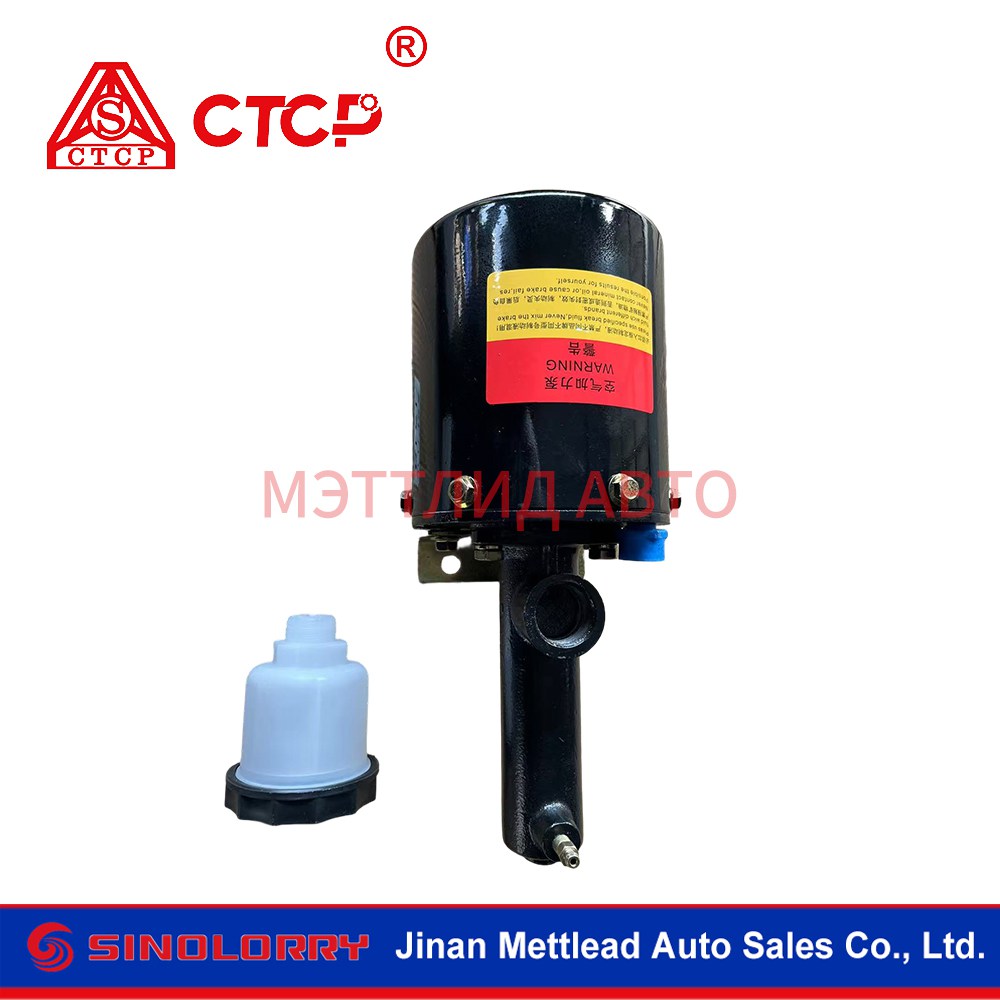
To better understand how the theoretical principles of verification are applied in practice, consider an example of a company’s workJinan Metallid Auto Co.,Ltd. It is an industrial and trading enterprise based in Jinan (Shandong Province, China), a global center for the production of automotive components. The company specializes in the export of original and compatible spare parts for trucks, special equipment and buses, working with brands such as SITRAK, HOWO, SHACMAN, FAW, Weichai, XCMG and others.
Although Jinan Metalled Auto Co.,Ltd is not a manufacturing plant in the traditional sense, their approach to quality control perfectly exemplifies the standards to be expected from a partner at a leading trade show. The company implements strict multi-level control at all stages of the supply chain: from the initial verification of compliance with technical characteristics and labeling to the final verification of the configuration. Each batch is individually tested in accordance with the requirements of a specific order.
Such suppliers are valued at exhibitions precisely for the transparency of their processes. With over 15 years of technical experience, their experts are able to answer complex engineering questions on-site regarding suspension components, axles, braking systems or engines. This level of expertise, supported by the “quality first” philosophy, allows us to minimize the risks of products not meeting the declared parameters even before shipment. For a Russian buyer, especially in the regions of the Southern Urals and Siberia, having a partner who provides the full cycle - from selection to customs clearance and delivery - becomes a key selection factor.
Frequently Asked Questions
How to check whether a supplier at an exhibition is a real manufacturer or trader?
Ask a question about production capacity: “On what machine is this operation performed?”, “What is the equipment fleet?” Ask to see a production video or machine serial number on the part. Traders usually get bogged down in the technical details of production. Also check the ISO 9001 certificate: it shows the manufacturing address. If the address on the certificate does not match the office address at the exhibition, this is a trader. This isn't always a bad thing (as the example above shows, professional trading houses can provide better service and oversight), but you need to know who you're dealing with.
Is it possible to buy spare parts directly from the exhibition stand?
Usually not. Exhibition samples are often unique, may have traces of installation/disassembly or may not have full factory packaging. However, you can enter into a purchase and sale agreement with the condition of shipment from the warehouse within 1-3 days. Some centers have a “warehouse-shop” area where you can buy standard items, but this is rare for industrial batches. The main purpose of the exhibition is to conclude a contract, not retail sales.
What documents should be requested from the exhibitor for subsequent verification?
Be sure to request: a copy of the certificate of conformity (GOST R or TR CU), a quality certificate for a specific batch (if any), a catalog with technical characteristics and company details. If we are talking about imports, request a HS code for preliminary calculation of customs duties. The presence of these documents at the stand indicates the seriousness of the company’s approach.
Is it worth going to the exhibition if I have already found a supplier on the Internet?
Yes, if the contract amount exceeds 1–2 million rubles or if the component is critical to production safety. A personal meeting allows you to assess the adequacy of partners, their stability and readiness for dialogue. In addition, at the exhibition you can find an alternative supplier in case of failures at the main one. Risk diversification is a key challenge in modern procurement.
Conclusion: Investing in Reliability
Visitleading exhibition center for spare partsis not an expense item, but an investment in the continuity of your production. In an era when the cost of equipment downtime amounts to hundreds of thousands of rubles per hour, the ability to personally verify the quality of a component and establish direct contact with the manufacturer becomes a strategic advantage.
We recommend planning visits to major industry exhibitions at least a quarter before the end of the budget period. This will not only allow you to select suppliers, but also include the right terms in contracts. Use the exhibition space as a laboratory, meeting room and testing ground all at once.
If you are looking for reliable solutions for upgrading your equipment fleet or replacing imported components, start by analyzing the exhibitors of the nearest specialized events. Your attentiveness at the selection stage will save you resources at the operation stage.
Contact us today for advice on selecting specialized exhibition venues for your technical needs or to organize an audit of potential suppliers.
Read also:how to choose an industrial bearing supplierandcertification of spare parts according to EAEU standards.