
High-quality spare parts selection services
2026-07-17
- Why accurate selection of spare parts is critical to production continuity
- An Engineering Approach to Identification: Beyond the Catalog Number
- Quality criteria: how to distinguish a reliable supplier from an intermediary
- Comparison of approaches: Original, OEM analogue and budget substitute
- Industry specifics: nuances of selection for different sectors
- Interaction process: from application to implementation
- Frequently Asked Questions
- Conclusion: An investment in reliability, not just expense
Why accurate selection of spare parts is critical to production continuity
In our practice of working with industrial enterprises in Russia and the CIS countries, we regularly encounter the same problem: equipment downtime due to an incorrectly ordered part costs the company tens of times more than the part itself.High-quality spare parts selection servicesis not just searching for an article in a catalogue. This is an engineering job that requires a deep understanding of mechanics, hydraulics, electronics and supply chain logistics. A mistake in bearing, O-ring or controller selection can lead to cascading failure of the entire system, stopping the conveyor and disrupting production plans.
Many buyers rely solely on cross-references (interchangeability tables) provided by analogue manufacturers. However, experience shows that such tables often contain inaccuracies, especially when it comes to specific operating conditions: extreme temperatures, high loads or aggressive environments. We have seen cases where a “complete analogue” from the catalog failed after 48 hours of operation, while the original part or a properly selected premium replacement served for years. The difference was not the brand, but the seal material, which was not specified in the basic specification.
This article was written by engineers who deal with the daily challenges of identifying and supplying components for CNC machines, hydraulic presses, pumping equipment and transport equipment. We will tell you how to avoid common mistakes when ordering, why it is important to check not only dimensions, but also materials, and how to build a supply process that minimizes the risks of downtime. If you want to understand how professional selection affects TCO (total cost of ownership), this material is for you.
An Engineering Approach to Identification: Beyond the Catalog Number
Finding a spare part by Part Number seems like a simple process, but in reality it is full of pitfalls. Manufacturers often change the design of components without changing the main article, adding suffixes or revisions that are not always reflected in general databases. In addition, many older equipment models have been discontinued and their original components are no longer available. In such situations, reverse engineering and performance analysis are required.
Our selection methodology begins not with entering a number into the search bar, but with an analysis of the context of application. We ask questions that are usually ignored by standard online directories:
- Operating conditions:What is the operating temperature? Is there contact with chemically active substances? What is the vibration level?
- Loads:Are we talking about static or dynamic load? What is the firing cycle frequency?
- Fit accuracy:Is ISO or GOST tolerances required? For example, for plain bearings, the clearance between the shaft and bushing is critical to preventing seizing.
One of our clients, a large metallurgical plant, was experiencing constant failure of hydraulic pumps. They ordered sealing kits strictly according to the original catalog. The problem was that the equipment manufacturer had changed seal suppliers three years ago, changing the material from nitrile (NBR) to fluoroelastomer (FKM/Viton) for improved heat resistance, but the parts catalog for the older machines had not updated this information. Nitrile seals degraded quickly at temperatures above 80°C, which became the norm after furnace upgrades. We carried out a spectral analysis of the remains of the old seal, identified the material and proposed an analogue from FKM that complies with DIN 3771 standards. After replacement, the time between failures increased by 6 times.
This example illustrates the main rule:high quality spare parts selection servicesalways include verification of technical parameters, and not just geometric dimensions. Geometry can be measured with a caliper or micrometer, but material and hardness require laboratory analysis or intimate knowledge of manufacturers' specifications.
Working with obsolete equipment and discontinued parts
Particularly difficult is providing spare parts for equipment manufactured more than 10–15 years ago. Original manufacturers (OEMs) often discontinue support for such models, archive the drawings, or transfer production rights to third parties. In this case, a standard search by article gives zero results or offers unreasonably expensive stock in distributor warehouses.
We use a three-stage algorithm for working with the following requests:
- Search for direct analogues (Cross-reference):Use of international interchangeability databases. It is important to check not only European and American brands, but also high-quality Asian counterparts, which often have ISO 9001 certificates and meet the same technical conditions.
- Adaptation of modern solutions:If there is no direct analogue, we select a modern part with similar characteristics and adapt it. This may require minor mechanical modifications to the seats. For example, replacing a rolling bearing with a plain bearing with a self-lubricating sleeve can solve the problem of frequent maintenance in hard-to-reach components.
- Manufacturing according to drawing (Reverse Engineering):For unique parts (gears, shafts, housings), we restore drawings based on the model of the worn part, taking into account wear compensation. Using 3D scanning data, we create a digital model and transfer it to production with quality control at every stage.
It is important to understand that replacing an original part with an analogue requires documentation, especially in enterprises with strict certification requirements. We provide quality passports, material certificates and test reports for each batch of supplied components, which allows our clients to legally use analogues within the framework of technical regulations.
Quality criteria: how to distinguish a reliable supplier from an intermediary
The industrial spare parts market is oversaturated with offers. Thousands of companies position themselves as suppliers, but only a small fraction of them have real engineering expertise. Most work according to the “buy and sell” scheme, shifting the risks of non-compliance to the buyer. How to choose a partner who will providehigh quality spare parts selection servicesand will take responsibility for the performance of the component?
Look for the following signs of professionalism:
1. Availability of our own technical base and laboratory
A true expert does not guess. He measures. A company that is serious about selection must have a fleet of measuring instruments: micrometers, bore gauges, hardness testers, and ideally, spectrometers for the express analysis of metals and polymers. If a supplier asks you to “send a sample in a photo” and based on this makes a conclusion about compatibility, this is a red flag. A photograph will not show surface hardness, roughness or internal diameter to the nearest micron.
We use coordinate measuring machines (CMMs) for complex geometries. This allows you to take hundreds of points from the surface of a part and compare them with the CAD model. Such precision is necessary when selecting precision components for the machine tool and aviation industries.
2. Transparency of the origin of goods (Traceability)
Every detail must have a traceable history. Where did she come from? Who is the manufacturer? Is there a manufacturer's certificate? There are many counterfeit products on the market, especially in the bearings and hydraulics segment. Counterfeits may look identical to the original, but their lifespan is 10–20% of the declared one. We work only with trusted supply channels and provide customers with the opportunity to verify the authenticity of products through official requests to manufacturers.
3. Deep specialization
It is impossible to be an expert in everything. Companies that claim to supply everything from bolts to turbines are often aggregators. We focus on the key categories: hydraulics and pneumatics, drive technology, bearing units, sealing technology and electronic control components. This specialization allows our engineers to know the nuances of each brand and each series of equipment.
Expertise in practice: the experience of Jinan Metallic Auto LLC
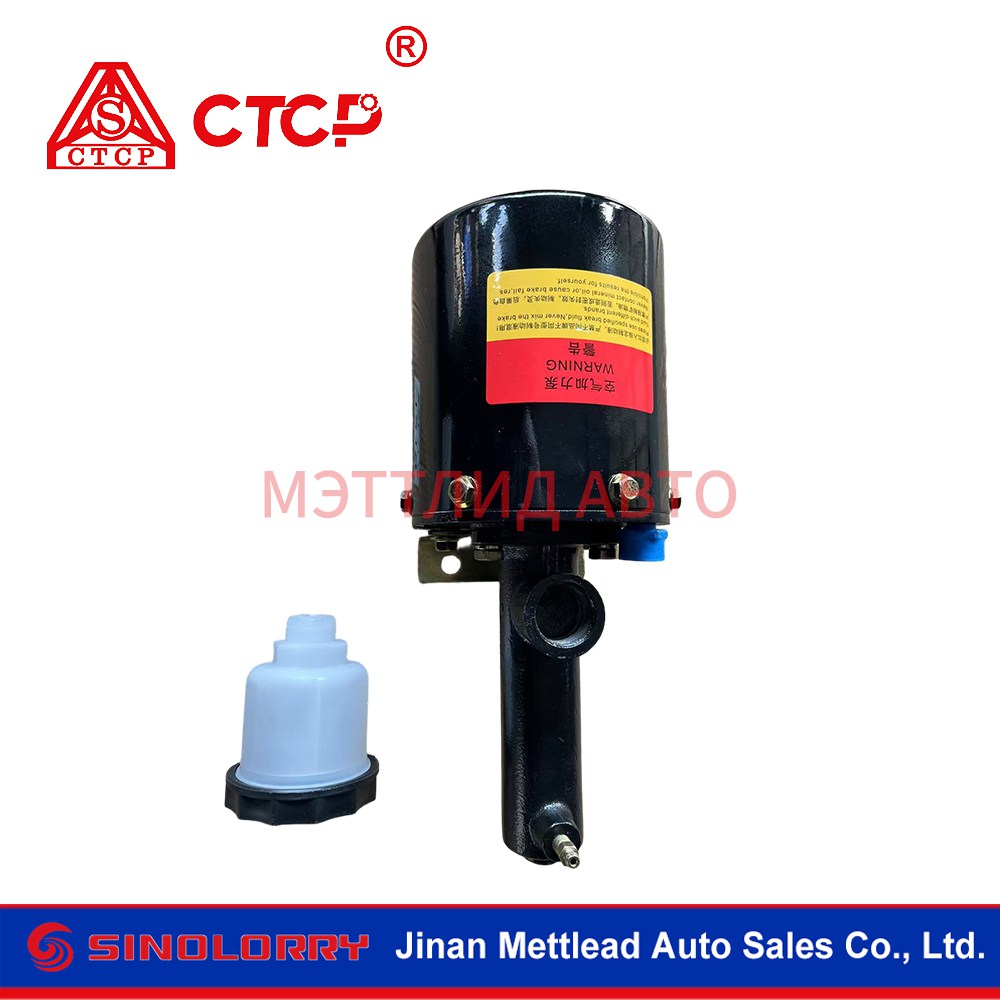
A striking example of such a specialized approach is the companyJinan Metallid Auto LLC. Located in Jinan - the heart of the Chinese automotive industry, the company specializes exclusively in the export of spare parts for trucks, special equipment and buses made in China (SITRAK, HOWO, SHACMAN, XCMG, Shantui, etc.).
Unlike general traders, Jinan Metallid Auto brings together sales specialists with 10 years of experience and technical engineers with more than 15 years of experience. This allows them to implement strict multi-level quality control: from checking labeling to final verification of packaging. The company doesn't just resell products, but provides a full supply chain with personalized butler-style service, including flexible packaging and branding customization. Such a deep focus on a specific niche (Chinese commercial vehicles) and the presence of direct connections with certified factory suppliers make it possible to minimize the risks of receiving counterfeit products, which is critical for owners of vehicle fleets and service centers.
4. Logistics flexibility and warehouse program
Delivery speed is often more important than price. A simple line costs thousands of dollars per hour. Having a strategic stock of popular items in our own warehouse and established channels for urgent delivery from Europe and Asia allows us to reduce delivery times from weeks to days. We honestly warn about production times for non-standard items and do not make empty promises.
Comparison of approaches: Original, OEM analogue and budget substitute
When selecting spare parts, an engineer or buyer always faces a dilemma: what to choose? An original part, an OEM-recommended part, or a cheaper third-party option? Let's look at this issue in detail using specific criteria.
Below is a comparison table based on our experience in supplying various industries.
| Criterion | Original spare part (Genuine) | OEM equivalent (Recommended) | Budget analogue (Aftermarket) |
|---|---|---|---|
| Price | High (margin for brand and OEM logistics) | Medium (20-40% lower than the original) | Low (50-70% lower than the original) |
| Compatibility Guaranteed | 100% (guaranteed by the equipment manufacturer) | High (tested by component manufacturer) | Requires careful inspection by an engineer |
| Delivery time | Often long lasting (depending on OEM policy) | Medium (availability at distributor warehouses) | High (widely available in the market) |
| Risk of downtime | Minimum | Low | Medium/High (depending on batch quality) |
| Applicability | Critical components, new equipment, warranty cases | Main equipment park, scheduled maintenance | Auxiliary equipment, low loads, repairs “until next time” |
When should you choose the original?If the equipment is under warranty, or if we are talking about high-precision components, where a deviation in microns leads to defective products (for example, CNC machine spindles). Also, the original is irreplaceable if there is no time for engineering selection and the risk of error is unacceptable.
When is an OEM analogue beneficial?This is the “golden mean”. Many global brands (SKF, Bosch Rexroth, Siemens) are suppliers of components for equipment assemblers. By purchasing a component directly from the component manufacturer rather than through the machine brand, you get the same quality without the premium of OEM “packaging.” Our specialists are able to determine the real manufacturer of a component by marking and offer direct deliveries.
When is a budget analogue acceptable?For non-critical components: fasteners, casings, frame elements, some types of filters. However, even here there are risks. A cheap filter may have a smaller filtration area or poorer permeability, which will lead to a drop in pressure in the system. Therefore, even for budget segments, we recommend proven second-tier brands, and not no-name products.
Industry specifics: nuances of selection for different sectors
There is no one-size-fits-all approach. What works for a textile loom may be a disaster for an oil and gas pump. Let's consider the features of selection in key industries.
Oil and gas and chemical industry
The main enemies here are corrosion, high pressure and extreme temperatures. When selecting seals and pipe fittings, suitability to the media is critical. Using 304 grade stainless steel instead of 316L in a chloride environment will result in pitting and leakage in a matter of weeks. We always request a chemical compatibility chart and select PTFE, Viton or Kalrez seals depending on the specific chemical formula of the fluid being pumped.
Also in this industry, fire safety and explosion protection requirements are strictly regulated (ATEX, IECEx). Electrical components and motors must have the appropriate certificates. Replacing a conventional engine with an explosion-proof one without proper documentation is unacceptable and can result in serious fines and accidents.
Food industry
The main priority is hygiene and safety of contact with food. All materials must have FDA (USA) or EC 1935/2004 (Europe) certificates confirming their suitability for food contact. When selecting conveyor belts, pump seals and lubricants, we exclude any components that contain toxic additives or are prone to bacterial growth.
The design of the units is also important: they must be easily disassembled for cleaning (CIP/SIP systems). We select seals with a smooth surface to prevent product stagnation and polished stainless steel fasteners.
Mining and heavy engineering
This is where abrasive wear, impact loads and contamination reign. Standard bearings and hydraulic cylinders quickly fail. We offer solutions with reinforced boots, special rod coatings (for example, HVOF spraying) and bearings with increased radial clearance. What matters is not so much accuracy as survivability. We often recommend the use of plain bearings with graphite inserts, which operate in dry or heavily contaminated environments.
Interaction process: from application to implementation
To get the most accurate results, we have developed an optimized process for working with clients. It allows you to minimize the number of iterations and eliminate communication errors.
- Collection of initial data.The client provides the available information: photo of the nameplate, article number, drawing or sample of the part. If there is little information, we conduct an interview with the customer’s engineer to find out the operating conditions of the unit.
- Engineering analysis.Our specialists check data, look for cross-codes, and analyze materials. If necessary, we request additional measurements or samples. At this stage, we identify possible compatibility issues.
- Selection of options and commercial offer.We provide the client with several options: the original, a high-quality analogue and an economical solution (if applicable). For each option, we indicate the delivery time, price and technical justification for the choice.
- Coordination and order.After choosing an option, we create an order, check availability and reserve the product. For complex items we can provide samples for testing.
- Quality control and shipment.Before shipping, each part undergoes visual and instrumental control. We pack cargo taking into account transportation requirements to prevent damage in transit. The product comes with a full package of documents.
- Technical support after sales.We do not abandon the client after shipment. If questions arise during installation, our engineers are ready to advise by phone or go to the site (for large projects).
This structured approach allows us to maintain high levels of customer satisfaction and form long-term partnerships. We understand that our task is not just to sell a part, but to ensure the smooth operation of your production.
Frequently Asked Questions
How quickly can you find a rare spare part?
Search speed depends on the availability of information. If you have a complete article and manufacturer, we can check availability at our warehouses and partners in 2–4 hours. If selection is required based on a sample or drawing, engineering analysis takes 1 to 3 working days. For unique parts that require manufacturing, the lead time can range from 2 to 6 weeks. We always communicate realistic deadlines and do not hide difficulties.
Do you provide a guarantee for analogues?
Yes, we provide a full warranty on all spare parts supplied, including analogues. The warranty period depends on the type of part and operating conditions, but usually ranges from 6 to 12 months. If a part fails due to a manufacturing defect or our selection error, we will replace it free of charge or refund your money. Our reputation is built on trust, so we are responsible for our recommendations.
Do you work with small volumes or only wholesale?
We work with clients of all sizes. Recognizing that sometimes you only need one part for an urgent repair, we do not place strict minimum order quantity (MOQ) limits on stock items. For bespoke parts, terms are negotiated individually, but we strive to be flexible and support SMEs.
Can I return an incorrect part?
Yes, returns are possible within 14 days if the item has not been used and its packaging and presentation are intact. However, we strongly recommend agreeing on technical parameters before ordering to avoid wasted time on returns. If we make a mistake in selection, we will bear all logistics costs.
How do you ensure protection against counterfeiting?
We cooperate only with authorized distributors and directly with manufacturing plants. Each batch of goods is accompanied by certificates of origin and quality. For brands at high risk of counterfeiting (bearings, electronics), we conduct additional checks of labeling and packaging. We guarantee that you will receive exactly the product you ordered.
Conclusion: An investment in reliability, not just expense
Selection of spare parts is not a bureaucratic procedure, but a strategic element of enterprise asset management. The right component increases service intervals, reduces energy consumption and prevents emergency shutdowns. Savings at the selection stage often result in multiple losses during operation.
The company [Your Company Name] is ready to become your reliable technical partner. We combine deep engineering expertise, transparent logistics and responsibility for results. Ourhigh quality spare parts selection serviceshelp enterprises in Russia and the CIS maintain equipment in optimal condition, reducing the total cost of ownership.
Don't let the wrong part stop your production. Entrust the selection to professionals who understand the difference between “similar” and “suitable”.
Contact us todayfor advice on your current supply challenges. Send us a request with a description of the problem or a list of required parts, and our engineers will prepare for you the optimal technical and commercial solution in the shortest possible time.
Find out more about our capabilities in the sectioncatalog of industrial equipment and spare partsor check out ourcases of successful modernization.