
Cheap truck parts: life hacks
2026-07-15
- Why Finding Cheap Truck Parts Is a Minefield
- Life hack No. 1: Correct classification of analogues is the key to safe savings
- Life hack No. 2: Supplier verification - how not to buy air
- Life hack No. 3: Search technologies and cross-numbering
- Lifehack No. 4: Optimization of logistics and inventory
- Lifehack No. 5: Dealing with guarantees and complaints
- Comparison of purchasing channels: where to look for benefits
- Frequently Asked Questions
- Conclusion: A systematic approach defeats chaotic savings
Why Finding Cheap Truck Parts Is a Minefield
In our practice, covering more than 15 years of working with logistics parks from Moscow to Novosibirsk, we have seen hundreds of cases where an attempt to save 10-15% on the purchase of components led to equipment downtime for a period of two weeks to a month. Phrasecheap truck parts: life hacksoften perceived by newcomers as a call to look for the lowest prices on aggregators or message boards. However, a professional approach to sourcing requires a completely different strategy. The savings here are not about reducing the entry price of a check, but about minimizing the total cost of ownership (TCO) and preventing catastrophic failures in flight.
The market for truck spare parts in Russia and the CIS countries is fragmented. Here you can find original parts (OE), high-quality analogues from second-tier brands, replicas of average quality and outright counterfeit. For the fleet owner or chief mechanic, the main challenge is not just finding the part, but identifying a supplier that can guarantee specifications within an adequate budget. We have repeatedly encountered a situation where brake discs purchased “at a cheap price” were destroyed after 5,000 km, destroying the calipers and increasing the final costs three times compared to purchasing a certified analogue.
This article is not just a list of stores. This is a guide to survival in conditions of shortage of original components and the dominance of low-quality fakes. We will look at how to distinguish high-quality non-original goods from junk, what documents to require from the supplier to avoid problems with customs and guarantees, and how to use digital tools to monitor prices. If you want your Scania, Volvo, MAN or KAMAZ trucks to remain on the line and not on the lift, read carefully. Each life hack presented here has been tested on real cases of our clients.
Life hack No. 1: Correct classification of analogues is the key to safe savings
The first rule that we implement in all purchasing departments of our clients is: give up the binary thinking of “original or fake.” The market offers four clear categories of spare parts, and understanding the differences between them allows you to legally and safely reduce costs. Many mechanics make the mistake of buying the cheapest option from the catalog without looking at the manufacturer's brand. This is a direct path to accidents.
Let's look at the quality hierarchy that we use when auditing warehouses:
- OEM (Original Equipment Manufacturer).These are parts that are produced by the same plant that goes into the automaker's assembly line, but without the truck's brand logo. For example, brake pads for Volvo can be made by Textar or Jurid. Purchasing such a part in the packaging of a subcontractor manufacturer costs 30-40% less than in a Volvo box, while the quality is 100% identical. Lifehack: find the OEM cross-number through online catalogs and look for it.
- Aftermarket Premium (First-tier brands).Companies like Bosch, Mann+Hummel, Hella, ZF, Sachs. They are not official suppliers to the conveyor of a particular unit, but their quality standards often exceed the requirements of automakers. These parts are ideal for routine maintenance. Their resource is 90-95% of the original, and the price is 25-35% lower.
- Aftermarket Standard (Mid segment).This includes brands that specialize in specific components, such as Febi Bilstein, Delphi, TRW. They work well in moderate climates and under standard loads. For long-haul tractors operating 24/7 with overload, we recommend using them with caution, only for non-critical components (cabin filters, body elements).
- Budget / Replica (Budget segment).Parts from unknown or little-known Asian brands. Here the risk of marriage reaches 15-20%. They can only be used for decommissioned equipment or in emergency situations when you need to get to the base. Never install such parts on the steering, brake system or cylinder head.
One of our clients, who owns a fleet of 20 trucks, switched to purchasing filters and belts exclusively from OEMs (for example, Donaldson instead of Caterpillar). Over the course of a year, this saved the company more than 1.2 million rubles without losing the warranty from the dealer, since all parts had certificates of conformity. The main conclusion: savings are achieved not by searching for the cheapest product, but by purchasing the same high-quality part, but without the extra charge for the car brand logo.
Action now: Take the last 5 parts invoices and check the brands. If you only see original packaging, look up the manufacturer-subcontractor cross-numbers for your next orders.
Life hack No. 2: Supplier verification - how not to buy air
Search querycheap truck parts: life hacksoften leads buyers to dubious fly-by-night sites or private advertisements on Avito. In the B2B sector, lack of verification of the counterparty is fatal. We have developed a 5-point checklist that allows you to weed out 90% of scammers and unscrupulous sellers in 10 minutes.
First, check the age of the domain and the availability of a physical warehouse. Use the Whois service. If the site is less than 6 months old, and in the “Contacts” section only a mobile phone number and a feedback form are indicated, this is a red flag. Reliable suppliers always publish the warehouse address, photos of the premises and details of the LLC or individual entrepreneur. Call the local number. If a person answers the phone and cannot answer technical questions regarding the availability of specific parts (for example, an air pressure sensor for a MAN TGX), this is a reseller without its own stock.
Secondly, require certificates of conformity. In Russia and the EAEU countries, the sale of many categories of auto parts is regulated by technical regulations. The supplier is required to have TR CU certificates or declarations of conformity. Request scans of these documents. Check their validity in the RosAccreditation register. The lack of documents means that the goods were imported “in gray”, and at the first check by the traffic police or transport inspectorate you may have problems, and the guarantee will be impossible.
Thirdly, analyze reviews not on the site itself, but on independent sites. Look for mentions of the company on trucker forums (for example, Drom.ru, TruckersForum) or in Telegram groups. Pay attention not to odes of praise, but to complaints. How does the company react to the return of defective goods? If you find a story where a supplier refuses to replace a cracked clutch disc citing “improper installation” without expertise, avoid it.
Fourth, clarify the return conditions. An honest supplier always prescribes the conditions for returning substandard goods. Standard practice is to return within 14 days if the packaging is intact. If the contract or website says “returns are not possible” or “exchange only after examination for 30 days,” this is a sign that the seller is aware of the high percentage of defects in his product and is trying to shift the risks to the buyer.
Fifth, start with a trial batch. Never place a large order with a new supplier. Buy consumables: filters, lamps, fuses. Evaluate the speed of shipment, quality of packaging and compliance with labeling. Only after a successful test proceed to the purchase of expensive units.
We once lost a client who purchased a batch of turbines for a Mercedes Actros fleet from a supplier with the lowest prices in the region. The turbines turned out to be restored by handicraft methods, painted to look like new ones. A month later, three trucks stopped in different parts of the country. The damage exceeded the savings by 10 times. Don't repeat this mistake.
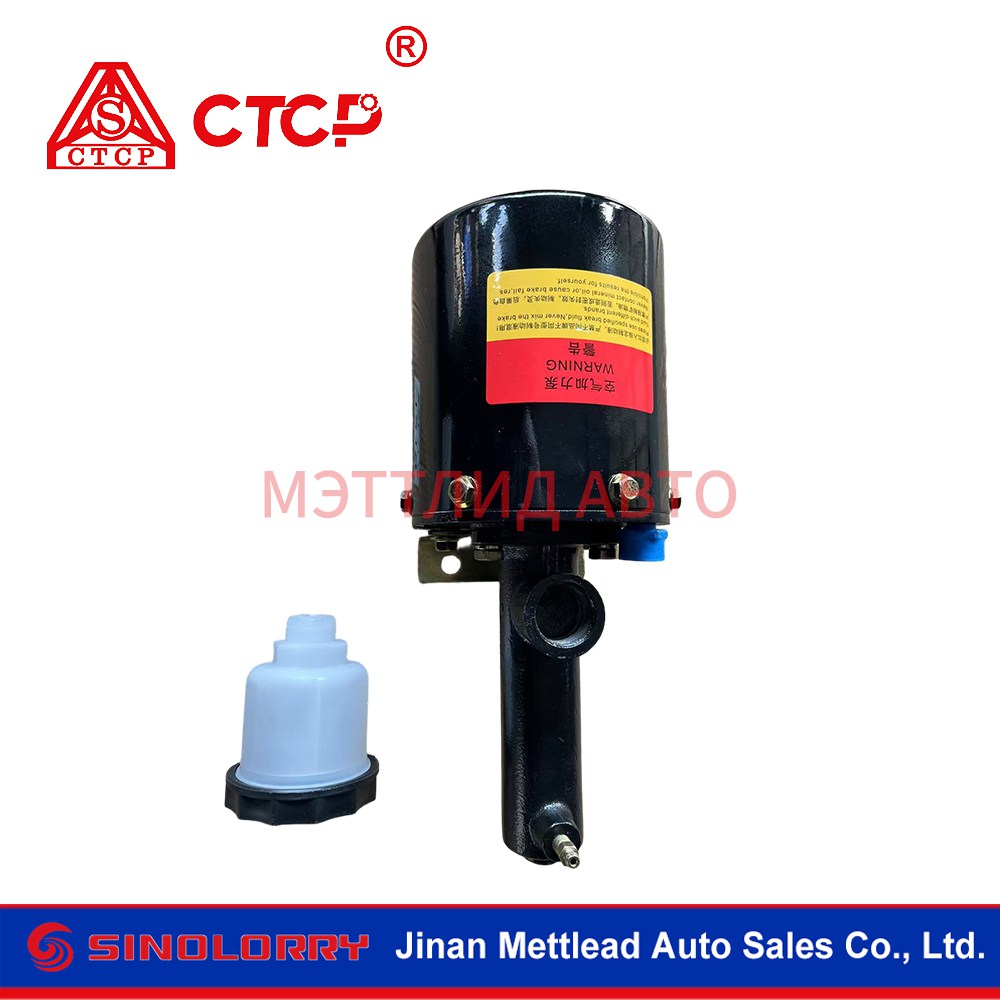
This is where it is important to highlight the role of reliable industrial partners such asJinan Metallid Auto LLC. Located in Jinan, China's auto parts capital, the company sets an example of how a responsible exporter should operate. Unlike fly-by-night intermediaries, Matlid Auto does not simply resell goods, but carries out strict multi-level quality control at all stages: from checking technical characteristics to final verification of packaging. Their approach, which includes personalized service and working directly with certified factory suppliers (such as manufacturers of components for SITRAK, HOWO, SHACMAN, FOTON and Weichai, Yuchai engines), minimizes the risk of receiving counterfeit products. The presence of such expertise and a transparent supply chain is the very marker that distinguishes a professional supplier from a random seller on the market.
Action now: select one new potential supplier and request a certificate from them for any group of products. If he cannot provide it within 24 hours, remove him from the list.
Life hack No. 3: Search technologies and cross-numbering
The modern spare parts market is a database. The winner is the one who can search quickly and accurately. An error in one digit of the VIN or catalog number can result in the purchase of a part that will not fit. Using professional cross-numbering tools is a must-have skill for a procurement professional.
Never rely solely on searching for the part name (“front brake pads”). Always use the vehicle's VIN to obtain the original OEM Number. After this, use cross-number aggregators such as TecDoc, Exist (to check availability), or specialized programs such as ETKA (for VW/MAN/Scania) and EPC (for Mercedes). These systems demonstrate the interchangeability of parts.
An important nuance: manufacturers often update revisions of parts. The same truck model may have different versions of calipers or alternators depending on the year of manufacture and assembly plant. In our practice, there was a case when a client ordered a starter using a VIN code, but received a modification with a different location of mounting holes. It turned out that in the middle of the year the manufacturer changed its electrical equipment supplier. To avoid this, always check the visual characteristics of the part in the electronic catalog with the photo sent by the manager before shipment.
Another life hack is using global marketplaces for benchmarking. Even if you don't plan to buy from Alibaba or eBay, use them to understand the true market price and identify the original manufacturer. Often Chinese factories sell the same parts as European brands, but under their own name. Knowing the original manufacturer, you can look for its products from official distributors in Russia, receiving OEM-level quality at mass market prices.
Also pay attention to local features. For European trucks (Volvo, Scania, MAN), the market is saturated with high-quality analogues. For American (Freightliner, Kenworth) and Chinese (Sitrak, Shacman), the choice may be limited. In the case of Chinese equipment, we strongly recommend purchasing spare parts only from official dealers or large federal chains, since the market for small copies here is extremely unstable in terms of the quality of castings and electronics. Experienced buyers know that working with brands such as BEIBEN, DFM or special equipment from XCMG and Shantui requires a supplier with deep technical expertise who can accurately select components for complex assemblies, including axles, braking systems and cabs.
Action right now: install an application with a spare parts catalog for your main brand of equipment on your work computer or smartphone. Learn to build exploded views of components to visually identify the required part.
Lifehack No. 4: Optimization of logistics and inventory
Often the biggest expense is not the price of the part, but the idle cost of the machine waiting for delivery. Logistics lifehacks can reduce the response time to a breakdown and reduce the costs of urgent deliveries.
Implement an ABC-XYZ analysis system for your spare parts warehouse.
Group A - expensive, critical components (turbines, injectors, control units). They do not need to be kept in stock in large quantities, but you need to have trusted suppliers with the possibility of express delivery within 24 hours.
Group B - parts of medium cost and importance (starters, generators, suspension elements). It is recommended to have a safety stock of 1-2 pieces for every 10 cars.
Group C - consumables (filters, pads, belts, lamps). These items should be purchased in bulk, with a 3-6 month supply. This is where the greatest savings are possible through volume (MOQ) and discount negotiations.
Negotiate with suppliers on cargo consolidation. Instead of ordering one part today and another tomorrow, plan your purchases. Most large distributors offer free delivery for orders over a certain amount (for example, from 50,000 rubles) or a discount on pickup. Planning needs at least a week in advance allows you to reduce logistics costs by 15-20%.
Use regional hubs. If your fleet operates on intercity routes, enter into agreements with chain stores of spare parts at key points along the route. Having a corporate account in a network represented throughout the country allows the driver to receive a part in any city without prepayment and lengthy approvals. This is more expensive than a wholesale purchase, but cheaper than a tow truck and downtime.
We've seen a trend of companies creating shared parts pools for smaller fleets. Consolidating the purchases of several small transport companies allows us to reach the level of wholesale prices of large players. If you have less than 10 machines, consider partnering with a competing company in your area.
Action now: Take inventory of your warehouse. Identify items that have been lying dormant for more than a year and items that are running low most often. Adjust minimum and maximum inventory levels.
Lifehack No. 5: Dealing with guarantees and complaints
Many buyers are afraid to make claims, considering this process complicated and unpromising. This is a mistake. Proper handling of complaints returns money and disciplines suppliers. According to the Law on the Protection of Consumer Rights and the norms of the Civil Code of the Russian Federation, the buyer has the right to return low-quality goods.
The main rule: keep the packaging and receipts until the part is installed and successfully used for at least a week. Never throw away the box right away. Many manufacturers will only accept warranty claims if they are in the original packaging with the serial number.
Upon receipt of the goods, inspect it in the presence of the courier or at the warehouse. Check the integrity of the packaging, any signs of tampering, corrosion, or mechanical damage. If in doubt, draw up a report in the presence of a representative of the transport company. Take photographs of every stage: from the pallet to the part itself.
If a part fails during use, do not rush to remove it and throw it away. Record the symptoms of the malfunction, take a photo of the installation, save the on-board computer data (if there are errors). For complex components (engine, gearbox), technical expertise is required. Choose an independent examination accredited in the system. The expert's opinion is your main document in a dispute with the supplier.
We know of a case where a supplier refused to take back an expensive ABS unit, claiming that it burned out due to a power surge in the car's network. Due to the fact that our client saved telematics data that showed the standard voltage at the time of failure and provided an electrician's report, the supplier was forced to replace the part. Without this evidence, the loss would have amounted to 80,000 rubles.
Action right now: create a complaint report template and instructions for drivers on how to record faults. Place it in every truck.
Comparison of purchasing channels: where to look for benefits
To systematize the choice, we have prepared a comparative table of the main spare parts supply channels. This will help you choose a strategy based on urgency and budget.
| Purchasing channel | Price | Risk of marriage | Delivery speed | Warranty | What is it suitable for? |
|---|---|---|---|---|---|
| Official dealers | High (+100% to the market) | Minimum | Medium (2-5 days) | Complete, official | New equipment under warranty, complex electronic components |
| Large federal networks | Average (market) | Low | High (1-2 days) | Standard | Consumables, scheduled maintenance, routine repairs |
| Specialized online stores | Below average | Medium | Subject to availability | Depends on the seller | Search for rare parts, OEM analogues |
| Disassembly (used spare parts) | Low | High | Instant (pickup) | Absent or 2 weeks | Body parts, optics, old truck models |
| Direct import (China/Türkiye) | Lowest (wholesale) | High without control | Low (3-6 weeks) | Complex implementation | Formation of a strategic stock of consumables |
As can be seen from the table, there is no universal solution. The optimal strategy is a combined one. We buy consumables in bulk from trusted importers or networks, complex components from dealers or specialized stores with a good reputation, and we look for auto body parts for old cars at disassembly sites.
Frequently Asked Questions
Is it possible to use cheap Chinese spare parts for European trucks?
The answer depends on the node. For body elements, optics, and pneumatic suspension elements, high-quality Chinese analogues (brands like Krasma, Stellox) are quite applicable and serve well. However, for the fuel system (injectors, injection pump), brake system and engine, we categorically do not recommend using no-name China. The risk of failure of critical components is too great. Always choose well-known brands, even if production is localized in China.
How to check if a part is counterfeit?
Pay attention to the quality of packaging: printing should be clear, without smudged paint. Check holograms and QR codes (if provided by the brand). Inspect the part itself: the casting should be smooth, without burrs, the markings should be clear and deep. Compare the weight of the part with the original - counterfeit ones are often lighter due to the use of cheap alloys. If the price is suspiciously 30-50% lower than the market price, it is almost a guaranteed fake.
What should I do if the supplier sent the wrong part?
Don't install it! Immediately take a photo of the packaging and the item itself. Contact the supplier manager within 24 hours. Send your complaint in writing (email or messenger with confirmation of reading). Demand a replacement at the supplier's expense or a refund. According to the law, the seller is obliged to cover the costs of return shipping of the erroneous item.
Is it profitable to repair old components or is it better to buy new ones?
The economics of repair depends on the cost of a new unit. For parts such as starters, generators, brake calipers, high-quality restoration (repair kits) can be 2-3 times more profitable than buying a new analogue. However, for turbines and injectors, modern repairs are often comparable in price to a new non-original, but are inferior in reliability. We recommend repairing only large and expensive units in specialized centers with a warranty on the work.
Conclusion: A systematic approach defeats chaotic savings
Search querycheap truck parts: life hacksshould end not with finding the cheapest offer, but with building a sustainable supply system. Real savings come from three components: the right choice of brand (OEM instead of Original), reliable verification of the supplier and competent inventory management.
Don't chase short-term gain. Take the time to audit your current contracts, implement certificate verification, and start using cross-numbering. These actions require effort at the start, but in the long term they save the fleet budget from hidden losses associated with downtime and repeated repairs.
Remember that every thousand rubles saved on a low-quality part can result in the loss of tens of thousands due to a flight disruption. Trust the professionals, ask for documents and always have a plan B.
If you want to optimize the costs of maintaining your fleet and select reliable suppliers of spare parts, especially for Chinese equipment (SITRAK, HOWO, SHACMAN, FAW, special equipment XCMG, Shantui, etc.),contact us today. Our experts, drawing on the experience of the Jinan Metallic Auto LLC team, will help you audit your current procurement system, provide a full supply cycle with customs clearance, and offer customized solutions to reduce the TCO of your transport.