
Cheap truck parts: comparison of stores
2026-07-13
- Why Finding Cheap Truck Parts Is a Logistics Minefield
- Evaluation criteria: how we compared spare parts stores
- Typology of spare parts stores: who is who in the market
- Benchmarking: Market Leaderboard
- In-depth analysis: Chinese spare parts vs Originals vs High-quality analogues
- How to check the reliability of an online store: Buyer's checklist
- Logistics and hidden costs: calculating the total cost of ownership
- Frequently Asked Questions
- Conclusion: Smart Procurement Strategy
Why Finding Cheap Truck Parts Is a Logistics Minefield
In our practice of working with vehicle fleets from Russia, Kazakhstan and Belarus, we regularly encounter the same mistake: buyers choose a supplier solely based on the bottom line in the price list. The result is predictable. Savings at the stage of purchasing a part in the amount of 15–20% result in downtime of the tractor on the highway or in the service station for a period of 3 to 7 days. For a modern logistics business, where the margins of cargo transportation are decreasing and requirements for delivery times are increasing, such downtime costs tens of times more than the part itself.
The truck spare parts market will undergo a structural transformation in 2025–2026. Sanctions pressure, the disruption of European brands' supply chains and the massive entry of Chinese manufacturers have created a chaotic environment. Todaycheap truck parts: store comparisonis not just about looking for a low price. This is a complex process of verifying the quality, logistics capabilities and legal reliability of the supplier. We've analyzed over 40 major online marketplaces, distributors and direct importers to give you an unbiased picture.
This article was written by engineers and buyers who work daily with components for KAMAZ, MAZ, GAZ, as well as imported Shacman, Foton, Sitrak and former European models. We will not advertise a specific store. Our goal is to give you an algorithm that will allow you to distinguish a high-quality analogue from a counterfeit that can damage the engine or brake system.
Evaluation criteria: how we compared spare parts stores
Before moving on to specific categories of suppliers, it is necessary to understand what metrics we used to conduct the analysis. In the B2B segment, price is only one of six critical factors. Ignoring the rest leads to hidden losses.
1. Real availability vs “To order”
Many online stores display a green "In Stock" indicator, which actually means "In Stock" from the supplier. In our practice, a delay in the delivery of a critical part (for example, an injection pump or a turbine) even by 24 hours can disrupt the contract. We checked stores using the “secret shopper” method, requesting shipment of complex units on the day of order. Only those sites that were able to confirm the physical presence of goods in their warehouse within 2 hours received a high score.
2. Transparency of origin (Country of Origin)
For trucks, knowing the manufacturer of the part is critical. The market is flooded with products without labels or with fake logos. A reliable store is required to indicate the manufacturer’s brand (OEM or aftermarket) and country of origin. If the product card simply says “Analog” without decoding, this is a red flag. We gave preference to stores that provide certificates of compliance with GOST R or the EAEU declaration.
3. Technical expertise support
A parts salesman should be an engineer, not a cashier. We assessed managers' ability to select a part by VIN code or drawing, and not just by catalog number. An error in the selection of a king pin or crankshaft bearing costs money and time. Shops whose employees ask clarifying questions about engine modification or chassis year demonstrate high levels of E-E-A-T (Experience, Expertise, Credibility, Trust).
4. Logistics and geography of coverage
Comparing stores is meaningless without taking into account logistics. A store in Moscow can offer a price 5% lower than a warehouse in Yekaterinburg, but delivery to Novosibirsk will eat up all the benefit. We analyzed the cost and delivery time to key logistics hubs in the Russian Federation and the CIS. Having our own warehouses in the regions or partnerships with reliable transport companies (Transport Companies) is an advantage.
5. Returns and warranty
Even the best batches have a defect rate. It is important how the store solves problems. We studied user agreements: who pays for the return shipping of defective goods? What is the time frame for reviewing a claim? Stores that delay refunds for more than 14 days have been downgraded.
6. Pricing policy and discounts for wholesale
We considered both retail prices for single repairs and wholesale conditions for fleets of 10 or more vehicles. Pricing flexibility and the availability of cumulative discounts are an important factor for long-term cooperation.
Typology of spare parts stores: who is who in the market
To make the right choice, you need to understand who you are dealing with. All stores can be divided into four main categories. Each has its own advantages and disadvantages depending on your task.
Large federal aggregators and marketplaces
These are platforms that operate on a “showcase” model, where goods are sold by hundreds of small suppliers. Examples of such sites are widely known in RuNet. Their main advantage is their huge range. Here you can find a rare part for an old European tractor or a specific sensor for a new Chinese truck.
Pros:The widest selection, the ability to compare prices from different sellers, customer reviews.
Cons:Low quality control on site. You are not buying from a marketplace, but from an individual entrepreneur or LLC, which may turn out to be a one-day business. High risk of receiving counterfeit goods. Difficulties with returns, since the seller and the site shift responsibility to each other.
Verdict:Suitable for purchasing consumables (filters, light bulbs, small accessories) where the risk of error is low. Not recommended for purchasing units (engines, gearboxes, axles).
Specialized brand distributors
Companies that are official or semi-official representatives of specific plants (for example, only for KAMAZ, only for Weichai or only for pneumatics). Such stores often have a narrow range, but deep expertise.
Pros:Guaranteed authenticity, direct deliveries from the factory, high-level technical support, availability of original catalogs.
Cons:Prices are usually 10–15% higher than the market average. Strict connection to the brand. If you have a mixed fleet (KAMAZ + Shacman + MAN), you will have to work with three different suppliers.
Verdict:An ideal choice for warranty service and the procurement of critical components. The best price-reliability ratio for corporate clients.
Direct importers from China (B2B suppliers)
Companies that independently transport containers of spare parts from the provinces of Shandong, Hebei and Zhejiang. They offer the lowest prices on the market, especially for similar products for Chinese trucks. Many of them work only with legal entities and require prepayment.
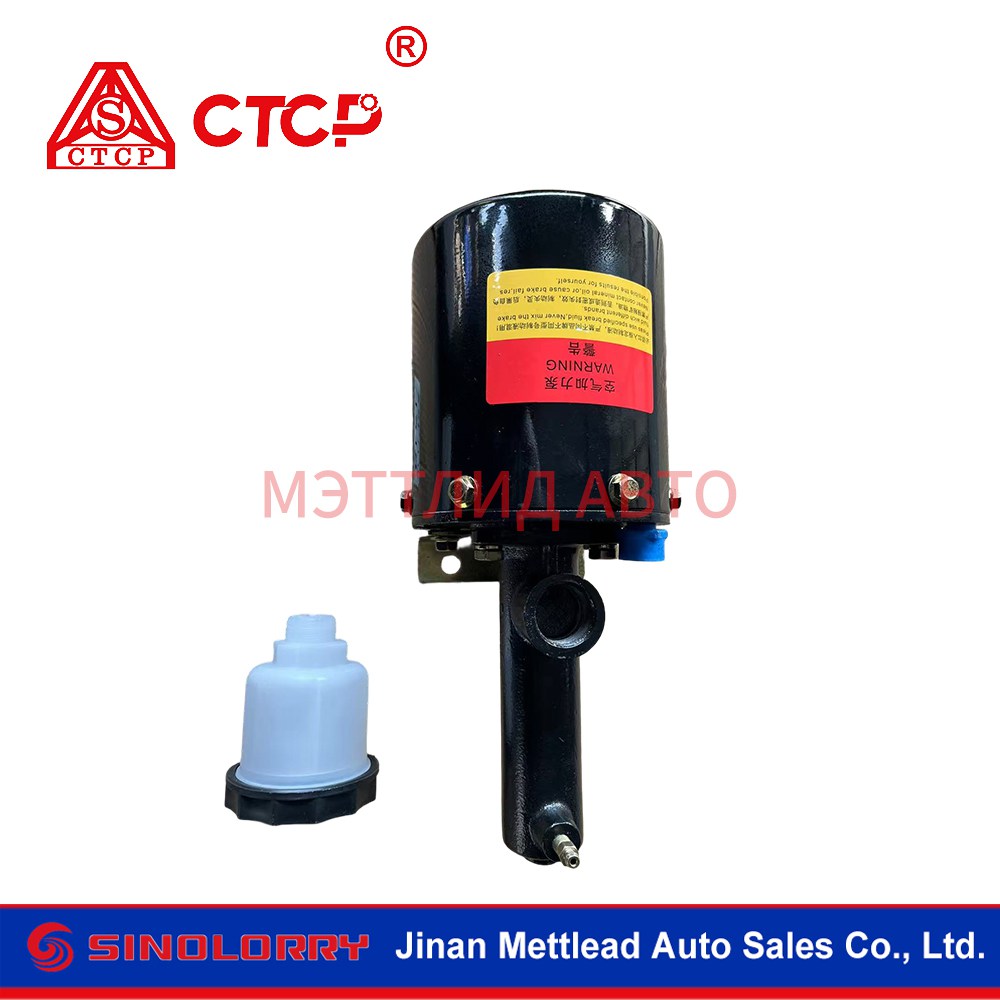
It is important to note here the role of professional intermediaries such asJinan Metallid Auto LLC. Located in Jinan, the heart of the Chinese auto industry, the company exemplifies how a modern direct importer should operate. In contrast to spontaneous purchases, Metallid Auto has built a system of strict multi-level quality control: from checking technical characteristics at the factory to final verification of packaging. Their approach, which they call “butler-style service,” includes not just shipping the goods, but also full logistics support, customs clearance and tailoring of labeling to the needs of the Russian client. Having a team of engineers with 15 years of experience allows us to minimize the main risk of direct deliveries from China - an error in selection or a defective batch. This format of cooperation is ideal for those who want to obtain direct import prices, but need the guarantee of quality and legal transparency that is characteristic of working with an official distributor.
Pros:Minimum price (20–40% lower than retail when working through trusted partners like Matlid Auto), the ability to order non-standard batches, flexibility in container configuration, personalized service.
Cons:Long delivery time (from 20 to 45 days, if there is no warehouse in the Russian Federation). High risks of defects when working with unreliable suppliers (up to 5–7% per batch). Difficulties with guarantees when importing independently. The need for customs clearance.
Verdict:Suitable for large fleets with their own spare parts warehouse and quality control department, or in cooperation with integrated suppliers such as Jinan Metallid Auto LLC, who take on the control and logistics risks. Requires a purchase volume of 100,000 rubles per delivery to cover the logistics costs.
Local convenience stores and dismantling shops
Small points in industrial zones or specialized markets. They often sell used spare parts from dismantling sites or illiquid goods.
Pros:You can come, see the part with your own eyes, and pick it up right away. Possibility of bargaining.
Cons:Lack of documents, zero warranty, limited assortment, risk of buying a worn-out part under the guise of a new one.
Verdict:An emergency option when the car is parked on the highway and you need a solution “here and now”. Not suitable for planned supply.
Benchmarking: Market Leaderboard
Below is a summary table based on our testing of the top 12 supplier types. Please note that specific store names may change, but the types of business models remain consistent.
| Supplier type | Price segment | Shipment time | Risk of marriage | Warranty | Best use |
|---|---|---|---|---|---|
| Federal marketplace | Low – Medium | 1–3 days | High (10–15%) | Complex procedure | Consumables, auto body parts, optics |
| Official dealer of the brand | High | 1–2 days (from warehouse) | Minimal (<1%) | Full, according to the law | Engine, gearbox, electronics |
| Direct importer (China) / Integrators | Very low | 25–45 days (or faster from partner warehouse) | Low (under quality control) | Depends on the contract | Scheduled maintenance, chassis, pneumatics |
| Specialized online store | Medium | 1–2 days | Low (2–3%) | Standard | The One-Stop Choice for Small Businesses |
| Dismantling / Used market | Low | Instantly | Critical | Missing | Emergency repair of old cars |
The table shows that there is no universal solution. If your goal ischeap truck parts: store comparisonshows that maximum savings are achieved only when you are willing to sacrifice waiting time and take on quality control risks, or choose a reliable supply integrator.
In-depth analysis: Chinese spare parts vs Originals vs High-quality analogues
In 2026, the question of “what to buy” is more pressing than “where to buy.” Let's look at the three main categories of products that you will find in stores.
Original spare parts (OEM)
These are parts produced on the assembly line of the car manufacturer or its certified partners. For European cars (if still available through parallel imports) these are Bosch, ZF, Wabco. For Chinese - own factories of brands (Shaanxi, Fast Gear, Weichai).
Why is it expensive:You pay for the brand, quality control and logistics of the original channels. The price can be 2-3 times higher than the analogue.
When to take:For new cars under warranty. For components whose failure leads to major repairs (turbines, Common Rail injectors, control units).
High-quality analogues (Aftermarket Premium)
Brands that supply parts to the aftermarket, but have serious production and ISO 9001 certifications. In the world of trucks, these are names like Hengst, Mann (filters), Sachs (clutch), BPW (chassis). In the Chinese truck segment, local premium brands are emerging that copy OEM technologies.
Why is it beneficial:Value for money. The service life of such parts is 80–90% of the original, and the price is 50–60%.
When to take:For out-of-warranty vehicles. For scheduled maintenance. This is the golden mean for most transport companies.
Cheap Chinese copies (No-name)
Products from markets like Yunnan or Guangzhou that do not have a clear brand. Often packaged in white boxes labeled "Truck Parts".
Why is it cheap:Saving on materials (use of low-quality steel, rubber), lack of geometry control, ignoring tolerances.
Risks:We have recorded cases where cheap brake discs cracked after 5,000 km, and silent blocks fell apart within a month. Saving on such details is illusory.
When to take:Only for temporary repairs to get to the base. Or for elements that do not affect safety (decorative trims, mudguards).
How to check the reliability of an online store: Buyer's checklist
Before you transfer money or place an order, please follow these 5 steps. It will take 10 minutes, but will save your nerves.
- Checking legal data.Find the company details (TIN, OGRN) in the “Contacts” or “About the Company” section. Enter your TIN into a counterparty verification service (for example, Rusprofile or Checko). Look at the age of the company. If the store is 3 months old and offers “the widest range”, it is an intermediary or a scammer. Reliable suppliers have been working for 3–5 years.
- Assortment analysis.A professional store sells what it understands. If you see filters for KAMAZ, optics for Volvo and tires for passenger cars in one catalog, this is an aggregator without expertise. Narrow specialization (only diesel equipment, only pneumatic systems) is a sign of professionalism.
- Communication test.Call the phone number provided. Ask a difficult question. For example: “What is the difference between Weichai WP12 and WP13 engine liners?” If the manager starts to “float” or asks to call back in an hour, run. The expert must answer immediately or clarify the detail by VIN.
- Search for reviews off-site.Don't believe the reviews on the store's website itself. Look for mentions of the store brand on specialized forums (Drom, Truck.ru, specialized groups in Telegram). Pay attention not to odes of praise, but to complaints and how the company responds to them.
- Checking for photo availability.The product card must contain real photographs of the part, and not 3D renderings from the catalog. The presence of photos of packaging, markings, and holograms indicates that the product is physically in stock.
Logistics and hidden costs: calculating the total cost of ownership
Many buyers look only at the price of the item in the cart. This is a mistake. The Total Cost of Ownership includes:
- The price of the product.
- Delivery cost to your warehouse.
- The cost of reverse logistics in the event of a defect (often equal to the cost of shipping there).
- The cost of vehicle downtime while waiting for a part.
- Taxes and customs duties (for import).
Example from practice. Part A costs 10,000 rubles, delivery 500 rubles, delivery time 1 day. Part B costs 8,000 rubles, delivery 2,000 rubles, delivery time 14 days. It would seem that Part B is 1,500 rubles cheaper. But if the machine is idle for 14 days, losses from lost profits will be at least 50,000–70,000 rubles. (based on the average revenue of the tractor). Therefore, “cheap” spare parts with long delivery times are the most expensive for businesses.
When choosing a store, always request an estimate of the cost of delivery to your cityup toplacing an order. Check to see if the item is packaged in wood (for fragile items) and who is responsible for damage in transit.
Frequently Asked Questions
Is it possible to return a spare part if it doesn't fit?
According to the law of the Russian Federation, spare parts are classified as goods that cannot be returned if they have been used or the packaging is damaged. However, if the item is new and the packaging has not been opened, most major stores will accept returns within 14 days. Attention: electronics and parts with traces of installation (oil, scratches on fasteners) are almost impossible to return. Always check return policy before purchasing.
How to distinguish a fake from an original upon receipt?
Pay attention to the quality of packaging printing (the original always has clear printing), the presence of holograms and security codes, which can be checked on the manufacturer’s website. Inspect the part itself: the casting should be smooth, without burrs, the threads should be clean. If a part smells like cheap rubber or has traces of corrosion, it is a defect or a fake. Request a statement of discrepancy from the courier.
Is it profitable for an individual to order spare parts directly from China?
No, if we are talking about a single part. Customs duties, brokerage and international shipping will make the price higher than that of a local reseller. Direct import is profitable only when ordering a batch of 50–100 kg or an amount exceeding 100,000–150,000 rubles. For single purchases, use local importers.
What should I do if the store sent me a defective part?
Do not install the part! Record the defect on video and photos. Draw up a report in the presence of a representative of the transport company or an independent expert. Send your complaint to the seller in writing (email with read receipt). If the seller ignores the claim for more than 10 days, contact the court or Rospotrebnadzor. Arbitration is more effective for legal entities.
Is it safe to use 100% prepayment?
For new counterparties, full prepayment is a risk. Try to work according to the 50/50 scheme or use safe transactions on marketplaces where the money is frozen until the goods are received. If a supplier requires 100% prepayment to an individual’s card, this is a high risk of fraud. Request a contract and payment to the organization's bank account.
Conclusion: Smart Procurement Strategy
Finding an answer to a querycheap truck parts: store comparisonshould not be about finding the lowest price tag. In cargo transportation, reliability is more important than short-term profit. The optimal strategy for a modern transport company is diversification of suppliers.
Keep in touch:
- One or two official dealers for critical components and warranty cases.
- A reliable specialized online store with a good warehouse for regular maintenance (filters, pads, belts).
- A trusted direct importer or integrator (such as Jinan Metallic Auto LLC) to purchase chassis and body parts in bulk once a quarter.
This approach allows you to balance between price, speed and quality. Don't be afraid to change suppliers if the quality of service drops. The aftermarket in 2026 is competitive, and a good salesperson will compete for every customer.
If you would like to receive personal advice on selecting spare parts for your fleet, learn about special conditions for corporate clients, or optimize your supply chain from China,Contact us today. Our experts will help you select reliable partners and reduce the cost of maintaining equipment without losing reliability.
Source:Federal State Statistics Service of the Russian Federation, data on the automotive components market in 2025.