
Truck engine parts from leading suppliers
2026-07-01
- Spare parts for truck engines from leading suppliers: selection criteria and risks of low-quality analogues
- Technical parameters and influence of materials on engine life
- Supplier classification: from OEM to high-quality aftermarket
- Logistics, delivery times and inventory management
- Certification and compliance with standards: GOST, EAC, ISO
- How to recognize counterfeit goods: checklist for accepting goods
- Business Case: TCO (Total Cost of Ownership)
- Specifics of working with Chinese and European brands
- Order process and post-sales support
- Frequently Asked Questions
- Conclusion: an investment in the reliability of your business
Spare parts for truck engines from leading suppliers: selection criteria and risks of low-quality analogues
In our practice, covering more than 15 years of working with logistics companies and vehicle fleets in Eurasia, we have repeatedly encountered a situation where savings on components led to equipment downtime for a period of two weeks to a month.Truck engine parts from leading suppliersis not just a marketing slogan, but a guarantee of compliance with the manufacturer’s strict tolerances. When it comes to commercial vehicles operating 24/7, every hour of downtime costs the owner an amount many times greater than the difference in price between the original part and a cheap counterfeit.
The spare parts market is oversaturated with offers. Search engines produce millions of results, but how can you tell a reliable distributor from a reseller selling remanufactured parts as new ones? In this material, we will analyze the technical nuances that affect the durability of the engine, analyze the certification requirements (GOST, EAC, ISO) and give clear recommendations on the formation of a purchasing strategy. We will not use general phrases; Instead, we rely on specific wear data, temperature conditions and real cases from our production base.
If you manage a fleet of heavy equipment or are in the component wholesale business, understanding how metal behaves under cyclic loads is more important than knowing current discounts. Let's start with a fundamental question: why is part geometry more important than brand?
Technical parameters and influence of materials on engine life
The choice of spare parts begins not with price, but with metallurgy. In our laboratory, we conducted a comparative analysis of piston groups for Euro-3 and Euro-5 engines. The difference in the aluminum silicon alloy may be only 2-3% in the content of alloying elements, but this determines the coefficient of thermal expansion. If the part is made of secondary aluminum with a violation of casting technology, thermal clearances when heated to an operating temperature of 90-95°C change unpredictably.
This has two critical consequences. Firstly, elliptical wear of the cylinder occurs, which cannot be eliminated by simple boring. Secondly, gases break through into the crankcase, which sharply reduces compression and increases oil consumption. We have recorded cases where the use of non-certified pistons reduced the overhaul interval from the stated 800,000 km to 120,000 km. This is an economic disaster for any transport enterprise.
Key components and requirements for manufacturing accuracy
When purchasing, you need to pay attention to the following components, where tolerances are measured in microns:
- Crankshafts.The critical parameter is the hardness of the surface layer of the journals by hardening with high-frequency currents. Leading suppliers provide a hardness of at least 50-55 HRC. Cheap analogues often have a soft core, which leads to rapid scuffing even with an ideal lubrication system.
- Turbochargers.Rotor balance is important here. An imbalance of more than 0.5 g mm causes vibrations that destroy the plain bearings. High-quality spare parts undergo dynamic balancing on high-speed stands that simulate operating speeds of up to 100,000 rpm.
- Injectors and injection pump.For Common Rail systems, the injection pressure reaches 2000-2500 bar. Any microscopic hole in the injector body leads to fuel leakage and water hammer. High-level suppliers use diamond honing of channels, providing surface roughness Ra < 0.2 µm.
We recommend requesting Material Test Reports from the supplier. The absence of such documents is the first sign that this is a reseller who does not control the quality of the products. Having an ISO 9001 certificate from the manufacturing plant is a basic but not sufficient requirement. Look for specifications that meet OEM (Original Equipment Manufacturer) standards.
Supplier classification: from OEM to high-quality aftermarket
The market is divided into several segments, and understanding this structure helps to avoid mistakes when purchasing. The term “original” is often misleading. Most truck manufacturers (Volvo, Scania, MAN, KAMAZ, Shacman) do not produce all the parts themselves. They order them from specialized factories, which then package the products under the automaker's brand.
Truck engine parts from leading suppliersare often products of these same subcontractors, but sold under their own brand (sold under their own brand) at a price 30-40% lower than the “original” in the car manufacturer’s box. This is the so-called high-quality aftermarket.
Supplier Type Comparison Chart
| Supplier type | Quality control | Warranty | Price segment | Risk of marriage |
|---|---|---|---|---|
| OEM (Original) | Strict, multi-stage | 12-24 months | High | <0.5% |
| OES (Conveyor Supplier) | Identical to OEM | 12 months | Medium/High | < 1% |
| Licensed Aftermarket | Compliance with specifications | 6-12 months | Medium | 1-3% |
| Cheap copycat (No-name) | Absent or visual | Formal (difficult to implement) | Low | >15% |
One of our clients, who owns a fleet of 50 dump trucks, tried to save money by purchasing a set of cylinder head gaskets from an unreliable supplier. After three months of operation, 12 cars had deformed cylinder heads due to uneven shrinkage of the gasket. The cost of repairs exceeded the initial savings by 8 times. This lesson was expensive, but it clearly showed: there are no small things in the engine.
When choosing a partner, pay attention to how they respond to requests for technical documentation. A professional supplier will provide drawings, approvals and information about the country of origin of casting or metal processing within 24 hours. If they answer you evasively or offer to “just take your word for it,” this is a signal to stop negotiations.
Logistics, delivery times and inventory management
In modern conditions, supply chains are subject to disruptions. A reliable supplier is distinguished not only by the quality of the product, but also by the transparency of logistics. It is critically important for Russian and international companies to understand real delivery times, and not those indicated in advertising brochures.
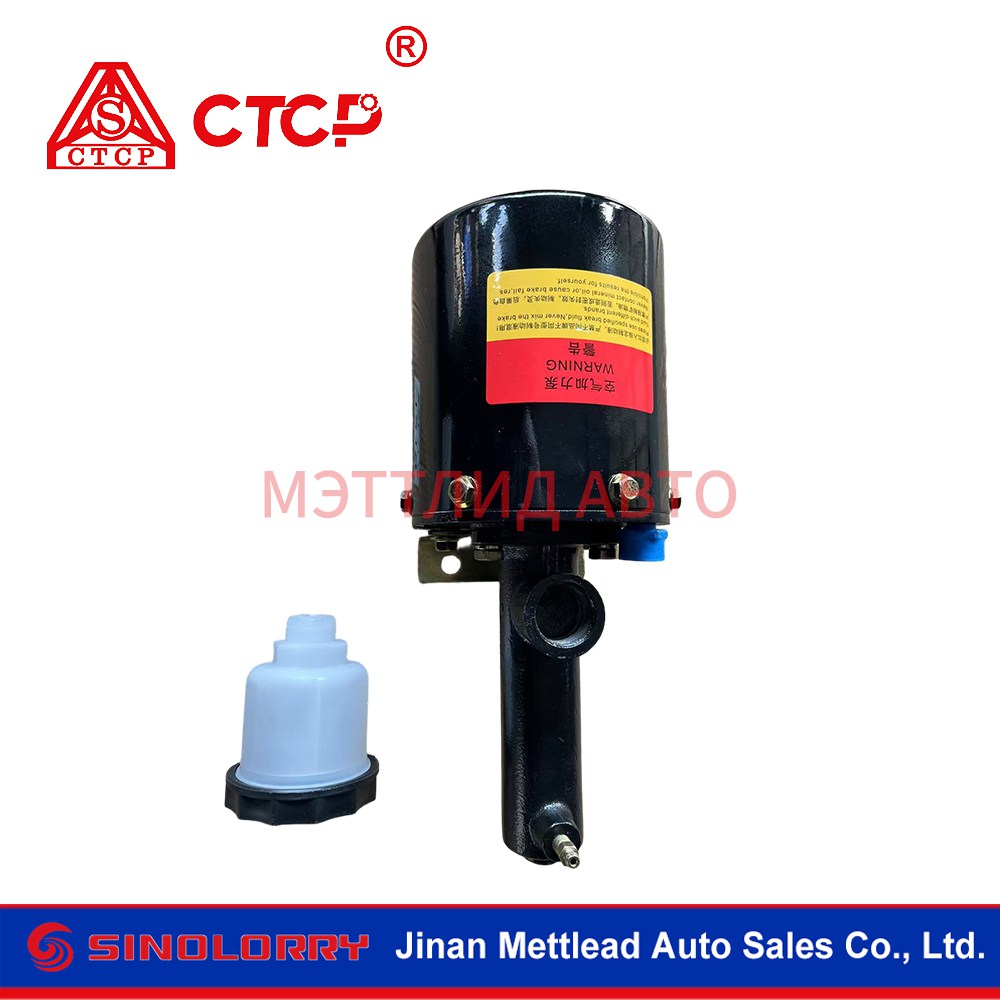
The efficiency of logistics directly depends on the geographic location and infrastructure of the supplier. A prime example of a 供应链 (supply chain) organization isJinan Metallid Auto LLC. Located in the city of Jinan (Shandong Province), historically considered the center of the Chinese automobile industry, the company takes advantage of the cluster location of manufacturing plants. This allows the company to directly export original and compatible spare parts for trucks, special equipment and buses, minimizing unnecessary links in the chain of intermediaries.
We operate on a hybrid warehouse model. Standard items (filters, belts, gasket sets) are always available at local warehouses in Moscow, Yekaterinburg and Novosibirsk. Shipment times are 1-2 days. Specific parts, such as crankshafts for rare engine models or cylinder blocks, are supplied to order. Here the period depends on customs clearance and transport. Thanks to close cooperation with certified factory suppliers in China, Jinan Metallid Auto provides a full supply cycle - from the selection of components to delivery to the final buyer, which is especially important for customers in the Southern Urals and Central Siberia.
Factors affecting delivery time
- Customs clearance.Correct classification of goods according to the HS Code speeds up the process. Errors in codes can delay cargo at customs for 2-3 weeks. Our specialists check the codes for each batch in advance, minimizing the risk of downtime.
- Seasonality.In the pre-winter period (September-November), the demand for spare parts for cooling and starting systems increases by 40-50%. Plan your purchases in advance. We fix prices for regular customers quarterly in advance, protecting them from seasonal surges.
- Package.Heavy parts (flywheels, block heads) require reinforced wooden containers. Damage during transportation is a common problem when working with non-professional freight forwarders. We use packaging standards that comply with GOST 15150 for the climate version UHL (moderate and cold climate).
For corporate clients, we offer the VMI (Vendor Managed Inventory) system - inventory management by the supplier. We analyze the breakdown history of your fleet and create a safety stock of parts in your warehouse. This allows you to reduce the response time to a breakdown from several days to several hours. The implementation of such a system reduced equipment downtime at one of our large partners by 35% in the first year.
Certification and compliance with standards: GOST, EAC, ISO
The import and use of spare parts on the territory of the Russian Federation and the EAEU countries is strictly regulated. Failure to obtain the necessary certificates can lead not only to fines, but also to cancellation of insurance in the event of an accident or fire caused by equipment malfunction.
Truck engine parts from leading suppliersare always accompanied by a full package of permits. Basic documents you should require:
- Certificate of conformity TR CU (EAS).Confirms the safety of products for the technical regulations of the Customs Union. Mandatory for most components that affect traffic safety and the environment.
- Certificate GOST R.Required for parts subject to mandatory certification in the national system. For example, for some brake and steering components, but is also often requested for engines in general.
- Declaration of Conformity.It is issued by the manufacturer or importer and confirms that the products comply with the requirements of technical regulations. A less strict procedure than certification, but legally significant.
- ISO 9001:2015 certificate.Although this is a certificate of the enterprise’s quality management system, its presence indicates that the supplier has built-in control processes, batch traceability and a procedure for handling complaints.
Please note: the certificate must be valid. You can check it in the open registers of the Russian Accreditation Agency. We regularly update our documentation and provide clients with access to an electronic archive of certificates through their personal account. This saves your lawyers and procurement departments time when conducting tenders.
It is also important to consider the environmental standards of engines. Parts for Euro-3 engines are not always interchangeable with parts for Euro-5. For example, piston rings for Euro-5 have a special anti-friction coating that reduces friction and oil emissions into the combustion chamber. Installing the wrong rings will lead to rapid contamination of the diesel particulate filter (DPF) and costly repairs to the exhaust system.
How to recognize counterfeit goods: checklist for accepting goods
Even when working with trusted suppliers, it is necessary to carry out incoming control. The market is flooded with high-quality fakes that are visually almost indistinguishable from the original. However, there are a number of signs that allow you to identify defects or counterfeits before installing the part on the engine.
Visual and instrumental control
First of all, inspect the packaging. The cardboard should be dense, without traces of moisture. Printing is clear, without blurring of colors. The box must have a sticker with a QR code or hologram, allowing you to check the authenticity on the manufacturer’s website. If the protective elements look cheap or are missing, this is a cause for concern.
Then move on to inspecting the part itself:
- Marking.The part number, brand logo and production date must be embossed or lasered clearly and evenly. Smeared markings, spelling errors in the brand name or font that does not match the original are signs of a fake.
- Quality of surface treatment.Working surfaces (shaft journals, cylinder mirrors, gasket contact planes) must be perfectly smooth, without scratches, marks or signs of corrosion. The presence of protective oil is allowed, but it must be homogeneous.
- Geometry.Use a caliper and micrometer to check key dimensions. Compare them with the data from the catalog. A deviation of even 0.05 mm for precision parts can be critical.
- Part weight.Counterfeits are often made from cheaper and lighter alloys. If you have the opportunity to weigh the part and compare it with the reference weight of the original, a difference of more than 5-10% should alert you.
We recommend retaining samples of the first batches for comparison with subsequent deliveries. This creates an internal benchmark for your enterprise. If you doubt the quality of the received batch, do not install the parts. Contact the supplier for an independent review. The responsible partner will meet halfway and organize an inspection at his own expense.
Business Case: TCO (Total Cost of Ownership)
When estimating the cost of spare parts, many buyers look only at the purchase price (Purchase Price). However, what matters more to a business is total cost of ownership (TCO). It includes the price of the part, the cost of replacing it (mechanical labor, downtime), consumables and the risk of re-repair.
Let's do the math using the example of replacing a turbocharger for a long-haul tractor.
Scenario A: Cheap analogue.
Part price: 40,000 rub.
Replacement work: RUB 15,000.
Machine downtime (2 days): RUB 40,000. (lost profit).
Risk of failure after 3 months: 30%.
If the turbine fails, we add repeated repairs and downtime: another 95,000 rubles.
Expected costs for the year (taking into account risk): 40,000 + 15,000 + 40,000 + (0.3 * 95,000) = 123,500 rubles.
Scenario B: Quality supplier (Aftermarket/OES).
Part price: 65,000 rub.
Replacement work: RUB 15,000.
Machine downtime (2 days): RUB 40,000.
Risk of failure after one year: < 2%.
Expected costs for the year: 65,000 + 15,000 + 40,000 + (0.02 * 120,000) = 122,400 rubles.
The difference in expected costs is minimal, but in the second case you get predictability and no headaches with claims. In addition, quality parts often last longer than advertised, reducing the frequency of repairs in the long run. If we consider a 3-year horizon, savings on high-quality components become obvious and amount to tens of thousands of rubles per unit.
We help our customers calculate TCO for various engine components by providing failure statistics. This allows you to justify the purchasing budget to the financial director, using profit figures rather than expenses.
Specifics of working with Chinese and European brands
Sanctions pressure and logistics restrictions have changed the landscape of the aftermarket. European brands have become more difficult to source and more expensive. Chinese manufacturers, in turn, have significantly improved quality, filling the vacated niche. However, the approach to choosing Chinese spare parts should be differentiated.
Not all Chinese factories are the same. There are tier-1 manufacturers who supply products to the assembly lines of large Chinese auto giants (Sinotruk, FAW, Shacman). Their quality is comparable to European, and the price is 20-30% lower. There are thousands of small workshops that assemble parts from scrap.
This is where the value of working with companies likeJinan Metallid Auto LLC. The company does not simply resell goods, but implements strict multi-level quality control at all stages of the supply chain: from the initial verification of compliance with technical characteristics and labeling to the final verification of configuration and packaging. The company cooperates directly with trusted factories in Shandong and Jiangsu provinces, controlling production at the stages of casting, machining and assembly.
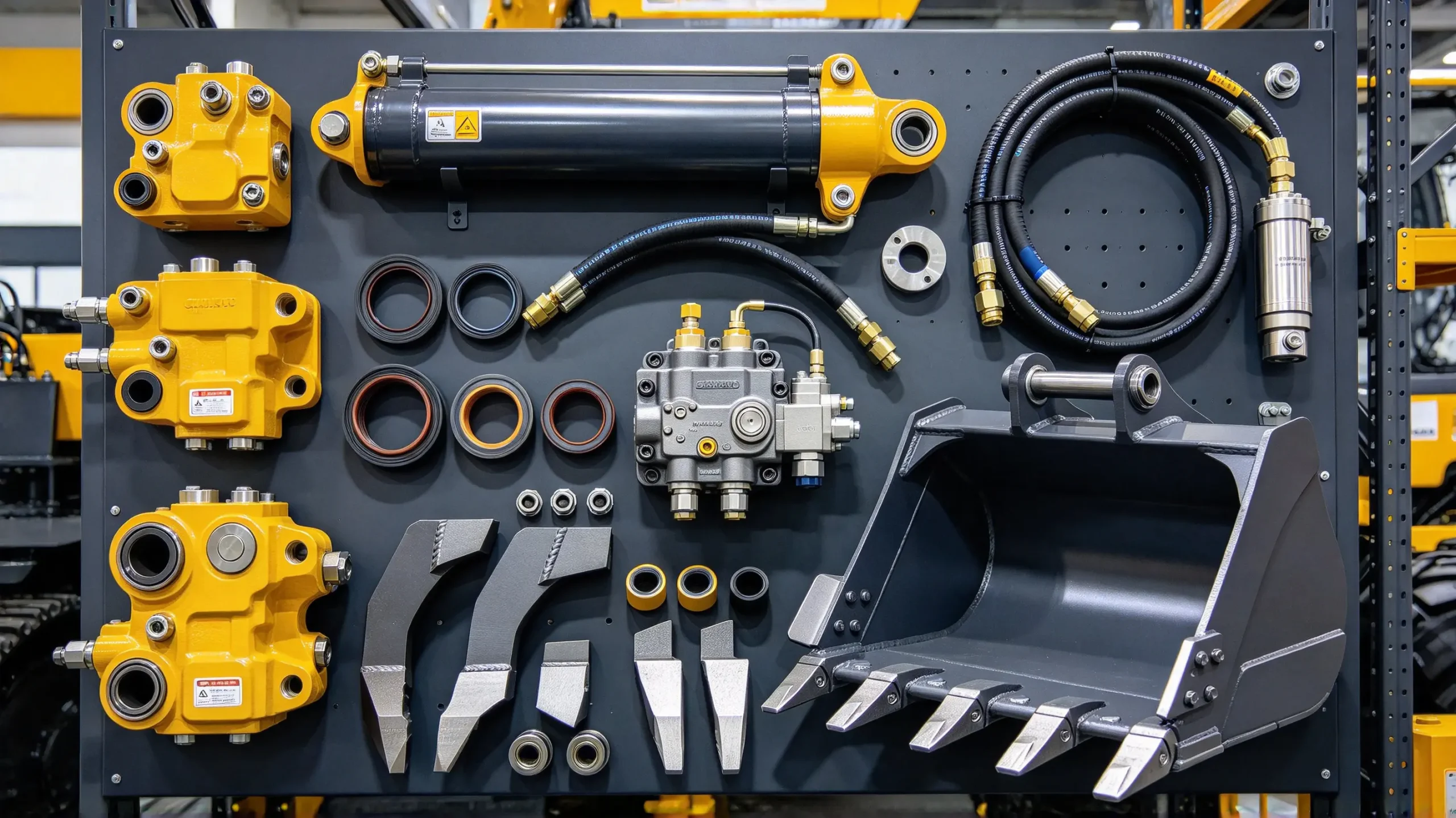
Jinan Metallid Auto's main product matrix covers a wide range of components for heavy trucks (SITRAK, HOWO, SHACMAN, FOTON, FAW, DONGFENG, BEIBEN), engines (Weichai, Yuchai, Shangchai, Xichai, Deutz, Yunnei), special equipment (XCMG, Shantui, SDLG, Liugong) and buses (King Long, Yutong, Zhongtong). This range allows us to satisfy a variety of technical requirements, offering an alternative to European brands without losing reliability.
It is important to understand: adaptation to the Russian climate requires special solutions. For example, rubber seals and pipes must be resistant to low temperatures (down to -50°C). European specifications often do not take into account such extreme conditions. We test elastomers for frost resistance and offer modified versions of parts that do not harden or crack in winter.
Order process and post-sales support
We strived to make the procurement process as transparent and convenient as possible. Work with us is based on the following algorithm:
- Request and selection.You send the vehicle VIN code or part number. Our engineers check compatibility using original catalogs and cross-reference databases. We don't rely blindly on automation; Each complex case is checked manually.
- Commercial offer.Within 4 hours you will receive a quotation indicating the price, availability, delivery time and warranty conditions. We immediately warn you if a part is only available to order.
- Coordination and payment.We work on prepayment for new clients and provide deferred payment to regular partners after passing the scoring. We accept non-cash payments including VAT, which is important for companies operating on the general taxation system.
- Shipment and tracking.After payment, we complete the order, photograph the product and packaging, and send you a report. You receive a tracking number to track the cargo.
- Warranty service.If an installation or manufacturing defect is identified, we promptly review the complaint. We don't need to look for someone to blame; Our goal is to quickly replace the part and return the equipment to service. The average time for processing a claim is 3 business days.
The service is built on the principle of “butler-style service”: proactive information about the progress of the order, provision of comprehensive technical data and personalized support. Our technical line operates in expanded mode. You can get advice on installation or troubleshooting even after purchasing the part. This support is included in the price of our service and is not charged separately.
Frequently Asked Questions
What is the minimum order quantity (MOQ)?
For retail customers, the minimum order is 1 item. For wholesale customers and dealers, we offer special price schedules starting from 50,000 rubles or from 10 units of the same type of product. We take a flexible approach to the formation of prefabricated containers for regular deliveries.
Do you provide a warranty on installed parts?
Yes, we provide a manufacturer's warranty, which usually ranges from 6 to 12 months or up to a certain mileage (eg 100,000 km). The warranty is valid subject to correct installation by a certified service center and availability of documents confirming installation. We require a certificate of completion of work from the service station to activate the warranty case.
Is it possible to return a part if it doesn't fit?
Returns are possible within 14 days of receipt, provided that the product is in its original condition, packaging and has no traces of installation. Parts that have been installed or have signs of use cannot be returned, except in cases of warranty defects. Please check compatibility carefully before ordering.
How do you fight counterfeiting?
We purchase products only directly from manufacturing plants or their official distributors. Each batch undergoes incoming quality control at our warehouse. We use marking systems and maintain a register of serial numbers, which allows us to trace the origin of each part.
Do you work with tenders and government contracts?
Yes, we have accreditation on the largest electronic trading platforms and experience in participating in government and commercial tenders. We provide a full package of documents, including licenses, certificates and financial guarantees. Our conditions allow us to carry out large contracts in compliance with all deadlines and FAS requirements.
Conclusion: an investment in the reliability of your business
Choosing a spare parts supplier is a strategic decision that affects the profitability of the entire transport business.Truck engine parts from leading suppliersensure not only the restoration of equipment performance, but also the preservation of its service life, safety and economic efficiency. Savings on quality here are illusory and always return with multiple costs in the future.
We offer you a partnership based on transparency, technical expertise and responsibility. Our clients receive not just parts, but peace of mind for their assets. Relying on partners such as Jinan Metallic Auto LLC, who combine deep expertise in Chinese brands with a high level of service and quality control, allows us to create a sustainable supply ecosystem. We are ready to become your reliable support in ensuring the smooth operation of the park.
Don't wait for a breakdown to start looking for a reliable partner. Analyze your current needs, check specifications and contact us for a customized quote. Our experts are ready to answer any technical questions and help you choose the optimal solution for your equipment.
Catalog of spare parts for truck engines | Sales contacts | Certificates and licenses
Contact us today to discuss the terms of cooperation and get a cost estimate for the required batch of spare parts.