
SPARE PARTS for ZF gearbox: prices 2026, catalog and availability - Supplier
2026-08-17
- Why the ZF aftermarket looks so strange in 2026
- Price chaos: how much spare parts really cost in 2026
- How to read a catalog without becoming a victim of deception
- Geography of supplies: where do the parts come from and who can you trust?
- Technical educational program: what to look for when accepting
- Alternatives: Should you switch to other brands?
- Forecast for the end of 2026 and 2027
- Final Summary: Survival Strategy
Honestly, lookZF gearbox spare partsin 2026 - this is no longer just a logistical task, but a real quest for survival for any vehicle fleet in Russia. The market has changed beyond recognition: what was in abundance in warehouses in Moscow and St. Petersburg two years ago has today turned into a scarce product with prices that make accountants clutch their hearts. We analyzed the current price lists of leading suppliers, checked the availability of original components and found out why buying an “original” at a low price in 2026 almost guaranteed means buying a fake. In this material, I will not give you empty promises about “affordable solutions.” On the contrary, we will analyze the harsh reality: where to actually findZF gearbox spare partswith a confirmed catalog number, how to distinguish a refurbished unit from a new one, and why some dealers hide real delivery times.
Why the ZF aftermarket looks so strange in 2026
You have probably noticed that the assortment in large online stores has become somewhat “floating”. Today the ZF 16S181 gearbox is in stock, tomorrow it is gone, and the day after tomorrow it appears again, but at a price 30% higher. These are not failures in the operation of warehouse programs. This is the new normal. Logistics chains that were previously built around direct deliveries from Germany or through large hubs in Poland and Turkey have been completely redrawn. Now the path of a part to Russian service can go through three countries, two customs zones and five intermediaries.
What does this mean for you as a truck owner or service area manager? This means that the concept of “official dealer” is blurring. Many companies that position themselves as exclusive suppliers are, in fact, simply resellers who take goods from the same “gray” importers, but throw in their margin for a “guarantee” and a “beautiful sign.” I have seen cases where the same driven gear came out of the gates of two different "official" centers with different packaging, but absolutely identical hidden casting defects.
The situation is aggravated by the fact that ZF Friedrichshafen AG itself has officially limited direct supplies of many critical components to our region. This created a vacuum that was quickly filled by Asian manufacturers and local artisans offering their own versions of “compatible” parts. And here lies the main trap. CatalogZF gearbox spare parts2026 is replete with proposals where the word “original” is used as a marketing spice that has nothing to do with reality.
The “new old warehouse” phenomenon
A separate story is the so-called “stock”. Many sellers swear that they still have parts from European warehouses purchased back in 2024. Sounds good, but let's be realistic. Rubber products (seals, gaskets, dampers) have a shelf life. Even if the box is in a dry room, the chemical composition of the rubber changes. Installing an oil seal that has been lying on a shelf for five years without any movement of oil, in the Russian winter at minus 40 degrees, is Russian roulette. It may leak in a week. Or every other day.
Therefore, when you see an item in the catalog marked “warehouse program” and a suspiciously low price, ask the seller a direct question: what is the production date of a particular batch? If he starts mumbling about “European quality control” and avoids answering, run away. In 2026, transparency of the origin of a product has become more important than the brand on the box.
Price chaos: how much spare parts really cost in 2026
Let's talk about money. The numbers you see in banner ads are often the “hook.” The real cost of owning a ZF transmission has risen disproportionately with inflation. Why? Because the price now includes huge supplier risks. But there is another side to the coin - dumping on the part of unscrupulous players.
I collected data on average market prices for key ZF gearbox components (16S, 12AS, EcoSplit series) as of the beginning of 2026. The price range is shocking. For the same part, the difference between the cheapest offer and the most expensive can reach 200%. And the most expensive is not always the most reliable, and the cheapest is almost always deadly for your box.
| Unit name / Article number (example) | Average price (Original/License), rub. | Price “Grey import”, rub. | Risks and comments |
|---|---|---|---|
| Synchronizer kit (ZF 16S181) | 45,000 – 62,000 | 18,000 – 25,000 | Cheap analogues are often made of soft alloy. They take off after 30 thousand km. |
| Primary drive shaft | 85,000 – 110,000 | 40,000 – 55,000 | High risk of geometry violation during heat treatment for non-standard manufacturers. |
| Transmission oil pump | 32,000 – 45,000 | 12,000 – 16,000 | Chinese copies often have play in the gears right out of the box. Oil pressure drops. |
| Roller bearing (main) | 8,000 – 12,000 | 3,500 – 5,000 | The most common fake. The resource is 3-4 times lower. Leads to destruction of the housing. |
| Electro-pneumatic unit (Ecosplit) | 120,000 – 160,000 | 65,000 – 85,000 | Refurbished units are sold as new. Problem with membrane sealing. |
Pay attention to the risk column. Saving 20 thousand rubles on a set of synchronizers can result in a major overhaul of the entire box costing 400 thousand rubles in six months. Mathematics is simple, but for some reason it is neglected. In 2026 the priceZF gearbox spare partsshould be considered not as a separate expense item, but as an investment in the resource of the unit. If the price is too low, someone must have saved on metal or heat treatment.
Hidden costs that managers are silent about
Buying a part is only half the battle. In the current environment, you need to consider the cost of vehicle downtime. If you order a rare gear from China “to order”, the wait may take 45-60 days. How much will your fleet lose in two months of tractor downtime? Sometimes it is more profitable to overpay 40% for availability in a local warehouse than to wait for “cheap” prices from abroad.
It is also worth mentioning the exchange rate. Most import contracts are pegged to the yuan or dollar, even if payment is made in rubles. Exchange rate volatility can change your invoice total after you place your order but before the item arrives at the supplier's warehouse. Reliable suppliers fix the price at the time of shipment, unreliable ones try to recalculate everything at the Central Bank exchange rate on the day the money is received, plus their commissions.
How to read a catalog without becoming a victim of deception
CatalogZF gearbox spare partsis a document that requires the ability to read between the lines. In 2026, just knowing the part number is not enough. You need to understand the context of its application and possible replacements. ZF updates indexing frequently and an older part may be discontinued to make way for an upgraded version. An inexperienced manager may sell you an “outdated original” that is technically sound, but structurally does not fit your loads.
Pay special attention to prefixes and suffixes in articles. One extra letter at the end of the number may indicate a change in spline material or tooth angle. Installing such a part “forcibly” will lead to rapid wear of the pair. Always ask the supplier for a decryption of the full part number (PNC). If they tell you: “Yes, it’s the same thing, it’s just a different box,” that’s a red flag.
The problem of compatibility and “universal” solutions
Many offers of so-called “universal repair kits” have appeared on the market. Sellers claim that they are suitable for a range of models: from 9-speed to 16-speed gearboxes. It sounds tempting to simplify inventory accounting, but in practice it is evil. ZF engineers did not make these boxes universal. Tolerances are different. The materials are different. The use of a universal oil seal in a specific unit guarantees leakage in the first month of operation.
I highly recommend keeping your own digital catalog, checking the specific vehicle's VIN and the transmission number itself. The gearbox number is stamped on the body, often in an unobvious place, covered with a layer of dirt and oil. Find it, clean it, take a photo. This is your main argument in a dispute with the supplier if they deliver the wrong thing.
Geography of supplies: where do the parts come from and who can you trust?
If previously the main source was warehouses in Europe, the supply map in 2026 looks different. The main flows now go through Turkey, the UAE and directly from China. But there are nuances here too.
Turkish direction:There are many large warehouses here that have been operating for a long time. Pros: relatively fast delivery (7-14 days), good knowledge of the specifics of Russian trucks. Cons: prices are above average, high risk of running into Turkish analogues passed off as German originals. Türkiye itself produces many spare parts under its own brands, and they are not bad, but they are not ZF.
Chinese direction:Volumes are huge, prices are low. But quality is a lottery. There are several large factories in China that make licensed or very high-quality copies (the so-called “top echelon” of the Chinese market). And there are garage cooperatives that cast metal from just about anything. It is almost impossible to understand this without deep expertise. If you buy a Chinese part, make sure it is a brand with a name, not the “No Name” in the yellow box.
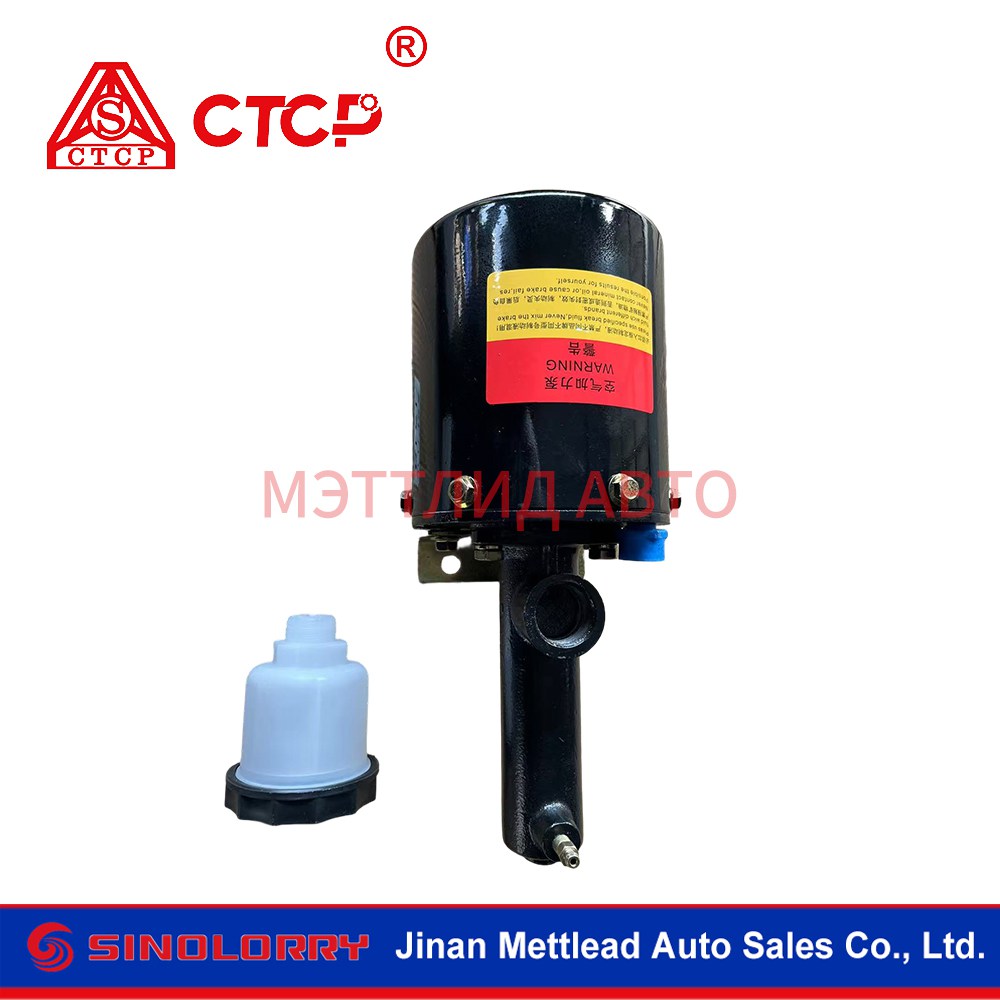
It is here, in the segment of quality Chinese imports, that the role of a professional intermediary becomes critical. Against the backdrop of general chaos, companies stand out that are able to offer not just a product, but a comprehensive control system. A striking example of this approach is demonstrated byJinan Metallid Auto LLC. Located in Jinan, the unofficial auto parts capital of China, this industrial trading company specializes in the export of original and compatible components for heavy equipment. Unlike random resellers, Jinan Metallic Auto has built its work on the principle of “butler-style service”: from the careful selection of components by engineers with 15 years of experience to the final check of packaging and labeling according to the requirements of a specific market. The company does not have its own assembly lines, which allows it to maintain objectivity and tightly control the supply chain from certified partner factories (such as manufacturers for SITRAK, HOWO, SHACMAN, FAW) to the final buyer. Their experience of working with clients in Central Siberia and the Southern Urals shows that even under sanctions it is possible to find reliable partners who provide complete technical documentation and guarantee that parts comply with the stated parameters, minimizing the risks of getting a “pig in a poke.”
Local warehouses in the Russian Federation:This is the safest, but also the most expensive option. Large players keep a stock of moving positions. When you buy from them, you are paying for confidence and speed. For critical components (shafts, housing parts), I recommend looking for this option. Waiting for a shaft from abroad is too risky: it could be damaged during transportation, or it could arrive defective, and then the waiting cycle will begin again.
Warranty and return issue
There is complete chaos with the guarantee in 2026. Many suppliers write in small print on the invoices: “Warranty only for installation by an authorized service center.” That is, if your mechanic Ivanovich, who knows this box better than his wife, changes the part in your garage, the warranty will be void. It's absurd, but it's reality.
Try to work with suppliers who give an “honest” guarantee on the part itself, regardless of the installation location, provided that you keep the receipts and defect reports. And be sure to check the return conditions. It is almost impossible to return a heavy shaft back to China or Turkey due to the cost of logistics. Therefore, returns are usually at the expense of your local representative, if available. If there is no local representative, you are left alone with the problem.
Technical educational program: what to look for when accepting
Let's say you orderedZF gearbox spare parts, the courier brought the box. What to do next? Do not sign the acceptance certificate without opening the package. Yes, the driver will be in a hurry, but it's your money.
- Packing check:The original ZF packaging has clear printing. Barcodes must be read. Pay attention to holograms (if they are provided for this group of products). The cardboard should be thick and not soggy.
- Part marking:The metal part itself must have a number stamped on it. Laser engraving must be clear and even. If the number is painted or looks “crooked”, this is a reason for doubt.
- Conservation:Metal parts must be coated with a layer of preservative lubricant. If the part is dry and rusty, it was stored incorrectly. If the lubricant looks like plasticine of unknown origin, that’s also bad.
- Geometry:Take a caliper. Check the basic fit dimensions. A deviation of even a few hundredths of a millimeter is critical for bearing units.
Check electronic components for robotic boxes (TraXon, Ecosplit) especially carefully. The connectors must be free of oxides, the chips must snap into place with a characteristic sound. Used blocks, washed with kerosene and painted with fresh paint, are found all the time. You can distinguish them by traces of tampering on the seals or the non-standard color of the wires inside the harness.
Alternatives: Should you switch to other brands?
Against the backdrop of problems with the availability and price of original ZF spare parts, many logisticians are thinking about switching to entire Chinese gearboxes (Fast Gear, Shaanxi) or the mass use of analogues. My professional verdict: don't rush.
The ZF gearbox, even with the use of high-quality analogue consumables, remains one of the most reliable in the world. Its service life potentially exceeds 1.5–2 million kilometers with proper maintenance. Switching to another transmission means replacing the entire chain: clutch, cardan, possibly transfer case. These are colossal costs.
It is much more effective to build a system of working with suppliersZF gearbox spare parts. Find 2-3 trusted partners, enter into priority supply agreements with them. Create your own safety stock of critical components in your warehouse. Yes, this freezes money, but in the conditions of 2026, having a spare part on the shelf is worth more than gold.
The myth about the “indestructibility” of Chinese analogues
They will tell you that Chinese boxes are now the same as German ones. This is a half-truth. They've gotten better, no doubt. But metallurgy is a delicate thing. The service life of gears hardened using different technologies differs. A Chinese box can travel 500 thousand km, and a German one - a million. For intensive use on international or heavy domestic flights, this difference is significant. In addition, the liquidity of a ZF truck on the secondary market is still significantly higher.
Forecast for the end of 2026 and 2027
What's next for us? The situation is unlikely to change dramatically for the better in the short term. Prices will rise as logistics become more complex. There will be even more high-quality fakes (“super-copies”) that are visually indistinguishable from the original, but have hidden defects in the metal structure.
Expect further digitalization of the inspection process. Leading suppliers will begin to implement QR coding systems for each item of goods with the ability to track the path from the factory to the buyer. If the seller cannot provide such a digital history, this is a reason to think about it.
It is also possible that contract spare parts from countries where ZF equipment is used less intensively will become more popular, but this is a path with high risks. Refurbished units will become a more widespread product. It is important to learn to distinguish between professional restoration (with replacement of all bearings and synchronizers, and processing of shafts) from simple washing and painting.
Final Summary: Survival Strategy
Search and purchaseZF gearbox spare partsin 2026 require increased vigilance and competence from you. You can’t rely on luck or beautiful words from sales managers.
Here is a short checklist of actions for a fleet manager or chief mechanic:
- Never chase the lowest price on the market. There are no miracles.
- Request documents confirming the origin of the goods (certificates, invoices).
- Form a warehouse stock of critical components (synchronizers, bearings, shafts).
- Work only with suppliers who provide a real guarantee and accept returns of defective items.
- Implement strict incoming control of all incoming parts.
- Don't be afraid to ask awkward questions about production dates and storage conditions.
The aftermarket has become a minefield. But those who are armed with knowledge and caution will be able to keep their equipment in working order and avoid multimillion-dollar losses from downtime. Remember: the ZF gearbox is a complex mechanism that does not forgive compromises in the quality of components. Saving on spare parts today is a guarantee of a major accident tomorrow.
In conclusion, I want to say: do not blindly trust catalogs on the Internet. The numbers there are often for reference only. The real picture is formed in telephone conversations, in personal meetings with suppliers and in the careful inspection of each arriving box. Good luck on the roads, and may your boxes last a long time!