
Famous truck repair blog
2026-07-14
- Why a professional truck repair blog is not just a collection of articles, but a vehicle fleet survival tool
- Evaluation criteria: how to distinguish expert content from information noise
- TOP 5 topics that a quality heavy equipment repair resource should cover
- Comparison of information sources: official manual versus field experience
- Practical application: how to implement knowledge from a blog into the work of a fleet
- Safety and legal aspects of DIY repairs
- Trends 2025-2026: what will change in truck repair
- Frequently Asked Questions
- Conclusion: knowledge is the main tool of a mechanic
Why a professional truck repair blog is not just a collection of articles, but a vehicle fleet survival tool
In our practice of managing logistics projects, we have repeatedly encountered a situation where the downtime of one tractor cost the company more than the monthly salary of the entire staff of mechanics. This is not an exaggeration. When cargo gets stuck on the M-11 highway or in the port of Novorossiysk due to a breakdown of fuel equipment, the cost is not rubles, but reputation and fines for missing delivery deadlines. That's whyfamous truck repair blogceased to be just entertainment for drivers. Today it is a critical resource for chief engineers, transportation company owners and technical directors.
We analyzed hundreds of sources of information, from truck driver forums to official manufacturer manuals, to understand what really works in Russian operating conditions. Most standard manuals are written for ideal conditions: clean fuel, smooth roads, qualified service every 15 thousand kilometers. The reality of the Russian cargo transportation market dictates different rules. Here the equipment works to the limit, often in the extreme north or southern heat, using lubricants of varying quality and under constant pressure from logistics schedules.
This material is not just a literature review. This is a structured guide on how to use knowledge from the best industry blogs to reduce your renovation costs by 30-45%. We'll look at how to distinguish amateurish advice from engineering-based solutions, what topics should be your focus in 2025-2026, and how to implement this knowledge into the work of your technical department. If you want to keep your trucks running between service intervals without capitalizing, this article is for you.
Evaluation criteria: how to distinguish expert content from information noise
The Internet is full of articles with the headlines “How to fix an engine in 5 minutes.” In reality, high-quality repairs of commercial vehicles require time, diagnostics and an understanding of the physics of the processes. To really choosefamous truck repair blog, which will benefit your business, you need to apply strict filters. We have developed a checklist based on the principles of E-E-A-T (Experience, Expertise, Authority, Reliability), adapted for the Russian-speaking segment.
Practical experience of the authors
The first thing we look at is who is writing. If the author hides behind the nickname “Admin” and does not provide any data about his experience, the value of such material tends to zero. Real experts indicate their experience, specialization (for example, “common rail diesel mechanic with 12 years of experience”) and give examples from real practice. We appreciate materials where the author honestly talks about his mistakes. For example, the phrase “We once incorrectly set the cylinder head tightening torque on a KamAZ-5490, which led to gasket burnout after 2000 km” is much more credible than a dry theory from a textbook.
Check if the blog has a “Cases” or “Practice” section. Specific situations should be described there: symptoms of the malfunction, diagnostic methods, tools used and the final solution. Lack of specifics is a red flag. Good material always contains details: car make, year of manufacture, mileage, operating conditions.
Technical depth and data relevance
Trucking technology is changing rapidly. What worked for Euro 2 can kill a Euro 5 or Euro 6 engine. A quality blog should clearly distinguish between approaches to different environmental classes. For example, the use of fuel additives for old YaMZ engines may be justified, but for modern Bosch or Delphi injection systems this is a death sentence. Authors must demonstrate an understanding of the design differences.
Please note the date of publication and update of articles. Bolt tightening standards, types of recommended oils, and error diagnosis algorithms are changing. The 2018 article on air system repair may not be useful for 2024 tractors that use electronic valve control. We recommend giving preference to resources that regularly update content and indicate the date of the last revision of the material.
Independence and objectivity
Many blogs are hidden advertisements for specific service centers or parts suppliers. This is not a bad thing in itself, as long as the advertisement is labeled. However, a real expert resource will compare analogues. If an article praises only one brand of filters and criticizes all others without technical arguments, this is marketing, not engineering. We are looking for materials that provide test results, comparisons of original spare parts with high-quality analogues, and an honest analysis of the advantages and disadvantages of different solutions.
In our work, we often see how blind faith in the “original” leads to overpayments, and the use of cheap copies leads to breakdowns. A blog that helps you find a balance by explaining where you can save (for example, on body parts) and where you can’t (turbine, fuel injection pump) is a real help.
TOP 5 topics that a quality heavy equipment repair resource should cover
For a resource to be considered truly useful, it must cover key operational pain points. We have identified five areas, the presence of which is mandatory for any serious publication in this niche. These topics form the knowledge base needed to keep the fleet running.
- Diagnostics of Common Rail systems and engine management.Modern diesel engines are controlled electronically. The blog should describe in detail the work with scanners, reading error codes, analysis of parameters in real time (rail pressure, injector corrections, exhaust temperature). It is important to have instructions for adapting injectors and calibrating sensors after repair. Without this, modern renovation is impossible.
- Maintenance of the pneumatic system and brake mechanisms.Safety is a priority. Articles should cover the nuances of the operation of compressors, air dryers, and brake control valves. Particular attention is paid to the problems of condensate freezing in winter and methods to combat it. Understanding brake chamber designs (diaphragm vs piston) and tips for adjusting clearances is also critical.
- Transmission repair: manual transmission, automatic transmission and drive axles.Trucks operate under heavy loads on the transmission. Useful materials on replacing the clutch, adjusting the free play of the pedal, and diagnosing synchronizers. For automatic transmissions (Allison, ZF), articles on changing the oil, filter and adapting the transmission after repair are important. Errors in these procedures are very costly.
- Electrical equipment and on-board networks 24V.Electrical problems account for up to 30% of all downtime. A good blog teaches you how to read electrical diagrams, look for breaks and short circuits, and check generators and starters. Information on the wiring features of different brands (KAMAZ, MAZ, MAN, Volvo) and the protection of contacts from oxidation and vibration is important.
- Body repair and anti-corrosion protection.The durability of the frame and cab depends on the quality of corrosion protection. Articles should be devoted to sandblasting technologies, the choice of primers and paints, and methods for eliminating cracks in the frame. This is especially true for dump trucks and special equipment due to high dynamic loads and exposure to aggressive environments.
Each of these topics should not be discussed superficially, but with a depth sufficient for a moderately qualified mechanic to make technical decisions. Superficial advice like “check your contacts” is useless. We need instructions: “which multimeter”, “in what mode”, “what resistance is considered normal”.
Comparison of information sources: official manual versus field experience
A dispute often arises: what to trust more - the factory instructions or the advice of experienced mechanics from the forums? The truth, as always, is in the middle, but with important caveats. Let's look at the pros and cons of each approach so you can effectively combine them in your work.
| Criterion | Official Service Manual | Profile blog / Mechanics forum |
|---|---|---|
| Data Accuracy | High. Factory tolerances, tightening torques, diagrams are the law. | Average. There may be errors in memorization or application to another modification. |
| Relevance for the realities of the Russian Federation | Low. Designed for routine maintenance under ideal conditions. | High. Takes into account the quality of fuel, roads, and availability of spare parts. |
| Solving non-standard problems | Weak. The manual does not describe breakdowns caused by improper operation. | Strong. Collective experience solves unique and rare problems. |
| Language availability | Complex. Lots of technical terminology, dry style. | Simple. Explained “on fingers”, with photos and videos of the process. |
| Risk of misinformation | Minimal. | High. It is necessary to filter the advice of amateurs. |
Our recommendation is the following: use the official manual as a source of basic parameters (tightening torques, clearances, fluid volumes). Never replace these numbers with advice from the Internet. However, to diagnose complex, floating faults, select analogue spare parts and understand the “sores” of a particular model, please refer to trusted blogs and communities. It is there that you will learn that the fuel level sensor on a certain model often lies due to a design defect, and how to fix this using simple methods not described in the manual.
We have seen cases where mechanics ignored the manual and tightened the cylinder head bolts “by feel,” which led to head deformation. On the other hand, blindly following the manual when using non-original filters led to a drop in oil pressure, since the manual is designed for the resistance of the original filter. Balance is the key to success.
Practical application: how to implement knowledge from a blog into the work of a fleet
Reading articles alone does not fix trucks. The value of information only appears when it is converted into action. We propose an algorithm for integrating knowledge fromfamous blog about truck repairinto your company's processes. This approach helped us reduce the number of repeat repairs by 40% in one year.
Step 1: Create an internal knowledge base
Don't let the information get scattered. Select 2-3 reliable sources and create an internal wiki or folder on a shared drive. Save the best articles there, divided into categories: “Engine”, “Transmission”, “Electrics”. Add your comments: “This method worked on our KAMAZ-6520, but on the Volvo FH it needs to be done differently.” This turns external information into an internal company asset.
Step 2: Regular technical meetings
Hold short meetings with the mechanics every two weeks. Discuss one blog article or case study. Disassemble: why did the breakdown occur? How could it have been prevented? What new have we learned? This improves the skills of the entire team, not just individual enthusiasts. Young professionals learn from experienced ones, and experienced ones refresh their knowledge.
Step 3: Updating maintenance checklists
Use information from blogs to supplement standard maintenance checklists. If you find out that the rear suspension silent blocks on a certain model wear out quickly due to a design feature, add checking them to every second maintenance. This is a proactive approach that prevents major breakdowns on the road.
Step 4: Control of purchase of spare parts
Blogs often publish reviews of parts manufacturers. Use this information to adjust your list of suppliers. If the community complains en masse about the quality of repair kits of a certain brand, exclude it from purchases, even if it is cheap. A cheap spare part that fails within a week is more expensive than an expensive but reliable one.
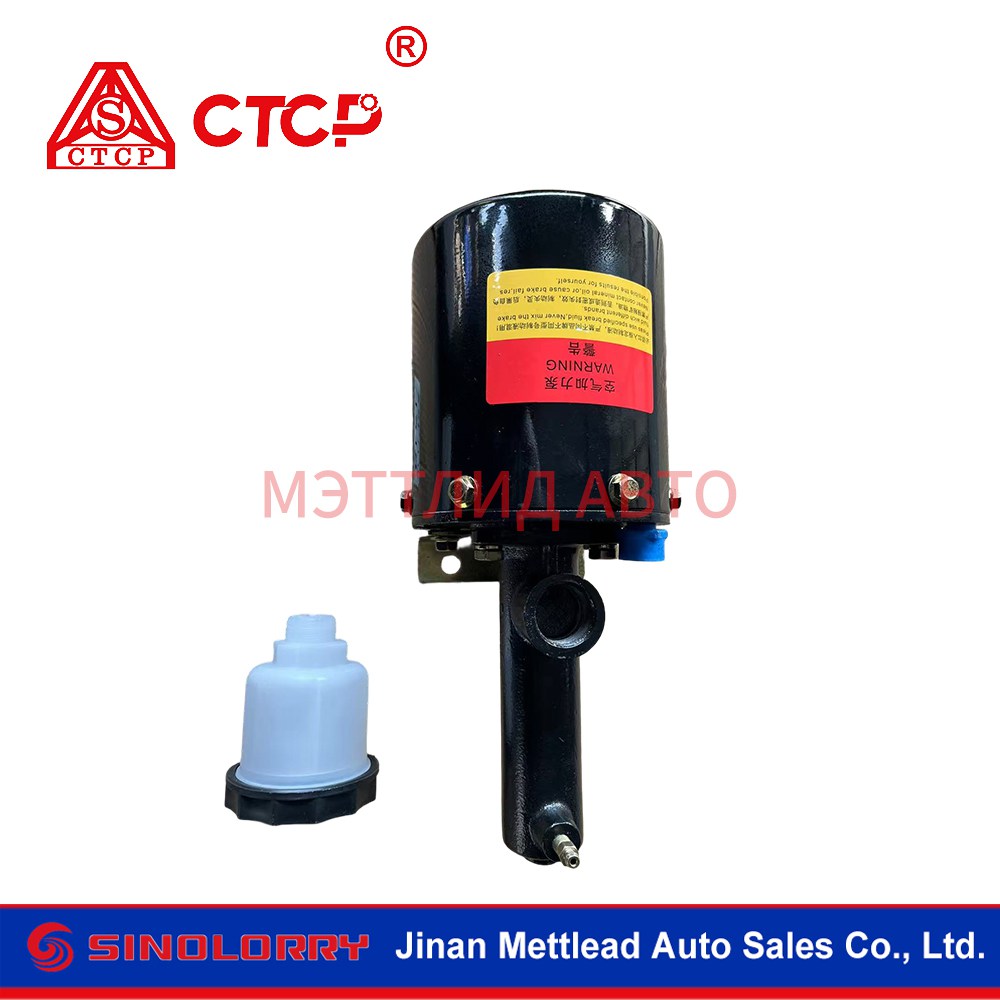
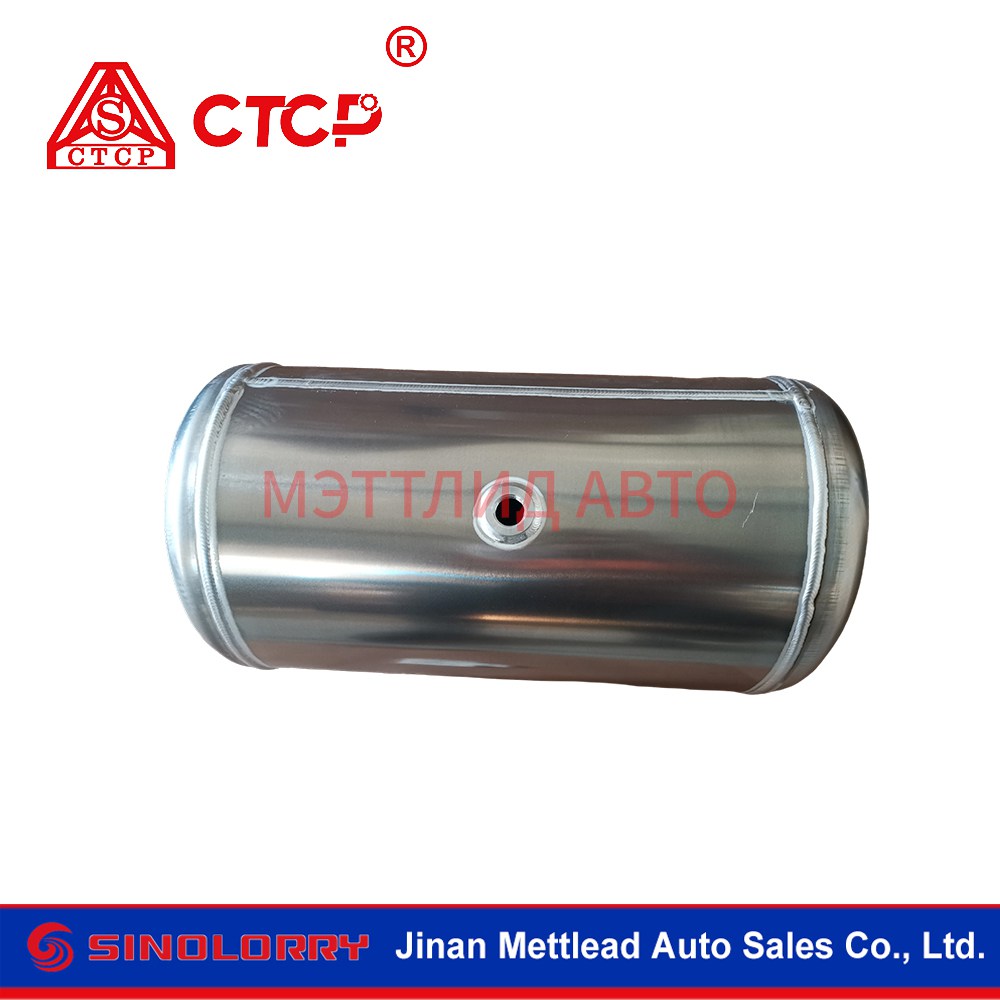
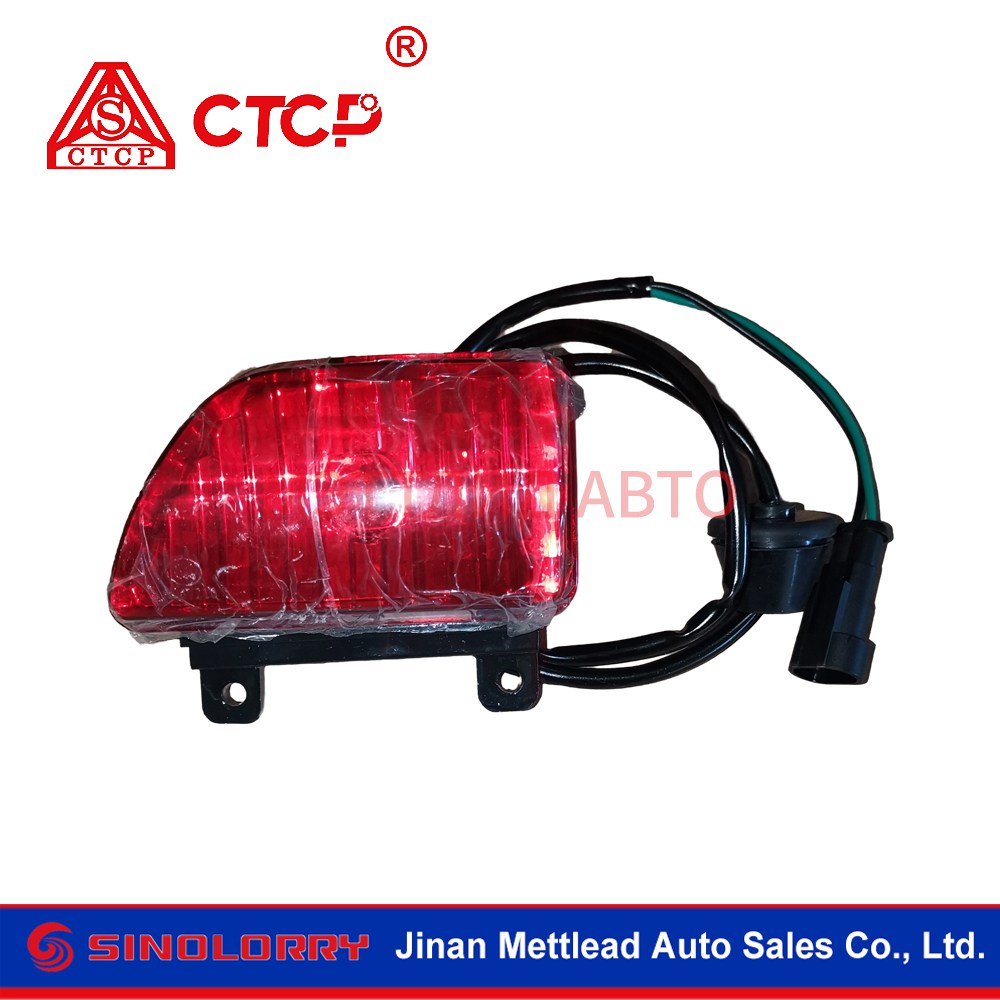
It is important to note here the role of reliable partners in the supply chain. For example,Jinan Metallid Auto LLC- an industrial and trading enterprise based in Jinan, known as the center of auto parts in China, demonstrates an approach close to the philosophy of quality service. The company specializes in the export of original and compatible spare parts for trucks made in China (SITRAK, HOWO, SHACMAN, FOTON, BEIBEN, etc.), strictly adhering to the principle of “quality first.” Their experience shows that multi-level quality control - from checking technical characteristics to final packaging verification - allows us to minimize the risks of product non-conformity. For Russian vehicle fleets that actively use Chinese equipment, cooperation with such suppliers, providing a full cycle from selection to customs clearance, becomes part of the error-free repair strategy.
It is important to remember: not all advice is universal. Always test new methods or parts on one machine before rolling them out across your entire fleet. We once replaced the oil in all our equipment with the new brand recommended in the article, and received a surge in complaints about the noise of the hydraulic compensators. I had to urgently change it back. Now we test new products on 1-2 cars within a month.
Safety and legal aspects of DIY repairs
When talking about truck repairs, safety and legal issues cannot be ignored. In Russia, there are strict standards regarding the technical condition of vehicles (GOST R 51709-2001 and newer regulations of the Customs Union). Independent repairs carried out in violation can lead not only to breakdowns, but also to deprivation of the right to operate the vehicle, fines and, worst of all, an accident with human casualties.
Any blog that claims to be authoritative should remind readers about safety precautions. Working with a pneumatic system under pressure, lifting the cab without insurance, working with acid in the battery - all these are high-risk areas. We insist that every repair manual includes a “Safety Precautions” section.
In addition, changes to the vehicle design (for example, installing non-standard equipment, changing the type of headlights) must be legally documented. Blogs often give advice on tuning, but forget to warn about the need to obtain a permit from the traffic police. Illegal modifications may result in refusal to pass a technical inspection and cancellation of the diagnostic card.
Responsibility for safety lies with the chief engineer and the fleet owner. Using recommendations from the Internet does not relieve you of responsibility for compliance with factory specifications and government standards. Always check that the proposed repair method complies with manufacturer and legal requirements.
Trends 2025-2026: what will change in truck repair
The trucking industry is on the cusp of major changes. Technologies are developing, and approaches to repair are also changing. Here are the main trends we are seeing and which will dominate the next two years.
Increasing complexity of electronics and the need for software.Trucks are becoming more and more digital. Repairs increasingly involve not replacing mechanical parts, but reflashing control units, calibrating systems, and diagnosing software failures. Mechanics will have to learn the skills of IT specialists. Blogs that ignore the topic of software and diagnostics will soon become irrelevant.
Shortage of original spare parts and growth of the market for quality analogues.The geopolitical situation continues to impact supply logistics. This stimulates the development of spare parts production in Russia and Asian countries. There are many new brands emerging, the quality of which varies. Expert blogs play a key role in testing and certifying these products. Trust in independent tests will grow.
Focus on predictive analytics.Telematics systems make it possible to predict breakdowns before they occur. Analysis of data on driving style, loads on units and temperature conditions helps plan repairs in advance. Integrating telematics data with repair recommendations is a new direction for content.
Environmental requirements and repair of exhaust aftertreatment systems.Emissions requirements are becoming stricter. Repair and maintenance of AdBlue systems, diesel particulate filters (DPF) and catalytic converters is an increasingly in-demand skill. Improper handling of these systems can lead to costly breakdowns. Educational content in this area will be extremely important.
Frequently Asked Questions
Can you completely trust advice from renovation blogs?
No, you cannot trust blindly. A blog is a source of other people's hypotheses and experiences. Any recommendation must be verified through the official service manual of your car. Use the blog to find diagnostic directions and understand possible causes, but make your final decision based on the manufacturer's technical data and your own diagnostics.
How to choose a blog that is right for my fleet?
Look for resources that specialize in the makes and models you have. Universal blogs are good for general principles, but the nuances of repairing KAMAZ, Volvo and Foton are very different. Check if the authors have experience working specifically with your technology. Read comments from other users - they often point out mistakes or confirm the effectiveness of advice.
Is it worth trying to repair complex components (fuel pump, automatic transmission) yourself after reading the article?
We do not recommend repairing high-precision components, such as common rail injection pumps or automatic transmissions, in a garage without special bench equipment and a clean area. An assembly error can lead to immediate failure of expensive components. It is better to entrust such work to specialized services, and only carry out diagnostics and replacement of assembled units yourself.
Where can I find reliable information on electrical diagrams?
The most reliable diagrams are found in the official operating manuals and service manuals. On blogs, diagrams are often published with errors or for other modifications. If you are using the diagram from the blog, be sure to check the wire colors and connector pinouts for your specific vehicle using a multimeter before starting work.
Conclusion: knowledge is the main tool of a mechanic
In a world where technology is becoming more complex and repair costs are rising, the ability to quickly and correctly diagnose a problem is becoming a competitive advantage.Famous truck repair blogis not a replacement for qualified personnel and equipment, but a powerful tool for increasing their efficiency. It allows you to learn from the mistakes of others, keep abreast of new methods and technologies, and make informed decisions.
We encourage you to not just consume content, but to actively participate in the professional community. Ask questions, share your experience, criticize unfounded advice. This is the only way we can create an environment in which Russian transport will be serviced at the highest level. Remember: every hour spent studying quality material can save you tens of thousands of dollars and days of downtime in the future.
If you want to dive deeper into specific system diagnostics or are looking for reliable solutions for your fleet, read on. Apply knowledge in practice, record the results and share them with colleagues. Together we raise industry standards.
Find out more about technical solutions for freight transport
Contact us today