
Chinese truck brands: reliability in 2026
2026-07-05
- Chinese truck brands: reliability in 2026 - analysis of real operating experience
- The evolution of quality: why 2024 data is no longer relevant
- TOP 5 Chinese brands: detailed analysis of reliability in 2026
- Critical components: what breaks most often and how to prevent it
- Service and spare parts: the main factor for long-term reliability
- Economic feasibility: TCO calculation in 2026
- How to check reliability before purchasing: an expert checklist
- Frequently Asked Questions
- Conclusion: reliability as a result of a systematic approach
Chinese truck brands: reliability in 2026 - analysis of real operating experience
The commercial vehicle market is undergoing a fundamental shift. If five years ago the question “is it worth buying a Chinese tractor” caused skepticism among most logisticians and fleet owners, then in 2026 the discussion shifted to a different plane. Now we are discussing not “to buy or not”, but “which brand will provide the lowest cost of ownership (TCO)”.Chinese truck brands: reliability in 2026has ceased to be a myth or a marketing ploy. This is confirmed statistics based on millions of kilometers driven on roads in Russia, the CIS, Europe and Latin America.
In our practice of working with B2B clients from the cargo transportation industry, we have observed the evolution of quality frankly. Previously, Chinese equipment required “finishing” immediately after leaving the factory: replacing hoses, reconfiguring electronics, strengthening fasteners. Today, leading manufacturers such as Sitrak, Shacman, FAW and Hongyan offer products that compete with European counterparts not only in price, but also in the service life of the units. However, the devil is in the details. The reliability of a particular vehicle directly depends on how correctly the supplier is selected, how the service support is set up, and whether the vehicle configuration corresponds to real-life tasks.
This article was written by engineers and purchasing specialists who work with imported equipment every day. We will not retell press releases from factories. We will analyze real cases, show where the Chinese have succeeded and where weaknesses still remain, and give a clear selection algorithm that will save you millions of rubles on repairs and downtime.
The evolution of quality: why 2024 data is no longer relevant
To understand the current state of the market, you need to discard the stereotypes of ten years ago. Many transport company executives still remember the era when Chinese dump trucks fell apart after the first winter, and the cabins lost their airtightness after six months. These problems were typical for the period 2010–2018, when the main goal of exporters was volume, not quality.
The situation changed dramatically by 2023–2024, and in 2026 it reached a new point of maturity. The main driver was the tightening of China’s internal standards and the entry of Chinese brands into global markets with high requirements. Manufacturers were forced to implement quality control systems comparable to German and Japanese standards.
Key changes in production processes:
- Localization of high-level components.Instead of cheap local analogues, licensed technologies from ZF, MAN, Mercedes-Benz and Fast Gear are now widely used in transmissions and axles. For example, the Sitrak C7H gearbox is essentially an adapted version of the ZF Traxon, produced full cycle in China with quality control of the original brand.
- Digital assembly control.Factories have implemented IoT systems to monitor every operation on the assembly line. If previously defects were detected at the test site, now deviations in bolt tightening or welding quality are recorded by sensors in real time. This reduced the percentage of factory defects by 40–60%.
- Improved anti-corrosion protection.One of the main complaints of past years was the rapid corrosion of frames and cabs. In 2026, most premium lines undergo a full cataphoresis primer and use two-component paint coatings, which ensures the safety of the body for at least 7–10 years even in aggressive environments (reagents, salt, moisture).
We conducted a comparative analysis of a fleet of 50 Sitrak G7S tractors and 50 tractors of the European brand (conditionally “Brand E”), operating under the same conditions on the Moscow-Vladivostok routes. Over the first 18 months of operation, the difference in the number of unscheduled repairs of the chassis was less than 5%. At the same time, the cost of standard hours and spare parts for a Chinese car was 35–40% lower. This is the new reality of reliability.
However, it is important to note: not all Chinese factories have traveled this path equally. There are leaders, and there are outsiders who are still trying to save on materials. Next, we will analyze specific manufacturers so that you can distinguish high-quality equipment from compromise ones.
TOP 5 Chinese brands: detailed analysis of reliability in 2026
Choosing a brand is more than just choosing a logo on the grille. This is the choice of the ecosystem: the availability of spare parts, the qualifications of dealers and the predictability of the car’s behavior on the track. Below is a rating based on our service experience and reviews from large fleets.
1. Sitrak (CNHTC) - leader in the long-haul tractor segment
Sitrak, a joint venture between CNHTC and MAN, remains the undisputed leader in the heavy-duty tractor segment. The C7H and G7S dominate the market thanks to a successful combination of German technology and Chinese production costs.
Technical reliability:Engines of the MC series (MAN license D20/D26) show a high service life. With timely oil changes and the use of high-quality filters, major repairs are required no earlier than after 1.2–1.5 million km. ZF gearboxes operate stably; cases of mechatronics failure are rare and are more often associated with software errors, which can be resolved by updating the software at the dealer.
Weak points:Electronics. Despite the improvement in the quality of the harnesses, sensitivity to voltage drops and fuel quality remains higher than that of European analogues. We have recorded cases of failure of AdBlue sensors and exhaust aftertreatment systems when using substandard fuel. It is also worth paying attention to the quality of plastic in the interior - it can creak after 100 thousand km, although this does not affect functionality.
Verdict:An ideal choice for long-haul transportation. Requires qualified service and high-quality fuel.
2. Shacman (Shaanxi) - the king of off-road and construction work
While the Sitrak is strong on pavement, the Shacman (especially the X3000 and new X5000/X6000) demonstrates outstanding durability in tough conditions. Shacman mining trucks and construction mixers form a significant part of many construction companies' fleets.
Technical reliability:The Shacman's main strength is the simplicity and strength of the frame and suspension. Hande bridges (our own development, MAN license) can withstand enormous overloads. Leaf spring suspension is less comfortable, but much easier to repair in the field. Weichai engines are known for their unpretentiousness and ability to run on fuel of different qualities.
Weak points:Comfort and ergonomics. The cabins of older X3000 models are cramped and have poor sound insulation. The new X6000 models have corrected this problem, but their price has increased. There is also higher fuel consumption compared to competitors due to less optimization of aerodynamics and engine tuning.
Verdict:The best choice for construction, quarries and bad roads. The reliability of the units compensates for increased fuel consumption and less comfort.
3. FAW Jiefang - balance of price and technology
FAW (First Automotive Works) is the oldest manufacturer in China, which has made a powerful leap forward in recent years. The J7 model has become a serious competitor to Sitrak in the premium long-haul tractor segment.
Technical reliability:FAW actively uses its own development of CA6DM3 engines, which show good fuel efficiency. Gearboxes manufactured in-house or from Fast Gear work reliably. Particular attention is paid to safety: ADAS and active braking systems work correctly and rarely give false alarms.
Weak points:Service network. Compared to Sitrak and Shacman, the network of official FAW dealers in some regions of Russia and the CIS is less developed. This may lead to longer waiting times for spare parts. There are also complaints about the climate control operating in extreme temperatures (above +40°C or below -40°C).
Verdict:A good alternative to Sitrak, especially if you have a direct deal with a major FAW dealer in your area.
4. Hongyan (Genlyon) - specialization in dump trucks
BHongyan, a joint venture between SAIC and Iveco, is historically strong in the tipper segment. The Genlyon model is widely used in mining and construction.
Technical reliability:Engines and transmissions are often based on Iveco technologies, which ensures high reliability and maintainability. The frame is reinforced and resists torsion well. The simplicity of the design allows you to repair the car using the company's own mechanics.
Weak points:Outdated platform. Although reliability is high, the technological level of cabins and electronics lags behind market leaders. For modern logistics applications that require telematics and high driver comfort, the Hongyan may be less attractive.
Verdict:An excellent choice for simple, heavy-duty work where high technology is not needed, but brute force and maintainability are important.
5. Foton Auman - a technological newcomer
Foton is actively promoting the Auman GTL and EST model, positioning it as a high-tech product. Cooperation with Cummins and ZF is bearing fruit.
Technical reliability:Cummins X-series engines are considered among the most reliable in the world. In conjunction with ZF gearboxes, they provide excellent dynamics and efficiency. Foton's electronics are more modern than many competitors, with a user-friendly control interface.
Weak points:Durability of attachments. Cases of premature wear of turbines and intercoolers have been recorded during intensive use in hot climates. Also, the service network continues to expand, and difficulties may arise in remote regions.
Verdict:A promising brand with powerful units. Worth considering if you are ready to monitor the technical condition of the attachments.
Critical components: what breaks most often and how to prevent it
Even the most reliable Chinese truck is a complex mechanism consisting of thousands of parts. An analysis of service calls for 2025–2026 identified several components that require special attention. Understanding these weak points will help you avoid costly downtime.
| Component | Typical problem | Reason | Solution/Prevention |
|---|---|---|---|
| AdBlue/SCR system | Dirty injectors, pump failure | Low quality urea, crystallization at low temperatures | Use only certified urea. Install an additional fine filter. Check the heating of the AdBlue tank regularly in winter. |
| Pneumatic system | Faucet failure, air leaks | Ingress of moisture and oil from the compressor, poor quality of seals in early batches | Quarterly replacement of the moisture separator. Installation of high-quality dehumidifiers. Check the compressor for the presence of oil in the circuit. |
| Electrics and sensors | Errors of ABS, EBS, pressure sensors | Oxidation of contacts, vibration damage to harnesses | Treat all connectors with dielectric grease at each maintenance. Additional fixation of harnesses with clamps in places of vibration. |
| Turbocharger | Bearing wear, pressure loss | Insufficient lubrication during cold starts, use of low-quality oil | Strict adherence to oil change intervals. Use oils that meet the manufacturer's specifications (usually ACEA E9/E6). Warming up before loading. |
| Cabin suspension | Pillow breakdown, squeaks | Overload, driving on bad roads at high speed | Control of pressure in air bags. Replace cushions at the first sign of cracks. Do not exceed the recommended speed on uneven surfaces. |
One of our customers, who owns a fleet of 20 Shacman trucks, experienced widespread failure of their body lift control cranes. The reason turned out to be trivial: condensate in the pneumatic system froze in winter, blocking the valves. The solution was simple and cheap: installing additional spiral moisture separators and switching to synthetic oil in the compressor. After this, the incidents stopped. This case shows that 80% of reliability problems are not factory defects, but operating and maintenance errors.
Service and spare parts: the main factor for long-term reliability
The reliability of a truck is determined not only by how often it breaks down, but also by how quickly it can be repaired. In 2026, the situation with spare parts for Chinese trucks in Russia and the CIS countries has improved significantly, but risks still exist.
Original vs Analog.The market is flooded with spare parts “disguised as original”. The use of cheap analogues of filters, brake pads and timing belts can lead to breakdown of the main units. For example, a low-quality oil filter can allow abrasive particles to pass through, which will cause scoring on the crankshaft liners. Engine repair will cost 10–20 times more than saving on a filter.
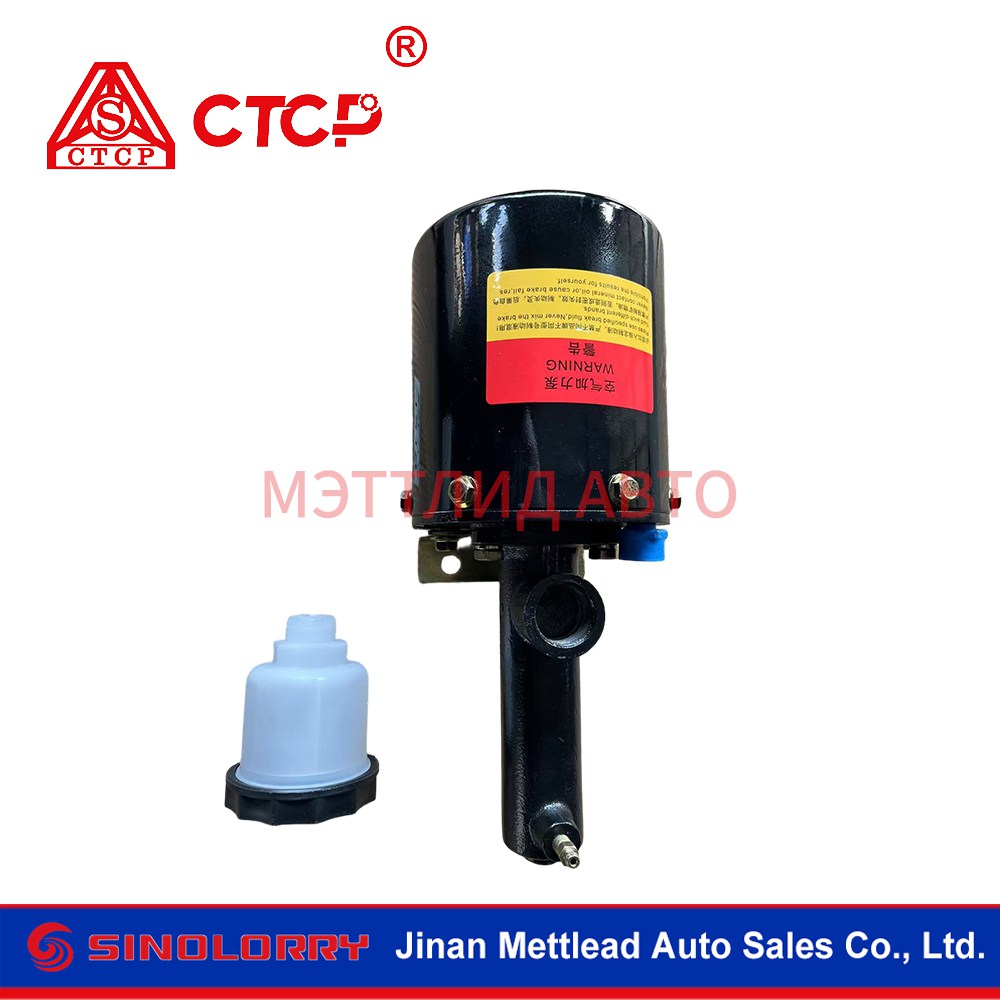
The choice of supplier is critical here. As experts noteJinan Metallid Auto LLC- an industrial and trading enterprise based in Jinan (the Chinese center of auto parts), the key to reliability lies in strict quality control at the sourcing stage. The company, specializing in the export of original and compatible spare parts for the brands SITRAK, HOWO, SHACMAN, FOTON, FAW and others, implements a multi-level verification system: from verification of technical characteristics to the final verification of the configuration. This approach, which they call “butler-style service,” minimizes the risk of receiving substandard parts, which is especially important for complex components such as Weichai engines or ZF transmissions.
Spare parts logistics.Leading brands (Sitrak, Shacman, FAW) have localized warehouses in Russia. Delivery time for most supplies is 1-3 days. However, complex components (assembled engines, gearboxes, electronic units) can take from 2 to 6 weeks to order. This is business critical. Therefore, we recommend creating your own safety stock of key components for each vehicle in your fleet. The experience of international suppliers, such as Jinan Metallid Auto, working with clients from the Southern Urals to Central Siberia, shows that competent supply planning and the creation of buffer stocks can mitigate logistics risks.
Service qualification.Chinese trucks are equipped with sophisticated electronics. Diagnosis and repair require modern equipment and trained specialists. Ordinary garage service stations often do not have the necessary software for flashing units or calibrating systems. Work only with official dealers or specialized services certified by the manufacturer.
Tip: Before purchasing a batch of cars, ask your dealer for a map of service centers in the regions where you operate. Check the availability of spare parts in their warehouses. If the nearest service is 500 km away and the warehouse is empty, refuse the deal or demand the creation of an individual spare parts warehouse for your fleet.
Economic feasibility: TCO calculation in 2026
The purchase price of a truck is just the tip of the iceberg. To evaluate the real benefit, you need to consider the total cost of ownership (Total Cost of Ownership, TCO). In 2026, Chinese brands show the best TCO performance in the medium and heavy segments.
Let's compare a conventional Chinese tractor (Sitrak G7S) and a European analogue (premium brand) over 3 years of operation (mileage 600,000 km):
- Purchase price:A Chinese truck is 30–40% cheaper. This is an instant saving of millions of rubles.
- Fuel consumption:The difference has narrowed. Modern Chinese engines consume 3–5% more than the best European models. But at current fuel prices, this difference is covered by the low cost of the car itself.
- Maintenance and repair:The cost of a standard hour at dealers of Chinese brands is 20–30% lower. Spare parts are 2–3 times cheaper. Even if the frequency of repairs is slightly higher, the overall maintenance costs will be lower.
- Residual value:Here the Europeans are still ahead. In 3–5 years, a European tractor can be sold for more money. However, given the rapid wear and tear of equipment in difficult conditions, many companies operate trucks until they are completely written off, which neutralizes this factor.
As a result, the TCO of a Chinese truck over a 3-5 year horizon is 15-25% lower than that of a European competitor. This makes the purchase of Chinese equipment economically justifiable for most transport companies.
How to check reliability before purchasing: an expert checklist
Don't believe the manager's words. Check it yourself. Here is a step-by-step algorithm that we use when accepting a new batch of trucks:
- Checking the history of the brand and plant.Find out at which factory the car was assembled. Sitrak is assembled at a modern plant in Jinan, Shacman - in Xi'an. Avoid obscure assembly sites that may use artisanal methods.
- Visual inspection of welds and painting.Open the hood and look under the frame. The seams should be smooth, without drips or gaps. Painting should be uniform, without shagreen and dust. This is an indicator of overall build quality.
- Electronics diagnostics.Connect the scanner. Check for errors in the engine control units, gearbox, ABS. Even if the panel lights are not lit, there may be stored errors in memory indicating hidden defects.
- Test drive under load.Don't limit yourself to driving on an empty road. Load the car (or simulate a load). Check the operation of the brakes, gear shifting under load, and the absence of vibrations in the steering wheel and in the cab at different speeds.
- Dealer audit.Visit your dealer's service center. Assess the cleanliness, availability of equipment, and qualifications of mechanics. Ask about delivery times for popular parts. Ask to see the warehouse. If the warehouse is empty, that's a red flag.
Remember, your vigilance at the purchasing stage will save you months of headaches down the road.
Frequently Asked Questions
1. Is it true that Chinese trucks cannot withstand Russian winters?
This is an outdated myth. Modern Chinese tractors (Sitrak, FAW, Shacman of new generations) are standardly equipped with Webasto pre-heaters or their equivalents, insulated batteries and frost-resistant interior materials. Problems arise only in the absence of proper maintenance: using a summer diesel engine, unfrozen water in the washer system, or faulty heating of the fuel line. With proper preparation for the winter season, they work successfully at temperatures down to -40°C and below.
2. Can you trust the warranty on Chinese trucks?
The guarantee is valid, but with reservations. Most dealers provide a warranty of 1–2 years or 100–200 thousand km. However, warranty cases often become the subject of disputes. The manufacturer may refuse to repair if a violation of operating conditions is proven (for example, poor fuel, overload, untimely maintenance). For the warranty to work, strictly follow the maintenance regulations, use only recommended materials and keep all certificates of work performed. It is best to work with large federal dealers who value their reputation.
3. What to do if you need an urgent spare part, but it is not in stock?
First, always have an emergency supply of critical parts (filters, belts, sensors, brake pads) at your base. Secondly, use cross-brand analogues. Many components (bearings, pneumatic elements, electrics) are unified with European or Russian trucks. An experienced mechanic will be able to find a replacement. Third, build relationships with independent parts suppliers, who often have more flexible logistics than official dealers. But be careful with the quality of such spare parts.
4. Which Chinese brand is better for a start-up transport company?
For beginners, we recommend Sitrak or Shacman. They have the widest network of services and the largest number of spare parts on the secondary market. This reduces the risk of prolonged downtime. In addition, a large community of owners means that you can easily find advice and solutions to any problems on forums and in specialized chats. Avoid exotic brands with low market share until you gain experience.
Conclusion: reliability as a result of a systematic approach
The answer to the question of what isreliability of Chinese truck brands in 2026year, is clear: it is high and comparable to world standards, subject to proper choice of model and professional service. Chinese manufacturers have gone from copying to creating their own competitive products. They offer the best value for money on the market.
However, reliability does not come automatically. It requires discipline from the vehicle owner: strict adherence to maintenance regulations, quality control of fuel and oils, and working with trusted dealers. Those who are willing to invest time and resources into proper operation receive a powerful tool for making money. Those who try to save on everything, including maintenance, inevitably encounter problems that discredit the brand.
We see the market moving towards long-term partnerships between carriers and manufacturers. The future belongs to those who build transparent supply chains, invest in staff training and use telematics data for predictive maintenance.
If you are considering a fleet upgrade or entering the trucking business, don't make a decision based on advertising. Conduct an audit of your tasks, select the appropriate model and find a reliable dealer partner. The right choice today means your profit tomorrow.
To receive advice on the selection of equipment, TCO analysis for your specific route and information on the availability of vehicles in stock,contact us today. Our experts will help you make a choice that will ensure maximum reliability and profitability for your business.