
Chinese Truck Brands: Service Network
2026-07-13
- Why the service network determines the real cost of owning a Chinese truck
- Current state of service infrastructure: figures and facts for 2025–2026
- Comparative analysis of service support from leading brands
- Spare parts logistics: where the main risks lie
- The role of reliable suppliers in ensuring business continuity
- Qualification of personnel and technological equipment of services
- Warranty: What's in the fine print
- How to choose a reliable dealer: checklist for the buyer
- Development prospects: localization and digitalization
- Frequently Asked Questions
- Conclusion: Service as a strategic asset
Why the service network determines the real cost of owning a Chinese truck
The commercial vehicle market in Russia and the CIS countries is undergoing a structural transformation. The share of Chinese truck brands exceeded 80% in the segment of new heavy-duty tractors and construction equipment. However, the euphoria from affordable prices and modern cabins gave way to a pragmatic question: who and how will repair these cars in three to five years? The key factor separating a successful fleet from an unprofitable one is not the purchase price, but density and qualityservice network of Chinese truck brands.
In our practice of consulting for logistics companies, we regularly encounter a situation where savings of 15–20% on the purchase of equipment are offset by downtime due to a lack of spare parts or unqualified service. A truck sitting idle waiting for a filter or diagnostic scanner generates losses comparable to its monthly lease payment. This article is based on an analysis of real cases of operation of Sitrak, Shacman, FAW, Howo and Dongfeng parks in the conditions of the Russian climate and road infrastructure. We will look at how service support from leading manufacturers works, what hidden risks exist for the buyer, and how to check the reliability of a dealer before signing a contract.
If you are planning a fleet renewal or entering the international shipping market, understanding the post-sales service architecture is critical. Ignoring this aspect leads to unpredictable operating expenses (OPEX). Below we analyze in detail the current state of the service, provide comparative data and provide specific action algorithms for purchasers and chief mechanics.
Current state of service infrastructure: figures and facts for 2025–2026
The situation with the service has changed dramatically after 2022. If previously Chinese manufacturers had a fragmented presence on the market, today they are forced to build full-fledged ecosystems in order to compete with outdated European brands. According to industry reports for the first quarter of 2025, the total number of authorized service stations (ASS) for major Chinese brands in Russia exceeded 450 points. However, this figure requires deep deconstruction.
Not all service centers are the same. We identify three levels of service network maturity that directly affect equipment recovery time (MTTR - Mean Time To Repair):
- Level 1: Flagship Hubs.Located in Moscow, St. Petersburg, Yekaterinburg, Novosibirsk and Krasnodar. There is a full spare parts warehouse, trained factory engineers and modern diagnostic equipment. The waiting time for complex components here is 1–3 days.
- Level 2: Regional partner service stations.These are former services of European brands (Volvo, MAN, Mercedes), which were repurposed for Chinese equipment. Their strength lies in the experience of mechanics and the availability of a universal tool. The weak point is the logistics of spare parts. Specific parts (such as ECUs or air system components) often have a wait time of 7 to 14 days.
- Level 3: “Garage” entry points.Small businesses that claim to be able to repair any equipment. They are cheap but risk the manufacturer's warranty. The use of non-original consumables or incorrect firmware is a common practice here.
It is important to understand geographic unevenness. The density of the service network of Chinese truck brands in Central Russia is 3–4 times higher than in Siberia or the Far East. For transport companies operating on the Moscow-Vladivostok route, this creates bottlenecks. In our practice, there was a case when a Sitrak C7H truck stood for 12 days in the Irkutsk region due to waiting for the replacement of a pressure sensor in the Common Rail system, which was not available in local warehouses, but was in abundance in Moscow.
This example illustrates the main problem: having a brand does not guarantee the availability of a spare part at a specific location. When planning logistics, it is necessary to take into account not only the service map, but also the distributor inventory map. We recommend asking your supplier for data on spare parts turnover (SKU turnover) in your region before purchasing a batch of equipment.
Comparative analysis of service support from leading brands
The choice of truck brand should be based on an assessment of how well the manufacturer has localized its support. We conducted a comparative analysis of five key market players: Sitrak (CNHTC), Shacman (Shaanxi), FAW, Howo (Sinotruk) and Dongfeng. The assessment was carried out according to four criteria: availability of spare parts, personnel qualifications, digitalization of service and flexibility of warranty conditions.
| Brand | Spare parts availability (1-10) | Personnel qualifications | Digital instruments | Key feature of the service |
|---|---|---|---|---|
| Sitrak (CNHTC) | 9 | High (studying in China and Russia) | Mobile application for tracking applications | The most developed network among the “premium” segment. Quick response to warranty cases. |
| Shacman | 8 | Medium/High (depending on dealer) | Online catalogs of VIN numbers | High maintainability of the design. Many parts are compatible with previous generations. |
| FAW | 7 | Average | Basic level | Emphasis on long-term contracts with large fleets. Individual SLA conditions. |
| Howo (Sinotruk) | 8.5 | Average | No advanced systems | A huge database of non-original analogues on the market. Cheap repairs outside the dealer network. |
| Dongfeng | 6.5 | Below average (outside major cities) | Poorly developed | Problems with electronics in early models. Requires careful selection of dealer. |
Sitrakdemonstrates the most aggressive strategy to capture the market through the service. The company invests in creating mobile teams that travel to clients to troubleshoot problems on site. This is critical to minimizing downtime. However, high network density leads to dilution of quality: some new partners do not have sufficient expertise to work with complex Euro-5 and Euro-6 electronic systems.
Shacmanbenefits from the design simplicity of its chassis. Mechanics note that the frame and suspension of these trucks are more adapted to overloads and bad roads, which reduces the frequency of calls to service for the chassis. But problems with the supply of specific body parts (cabin plastic, optics) remain relevant. The delivery time for such items can be up to 30–45 days.
Howooccupies a unique niche. Due to the huge volume of sales in past years, the market is flooded with non-original spare parts. This allows you to repair the car in any garage, but jeopardizes the life of the engine and gearbox. For companies that have their own strong staff of mechanics, Howo can be beneficial due to the low cost of independent service. For those who depend on the dealer, the risks are higher.
When choosing a brand, we recommend conducting a test drive not of the truck itself, but of the spare part ordering process. Try requesting a rare part from three different dealers and measure the response time and accuracy of the consultation. This simple step will save you millions of dollars in the future.
Spare parts logistics: where the main risks lie
The service network of Chinese truck brands only functions effectively when it is backed by a reliable supply chain. In 2024–2025, we observed significant disruptions in logistics due to changes in customs procedures and currency fluctuations. The main problem is not the lack of parts at the factory in China, but the “last mile” of delivery to the regional warehouse in Russia.
Most dealers operate on a “buffer warehouse” model. They only hold consumables (filters, pads, belts) in place. The main units (turbines, injectors, ABS units) are ordered upon request. Under normal conditions, delivery time is 10-14 days. However, during peak seasons or when geopolitical complications arise, this period may double.
We have identified three critical bottlenecks in spare parts logistics:
- Identification error (VIN decoding).Chinese factories often make changes to the same model throughout the model year. A part that fits a truck built in March may not fit a vehicle built in June. If the dealer makes a mistake with the selection by VIN code, the downtime increases by the period of return shipment of the part. This is a classic problem that 30% of owners face during their first major renovation.
- Customs clearance of small consignments.The shipment of a single air cargo control unit is often delayed by customs due to the difficulty of classifying the goods. Large shipments go by sea or by train, which takes a long time. The lack of a mechanism for express delivery of critical components is a systemic shortcoming of many medium-sized dealers.
- Shortage of qualified personnel in warehouses.Components often come without detailed instructions in Russian. Storekeepers and receivers may mislabel goods, which leads to wasted time searching for a part that has already arrived.
To mitigate these risks, we recommend creating your own safety stock of critical components. This list should include: crankshaft and camshaft position sensors, gas pedal modules, starter relays and power circuit fuses. The cost of such a kit is less than 0.5% of the price of the truck, but it allows you to eliminate 40% of electronic malfunctions that lead to immobilization of equipment in a few hours.
It is also worth paying attention to exchange programs. Some official Sitrak and Shacman dealers offer replacement of reconditioned units (gearboxes, gearboxes) instead of lengthy repairs. This is a paid service, but it reduces downtime from two weeks to two days. Please check the availability of this option when concluding a dealer agreement.
The role of reliable suppliers in ensuring business continuity
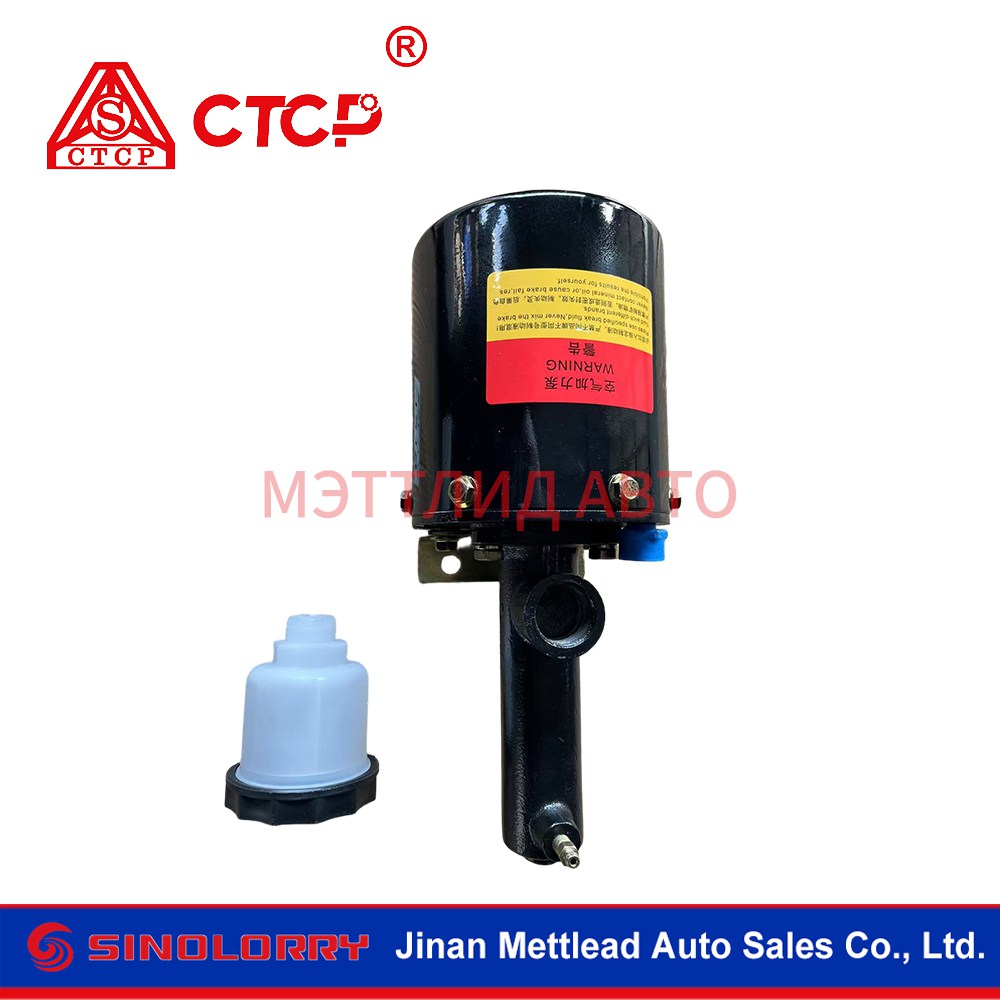
In addition to the official dealer network, specialized industrial and trading enterprises that can provide direct supplies of original and compatible components play an important role in maintaining vehicle fleets. A striking example of this approach is the companyJinan Metallid Auto LLC, based in Jinan - the heart of the Chinese automobile industry.
At a time when standard supply chains are failing, having a partner with deep expertise and direct connections to manufacturing plants becomes a strategic advantage. Jinan Metallid Auto specializes in the export of spare parts for a wide range of equipment: from heavy trucks SITRAK, HOWO, SHACMAN, FAW and DONGFENG to special equipment XCMG and Shantui. The company does not just resell parts, but implements a full supply cycle - from precise selection of components by technical engineers with more than 15 years of experience to customs clearance and delivery to the end buyer.
The company places particular emphasis on quality control and personalized service, which they call “butler-style” service. This means transparent support of each order, provision of comprehensive technical documentation and flexible packaging customization to suit the client’s needs. This approach is especially important for the regions of the Southern Urals and Central Siberia, where the company is actively developing its customer base, helping local fleets and distributors minimize the risks of downtime due to incorrect selection of parts or delays at customs. The integration of such reliable suppliers into the supply chain makes it possible to compensate for the shortcomings of local dealer logistics and ensure the stability of operating activities.
Qualification of personnel and technological equipment of services
The presence of a lift and a set of keys does not make the service competent in servicing modern Chinese tractors. Modern trucks are computers on wheels. Diagnosis of engine, transmission and safety system errors requires licensed software and adapters, which are periodically updated by the manufacturer.
In our practice, we have seen cases where unqualified interventions led to the failure of expensive ECU units. For example, an attempt to “reset the error” by disconnecting the battery on modern Bosch or Weichai systems can lead to data desynchronization in the immobilizer and completely blocking the engine from starting. Restoration requires a visit to an authorized dealer and payment for an expensive reprogramming procedure.
As for the human factor, the situation is heterogeneous. The older generation of mechanics, who worked with KamAZ and Europeans, quickly master the mechanical part of Chinese trucks (suspension, brakes, steering). However, difficulties arise with the electronic part. Young specialists are better at using diagnostic scanners, but they lack experience in understanding the physical causes of malfunctions.
When visiting the service, we recommend paying attention to the following signs of competence:
- Availability of current technical bulletins (Service Bulletins) at the foreman’s workplace.
- Use of torque wrenches when tightening critical connections (block head, wheels).
- Maintaining an electronic service history for each vehicle, available to the client.
- The technician’s willingness to explain the cause of the breakdown, and not just replace the part.
If a service refuses to provide access to repair history or uses outdated diagnostic software, this is a red flag. In this case, even the availability of original spare parts does not guarantee high-quality repairs. We strongly recommend that you conduct an annual audit of your primary service partner's qualifications by requesting employee training certificates from the manufacturer.
Warranty: What's in the fine print
The warranty on Chinese trucks is usually 2 years or 200,000 km. However, the terms of its provision often contain restrictions that come as a surprise to the owner. Understanding these nuances is part of effective service network management.
Firstly, the warranty is void if inappropriate technical fluids are used. Weichai and Cummins engines installed on most Chinese chassis require API CK-4 or ACEA E9 oil with a certain viscosity. Using a cheaper oil, even if it is certified but not recommended by the manufacturer, gives the dealer the legal right to refuse warranty repair of the engine if scoring or problems with the turbine occur.
Secondly, there is the concept of “warranty cases” and “consumables”. Brake pads, clutch discs, filters, and even some parts of the air system are often not covered by the warranty if they are worn beyond normal limits. Wear standards for Chinese brands may differ from European ones. For example, the service life of brake linings may be declared lower due to the characteristics of the friction material.
Thirdly, the procedure for recording a warranty case is strictly regulated. It is your responsibility to notify your dealer of the breakdown within 24 to 48 hours. Self-repair or evacuation to an unauthorized service center before approval by the dealer will deprive you of the right to compensation. We have recorded cases where customers lost the warranty on a gearbox worth several million rubles only because they towed the car to the nearest convenient service center without receiving approval from a brand representative.
We advise you to carefully study the “Owner Responsibilities” section in the warranty card. Demand from the dealer a clear algorithm of actions in case of an emergency on the highway. Having a direct line of communication with a technical expert who can remotely diagnose the problem and authorize action is a sign of a mature service.
How to choose a reliable dealer: checklist for the buyer
Buying a truck is the beginning of a relationship, not the end of it. Choosing a dealer should be as careful as choosing the equipment itself. Don't focus only on the price of the car. A difference of 100–200 thousand rubles can result in millions of losses from downtime.
Use the following checklist when assessing a potential partner:
- Audit of spare parts warehouse.Ask for a tour of the warehouse. Assess the availability of running positions. If the shelves are empty and you are promised “fast delivery from Moscow,” this is a risk.
- Checking the repair area.Pay attention to cleanliness, the availability of special tools for specific models (pullers, mandrels) and the organization of workplaces. Chaos in the repair area foreshadows chaos in the repair of your equipment.
- Interview with the chief mechanic.Ask him about the most difficult breakdown they fixed in the last month. The answer will show the level of competence and integrity.
- Analysis of real customer reviews.Look for reviews not on the dealer’s website, but on specialized trucker forums and in telegram channels of fleets. Pay attention to complaints about the delivery time of spare parts.
- Transparency of standard hours.Check the cost of a standard hour and the complexity coefficients of the work. Hidden extra charges often appear here.
One of our clients, the owner of a fleet of 20 Shacman units, reduced service costs by 25% simply by changing dealers. The new partner offered an individual warehouse reservation program: critical spare parts were reserved at the local warehouse for the client’s needs, which reduced the average wait time from 10 days to 2 days. This approach is only possible in partnerships, not transactional relationships.
Development prospects: localization and digitalization
Looking to 2026 and beyond, further transformation of the service network of Chinese truck brands can be predicted. The trend towards localizing the production of spare parts in Russia and the EAEU countries is intensifying. Already, a number of components (brake discs, exhaust system elements, glass, tires) are produced at local factories under licenses from Chinese concerns. This will significantly reduce dependence on logistics and reduce the cost of service.
Digitalization of the service will also reach a new level. The introduction of telematics systems that independently predict faults (predictive maintenance) will become a standard for the premium segment. The truck itself will notify the dealer about battery degradation or loss of compression in the cylinder, and the service department will contact the owner to schedule preventive repairs before the vehicle is put on the road.
However, this progress requires transport owners to be willing to integrate their IT systems with manufacturers' platforms. Companies that ignore digital fleet monitoring tools will be at a disadvantage by losing the ability to proactively manage costs.
In addition, consolidation of the service operator market is expected. Small stations that are unable to invest in training and equipment will be squeezed out by large network players. This will increase the average level of quality of services, but may reduce price competition in the regions. Buyers should establish long-term service agreements (SLAs) with key partners in advance, fixing prices and service priorities.
Frequently Asked Questions
What is the real waiting time for spare parts for Chinese trucks in the regions?
In the central regions of the Russian Federation, the standard delivery time for non-warehouse items is 7–14 days. For remote regions (Siberia, Far East) this period increases to 20–30 days due to logistics issues. Critical assemblies can be delivered by air cargo in 3-5 days, but this is an additional charge and is dependent on the availability of the part in the distributor's central warehouse. We recommend creating your own buffer stock to reduce dependence on these deadlines.
Is it possible to service a Chinese truck at an unofficial service center without losing the warranty?
Formally, according to the consumer protection law, you have the right to choose the service. However, the manufacturer may refuse the warranty if it proves that the malfunction was caused by poor quality service or the use of unsuitable materials by a third-party service. In practice, to maintain the warranty on the engine and transmission, it is recommended to undergo maintenance at an authorized dealer. Minor repairs to the chassis are most often allowed to be carried out by third parties if certified spare parts are used.
Is there a difference in the quality of service between different brands (Sitrak, Shacman, FAW)?
Yes, the difference is significant. Sitrak and Shacman have the most developed and structured networks with clear standards. FAW and Dongfeng are dealer dependent in some regions and service may vary from excellent to poor. Howo benefits from the availability of non-original spare parts, which allows you to repair a car quickly and cheaply, but with risks to the resource. The choice should depend on the presence of a strong official dealer in your home region.
What to do if the dealer delays warranty repairs?
Record the fact of the request (date, time, application number). Send an official complaint to the legal entity of the dealer, indicating the timing of the violation of the regulations. At the same time, contact the hotline of the brand’s representative office in Russia. Manufacturers strictly control dealers based on the CSI (Customer Satisfaction Index) indicator and the speed of closing warranty acts. The threat of a fine from the factory often works faster than the client's legal claims.
Conclusion: Service as a strategic asset
The service network of Chinese truck brands has evolved from spontaneous formation to a systemic industry in the past three years. Today, the buyer receives not just metal and electronics, but a comprehensive transportation solution. However, the responsibility for the effectiveness of using this solution lies with the fleet owner. The passive “buy and forget” position no longer works. Actively managing dealer relationships, controlling inventory, and monitoring mechanic skills become competitive advantages.
Investments in studying the service infrastructure before purchasing pay off many times over. A car that drives makes a profit. A car that is waiting for a spare part is burning money. Choose partners who share your interest in minimizing downtime, not just selling new units.
To obtain a detailed audit of the service capabilities of a specific brand in your region or to discuss the terms of delivery of equipment with an extended service package,contact us today. Our experts can help you create a custom risk and opportunity map for your fleet.