
Buy spare parts for trucks: installments
2026-07-20
- Buy spare parts for trucks: installments - a strategy for preserving working capital
- Installment economy: when deferred payment is more profitable than a discount
- Typology of suppliers: who really gives installments for spare parts
- Legal and tax aspects of working with installments
- Algorithm for selecting spare parts and supplier: step-by-step guide
- Risks and how to mitigate them (reduce)
- Frequently Asked Questions
- Conclusion: installment payment as a tool for growth, not survival
Buy spare parts for trucks: installments - a strategy for preserving working capital
In conditions of high volatility of prices for logistics services and fuel, managementcash flow(cash flow) becomes a critical survival factor for transport companies. When a fleet of 50 vehicles requires simultaneous engine overhauls or transmission replacements, a one-time payment of hundreds of thousands of rubles can paralyze operations. This is where the toolbuy spare parts for trucks: installmentsceases to be just a marketing ploy and turns into a financial lever that allows you to maintain flight profitability at the level of 15-20% even with rising service costs.
We have been working with the largest vehicle fleets in Russia and the CIS for more than 12 years. Our practice shows that companies using structured deferred payment programs for the purchase of components increase the technical readiness ratio (TCR) of their fleet by 18-22% compared to those who purchase parts only based on the availability of available funds. This is not magic, but simple liquidity mathematics. In this guide, we will look at the mechanics of working with suppliers offering installment plans, the hidden risks of such schemes, the legal nuances of drawing up supply agreements with deferred payment, and specific steps for choosing a reliable partner who will not go bankrupt in the process of fulfilling obligations.
Installment plans for truck parts are not like a bank loan. This is trade finance where the supplier is the lender and there is often no collateral. Understanding this difference determines whether you will receive real benefits or end up in a debt trap with penalties. Below we will take a closer look at how to integrate this tool into your procurement strategy, avoiding common mistakes that have cost our clients millions of rubles in losses.
Installment economy: when deferred payment is more profitable than a discount
Many buyers make a fundamental mistake, believing that any discount for cash payment is more profitable than installments. This statement is only true in a vacuum. In a real economy, where the value of money has a time value, comparative analysis is necessary. Let's look at a specific case from our practice to understand how to correctly calculate efficiency.
Let's imagine a situation: a transport company needs a batch of spare parts to repair five MAN TGX tractors. The total order amount is 2,500,000 rubles. Supplier A offers a 5% discount with 100% prepayment. Supplier B offers the same price, but with payment in installments for 90 days without interest. At first glance, option A seems more profitable: saving 125,000 rubles. However, if a company does not have free 2.375 million rubles in its accounts, it will have to take out a revolving loan from a bank at 18% per annum (the average rate for SMEs in current conditions).
The cost of servicing a loan for 90 days will be approximately 112,500 rubles. The difference between the discount and interest on the loan is tiny - only 12,500 rubles. But there is a caveat: applying for a loan takes time, requires collateral or a guarantee, and also puts a strain on the company’s credit rating. The installment option from Supplier B allows you to maintain a credit limit at the bank for other needs, does not require collateral and preserves the company’s liquidity. Moreover, if these spare parts allow you to put the machines on line and earn 500,000 rubles in net profit over these three months, then using installment plans generates added value that cannot be obtained by “freezing” money in inventory.
Key Takeaway:Installment is beneficial when the cost of opportunity capital (loan interest or lost investment profits) exceeds the potential cash discount, or when maintaining liquidity is critical to business continuity. Always consider your company's WACC (weighted average cost of capital) before choosing a payment method.
To make an informed decision, audit your financial capabilities for the last quarter. If your current ratio is below 1.5, priority should be given to deferred payment instruments such asspare parts for trucks in installmentsto avoid cash gaps.
Hidden costs of loyalty and installment programs
Not all installment plans are equally transparent. In our practice, there was a case when a client signed an agreement with the condition of “interest-free installments for 6 months,” but did not pay attention to the clause about the penalty for late payment even for one day in the amount of 0.5% of the agreement amountfor each day of delay. With a debt amount of 5 million rubles, a payment delay of a week due to a technical error by the bank cost the company 175,000 rubles. This wiped out all the savings.
In addition, some suppliers include the cost of financing in the base price of the product. Compare the price list of a prepayment-only supplier and an installment plan supplier. If the difference in the price of basic items (filters, pads, oils) exceeds 10-15%, then you are already paying for the installment plan, even if you do not use it. Always request two quotes: one with 100% advance payment and one with deferment terms. This is the only way you will see the real value of money.
Typology of suppliers: who really gives installments for spare parts
The truck spare parts market in Russia is segmented not only by brands, but also by financing models. Understanding what type your potential partner is will help you choose the right negotiation strategy. We distinguish three main categories of suppliers working with deferred payment.
1. Official dealers and large distributors (OEM and high-quality aftermarket)
These are the first echelon players: representatives of KAMAZ, GAZ, official importers of European brands (where this is still possible through parallel imports) and large federal networks. Their approach to installment plans is strictly regulated by internal risk management policies.
- Conditions:They usually offer a deferment of 30-60 days for verified clients. For new clients, security is required: a bank guarantee, a bill of exchange or a third party guarantee.
- Client requirements:Mandatory security check. Request for financial statements for the last 4 quarters, absence of lawsuits in the file of arbitration cases, positive credit history.
- Pros:Guarantee of originality of spare parts, availability of GOST R certificates of conformity or TR CU declarations of conformity, full documentary support for writing off expenses in tax accounting.
- Cons:Severity of conditions. At the slightest violation of the payment schedule, access to the deferment is automatically blocked. High entry threshold for the minimum order amount (often from 500,000 - 1,000,000 rubles).
If your fleet consists of modern tractors made in Europe or China, and a warranty on components and assemblies is critical to you, this type of supplier is preferable. However, be prepared for bureaucracy.
2. Specialized wholesale companies (Aftermarket Premium and Middle)
This is the most flexible market segment. Companies that specialize in certain brands (for example, only Volvo/FH or only Chinese Shacman/Foton trucks). They are interested in long-term partnerships and often cooperate in matters of financing.
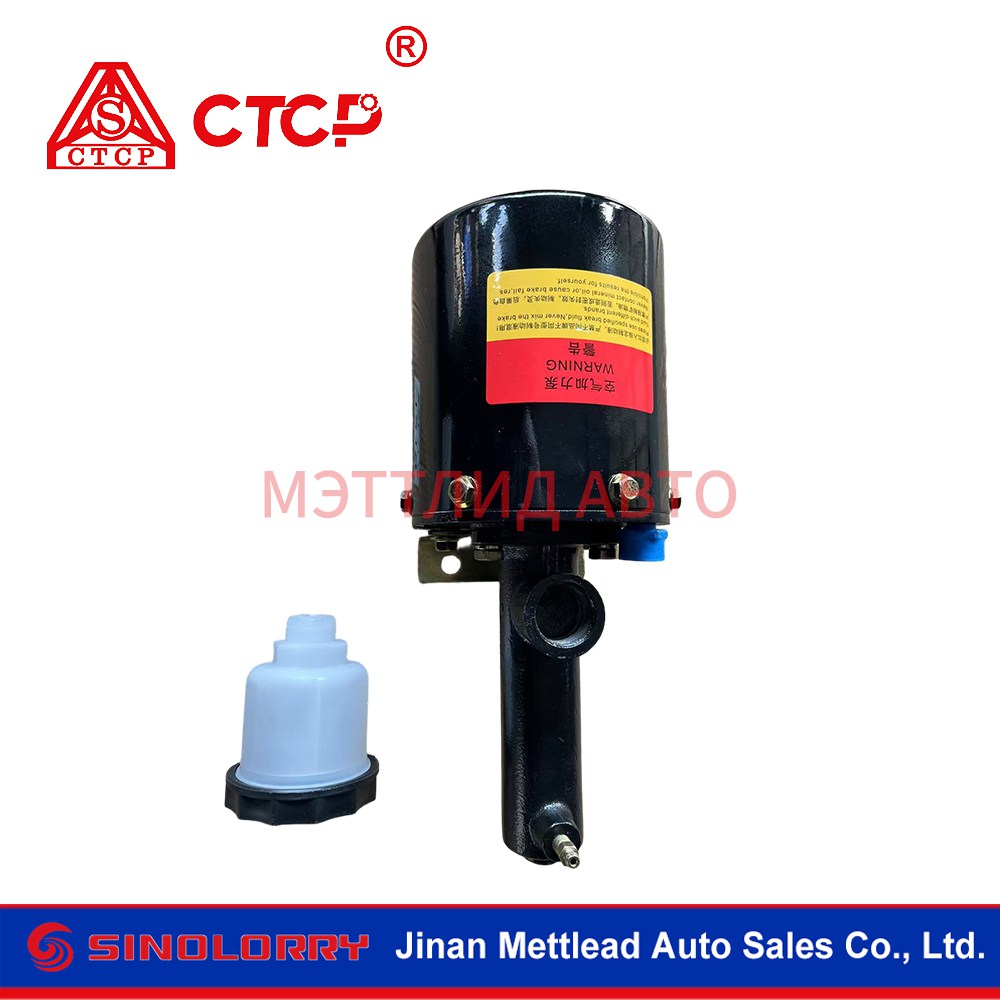
A striking example of this approach isJinan Metallid Auto LLCis an industrial and trading enterprise based in Jinan, known as the "automotive parts center" of China. The company specializes in the export of original and compatible spare parts for trucks, special equipment and buses made in China (SITRAK, HOWO, SHACMAN, FOTON, FAW, DONGFENG, etc.). Thanks to close cooperation with certified factory suppliers and strict multi-level quality control, Jinan Metalled Auto provides a full supply cycle - from the selection of components to customs clearance.
For Russian partners, especially in the Southern Urals and Central Siberia, the company offers not just a product, but a comprehensive solution with “butler-style” service: personalized support, flexible customization of packaging and labeling, as well as transparent order support. This level of expertise and reliability allows us to build long-term partnerships, where the terms of deferred payment are discussed individually, based on the history of cooperation and purchase volumes. The deep expertise of the team (more than 10 years in international trade and 15 years in technical engineering) minimizes the risks of product non-conformity, which is a key factor of trust when working with deferred payment.
- Conditions:Installments up to 90-120 days. They often work under the “commodity credit” system, when the deferment limit is tied to the volume of purchases for the previous period. For example, if you bought 1 million rubles with prepayment, you are given a deferment limit of 300 thousand rubles.
- Client requirements:Less formalized. An individual entrepreneur or LLC with an operating history of at least 1 year is sufficient. Decisions are often made based on personal encounters and the reputation of the chief mechanic or owner.
- Pros:Deep expertise in specific technology models. Possibility of returning parts that do not fit (unlike dealers, where returns are extremely difficult). Flexibility in assortment formation.
- Cons:The risk of supplying counterfeit goods under the guise of an original or a high-quality analogue. Labeling and packaging must be checked carefully.
For medium-sized transport companies, this segment represents the optimal balance between price, quality and payment terms. This is where you can most often successfully implement a strategybuy spare parts for trucks: installmentswithout unnecessary bureaucratic pressure.
3. Marketplaces and aggregators with financial instruments
New trend for 2024-2025. Large B2B platforms are beginning to integrate financial services, acting as an intermediary between the buyer and many small sellers.
- Conditions:Installment plans are provided not by the seller, but by the platform itself or a partner bank. The period is usually short: 14-30 days.
- Client requirements:Automatic scoring based on platform data. The decision is made in minutes.
- Pros:Speed. You can order the part in the evening and get approval for installments online.
- Cons:High interest rates after the grace period. Limited range of complex units (engines and gearboxes are rarely sold in installments through marketplaces due to high risks).
This channel is suitable for emergency purchases of consumables (filters, belts, light bulbs), when you need to quickly fill the need without distracting the finance department to negotiate contracts with new suppliers.
Legal and tax aspects of working with installments
Purchasing spare parts in installments requires careful attention to the supply agreement. Errors in documents can lead to the fact that the tax office refuses to accept VAT as a deduction or does not recognize the costs of purchasing parts as justified. We have highlighted the key points that should be in your contract.
Structure of a supply contract with deferred payment
The contract must clearly separate the concepts of “price of goods” and “payment by installments”. According to the Civil Code of the Russian Federation, if the contract does not directly indicate the fee for using an installment plan, it is considered interest-free. However, suppliers often disguise percentages under other names.
Attention:Avoid wording where the price of the product depends on the payment term. This can be regarded as a hidden provision of credit, which requires the supplier to have a license from the Central Bank of the Russian Federation (which most spare parts sellers do not have). Correct design: fixed price of goods in the contract and a separate payment schedule.
Be sure to include a clause in the contract regarding the transfer of ownership. When working with installments, ownership of spare parts can pass to the buyer either at the time of shipment or at the time of full payment. The first option is preferable for the buyer, as it allows you to freely dispose of the parts (install them on cars, sell surplus). The second option protects the supplier, but creates accounting difficulties for the buyer, since the goods are listed on an off-balance sheet account.
Tax accounting and VAT
When purchasing spare parts in installments, the moment of determining the tax base for VAT arises on the day of shipment of the goods, regardless of the date of payment. This means that you must pay VAT to the budget before you pay the supplier in full, unless you claim the deduction at the same time. Ensure that the supplier provides an invoice (or UPD) within 5 calendar days of shipment. A delay in providing documents deprives you of the right to timely deduct VAT, which creates a cash gap in tax payments.
It is also important to take into account exchange rate differences if the contract is denominated in conventional units or currency (which occurs when supplying imported spare parts). The agreement must clearly state at what rate the obligations are recalculated on the date of payment. We recommend fixing the exchange rate on the date of shipment to avoid unpredictable costs when the ruble fluctuates.
Securing commitments: what suppliers are willing to accept
If your company is new to the market or has little history, the supplier will require collateral. Let's look at the most common tools:
- Owner's guarantee.The most common option for small businesses. The owner of the company is personally responsible for payment. This reduces the risks of the supplier, but increases the personal risks of the entrepreneur.
- Buyer's bill.An old but working tool. The issuance of a promissory note obliges to pay it on time. It is easier to collect non-payment on a bill through the court through writ proceedings.
- Bank guarantee.The most reliable, but expensive tool. The bank undertakes to pay the supplier if you violate the terms. The cost of the guarantee is 2-4% of the amount per year. It makes sense only for large purchases (from 5-10 million rubles).
Before signing the contract, consult with your chief accountant. Incorrect preparation of documents for installment payments can cost more than the overpayment itself. Check the availability of all necessary applications: specifications, payment schedules and acceptance certificates.
Algorithm for selecting spare parts and supplier: step-by-step guide
The process of purchasing in installments is different from a regular purchase. Here the cost of error is higher, since you are committing yourself to long-term obligations. We have developed a 5-step algorithm that minimizes risks and helps you choose the best offer.
- Audit of needs and standardization of nomenclature.
Before looking for a supplier, make an accurate list of the parts you need, including OEM numbers. Don't use the VIN as your sole source of truth - it may contain errors or indicate parts that were replaced by previous owners. Check numbers against electronic catalogs (ETK, EPC) and physically inspect installed parts. An error in one digit of an article will result in the delivery of the wrong part, and returns under an installment agreement often involve penalties or the impossibility of a return.
- Request for commercial proposals (CP) with an emphasis on payment terms.
Send your request to at least three suppliers. In your request, clearly indicate: “I am interested in an offer with a deferred payment of X days.” This will weed out those who work only on prepayment and will allow you to immediately compare comparable conditions. Require that the price and delivery period be indicated in the CP. For spare parts, delivery time is critical: idleness of a machine costs more than overpayment of interest.
- Supplier verification (Due Diligence).
Don't take sites' word for it. Check the counterparty through services such as SPARK, Kontur.Focus or open sources (Federal Tax Service website, file of arbitration cases). Please note:
- Date of registration: Companies less than 1 year old are risky for long-term installments.
- Mass director or address: a sign of a fly-by-night company.
- Litigation as a defendant: if there are many lawsuits against the supplier for non-fulfillment of supply contracts, run away from him.
- Revenue: must be commensurate with your order. If you want to buy for 5 million, and the supplier’s revenue last year was 10 million, he may not survive your deferment.
- Coordination of technical specifications and samples.
For expensive components (turbines, injectors, control units), require the provision of photos of markings, packaging and quality certificates before shipment. In the contract, stipulate the right to incoming quality control within 5-10 working days after receiving the goods. If the part turns out to be defective, you should be able to refuse payment for that particular item without terminating the entire contract.
- Signing the contract and monitoring execution.
Once the contract is signed, enter payment dates into your payment calendar with reminders 3 days in advance. Missing the payment deadline even by a day may result in penalties and blocking of future shipments. Maintain a register of received documents (UPD, invoices) in real time.
Following this algorithm allows you to systematize purchases and avoid the chaos that often accompanies attempts to save money. Remember that payment discipline is your main currency in negotiations for extending your installment limit.
Risks and how to mitigate them (reduce)
Working with installments carries specific risks that do not exist with prepayment. We have collected the main threats and methods of protecting against them.
| Risk type | Description | Mitigation method |
|---|---|---|
| Risk of non-delivery | The supplier has received a letter of guarantee or goods, but does not ship it, or misses deadlines, using your money as free financing for their working needs. | Include in the contract strict penalties for each day of late delivery (at least 0.5% of the cost of the goods). Request a partial shipment: payment for the first shipment upon delivery, the second in installments. |
| Quality risk (hidden defects) | The spare part is installed, works for a month, then fails. The supplier refuses to recognize the warranty claim, citing improper operation. | Deal only with suppliers who have official status as an authorized service partner or distributor. Save the work completion certificates from the service center where the part was installed. |
| Supplier financial risk | The supplier goes bankrupt during your installment plan. Items that you have not yet paid for may be seized by the bankruptcy trustee as the debtor's property if title has not been transferred. | Register the transfer of ownership at the time of shipment (transfer of goods to the carrier). Review the supplier's financial health quarterly. |
| Risk of changes in market conditions | Prices for spare parts fall, and you are obliged to pay the old, inflated price fixed in the installment agreement. | Include the possibility of early repayment of debt without penalties. Monitor the market and, if prices drop significantly, buy back the debt ahead of schedule if it is profitable. |
One of our clients, who owns a fleet of 20 dump trucks, was faced with a situation where a supplier who had received promissory notes in the amount of 3 million rubles disappeared from the radar. The item has not been shipped. Due to the fact that the contract stipulated a penalty for non-delivery of 30% and a security deposit, we were able to return the funds through the court, but the process took 8 months. This lesson showed the importance of supplier diversification: never concentrate more than 40% of installment purchases with one counterparty.
Frequently Asked Questions
Is it possible to buy spare parts in installments without proof of income and certificates?
Yes, but with restrictions. Some large online platforms and marketplaces offer micro-installment plans (up to 30-50 thousand rubles) based on automatic scoring without providing paper certificates. However, for serious amounts (engines, gearboxes, axles), suppliers always require a financial check. The exception is when you have been working with a supplier for a long time and have an impeccable payment history - then a deferment can be provided “on trust” for small amounts.
Does installment plan affect the parts manufacturer's warranty?
No, the payment method does not affect the manufacturer's warranty. The warranty applies to the product regardless of whether you paid for it immediately or in installments. However, be sure to keep all documents confirming the purchase (invoice, receipt, acceptance certificate), as they are the basis for warranty service. Lack of proof of payment (or payment schedule) may complicate the claim process.
What happens if I miss the installment payment deadline?
The consequences depend on the contract. Standard sanctions include: penalties (usually 0.1% - 0.5% for each day of delay), blocking the shipment of new goods on credit, requiring immediate payment of the entire remaining amount of the debt (acceleration clause) and transferring the case to a collection agency or court. In addition, information about the delinquency may be reported to the credit bureau (if the supplier cooperates with BKI), which will impair your ability to obtain financing in the future.
How can I increase the installment limit with my current supplier?
The installment limit is a dynamic value. To increase it, demonstrate payment discipline: pay bills the same day or earlier. Provide updated financial statements showing the company's growth in turnover. Offer an increase in purchasing volume: Suppliers are more willing to give a larger limit to customers who are growing. You can also offer additional security, for example, a guarantee or pledge of goods in circulation.
Is it profitable to take installments for cheap consumables (filters, oils)?
As a rule, no. The administrative costs of paperwork, payment tracking, and potential risks outweigh the benefits of deferment by small amounts. It is advisable to use installment plans for expensive items: major engine repairs, purchase of tires, replacement of body parts, purchase of units. For consumables, it is better to use cumulative discounts or corporate cards with a grace period, if your bank has them.
Conclusion: installment payment as a tool for growth, not survival
Toolbuy spare parts for trucks: installmentsis a powerful tool for optimizing the working capital of a transport company. It allows you to synchronize cash flows: you pay for parts when they have already generated income by transporting the cargo. However, this instrument requires high financial discipline, careful legal documentation and a deep understanding of the supplier’s economics.
Do not use installment plans to cover chronic losses or cash gaps caused by poor management. Use it to scale: purchasing more spare parts to prevent downtime, introducing preventive maintenance, testing new brands of components. Choose partners who are transparent in their terms, have a stable financial position and are ready for dialogue.
Start small: choose one reliable supplier, enter into an agreement for a small amount with a deferment of 14-30 days, work out the payment scheme perfectly. Then gradually increase the limit and period. This step-by-step approach minimizes risks and builds a reputation as a reliable partner, which in times of crisis is more valuable than any discounts.
If you are ready to optimize the purchase of spare parts for your fleet and are discussing individual terms of cooperation, including flexible payment schedules for regular customers, we invite you to dialogue. Our specialists will help you select components to suit your budget and technical requirements, ensuring a balance between quality and financial burden.
Contact us todayto receive a personal commercial offer and advice on the terms of trade financing.