
Sale of spare parts for forklifts: leasing
2026-07-15
- Sale of spare parts for forklifts: leasing as a strategy for optimizing costs for warehouse equipment
- Why parts leasing is becoming standard in 2026
- Technical aspects: what spare parts can be leased
- Comparison of financing models: Leasing vs. Loan vs. Purchase
- Step-by-step guide: how to arrange leasing for forklift parts
- Risks and how to avoid them: the experience of practitioners
- How to choose a spare parts supplier for a leasing scheme
- Frequently Asked Questions
- Conclusion: Take a step towards effective resource management
Sale of spare parts for forklifts: leasing as a strategy for optimizing costs for warehouse equipment
In modern logistics, a downtime forklift costs more than the part itself. When a hydraulic pump fails during peak seasonal demand, a company loses not only repair time, but also contracts. The traditional model of purchasing spare parts “on the basis of breakdown” or creating huge warehouse stocks “just in case” has ceased to be cost-effective. The market is changing. More and more warehouse managers and chief engineers are paying attention to hybrid financial instruments. The key request today is not just the purchase of metal and rubber, but cash flow management. This is where the game changing theme comes in:sale of spare parts for loaders: leasing.
This approach turns operating expenses (OPEX) into predictable payments while maintaining business liquidity. In our practice of working with industrial enterprises in Russia and the CIS, we observe a stable trend: companies using leasing schemes to provide spare parts reduce cash gaps by 30-40% compared to those who purchase parts for a one-time payment. But this tool has its own nuances, risks and technical requirements. In this article we will look at how leasing of spare parts works, why it is profitable now, in 2026, and what pitfalls await an unprepared buyer.
Why parts leasing is becoming standard in 2026
The economic situation dictates new conditions. The high cost of borrowed capital and stringent requirements of banks for lending to small and medium-sized businesses are forcing them to look for alternatives. Spare parts leasing is not a new service, but its widespread use in the MRO (Maintenance, Repair, and Operations) segment began relatively recently. Previously, only the equipment itself was leased: forklifts, reach trucks, stackers. Spare parts were considered too small an asset for financial companies. The situation has changed thanks to the digitalization of accounting and the emergence of specialized leasing products for industrial needs.
The main advantage is the speed of VAT refunds and tax benefits. With the classic purchase of spare parts, the company freezes working capital. When leasing, payments are charged to the cost of production, which reduces the tax base for income tax. For businesses with high margins, this is critically important. We have seen cases where the difference in tax burden between purchase and leasing was up to 25% of the contract amount for the year. These are not theoretical calculations, but real figures from the accounting reports of our clients.
In addition, inflation plays into the hands of the lessee. By fixing a payment schedule today, you pay in the future with “depreciated” money. If the lease term is 12–24 months, the real cost of each subsequent payment decreases in proportion to the rate of inflation. In conditions of instability of exchange rates, this serves as a natural risk hedge. However, it is important to understand: leasing is profitable only if the transaction is structured correctly. Errors in choosing the leased item or payment schedule can eliminate all savings.
Another factor is access to original components. Forklift manufacturers such as Toyota, Linde, Jungheinrich, Komatsu, as well as Chinese heavy equipment market leaders XCMG, Shantui, SDLG and Liugong, often require advance payment or have long delivery times for new customers. Leasing companies, having a large volume of purchases, can act as demand aggregators, ensuring priority shipment of spare parts. For the chief engineer, this means reducing equipment downtime from 3 weeks to 3-5 days. Time is money, and in warehouse logistics this formula works without exception.
Technical aspects: what spare parts can be leased
Not all parts are suitable for the leasing scheme. Finance companies and suppliers usually set certain criteria for leased items. The basic principle: the part must have clear identification, long service life and high value. Consumables such as filters, oil or brake pads are rarely the subject of a separate lease agreement due to low cost and rapid wear. They are usually included in service contracts or purchased in bulk.
The most popular categories of spare parts for leasing:
- Engines and transmissions.Overhauling or replacing the internal combustion engine (ICE) on diesel forklifts is an expensive procedure. The cost of a new engine can reach 30-50% of the price of a new car. Leasing such a unit allows you to spread the costs over 12-24 months, comparing payments with the productivity of the equipment.
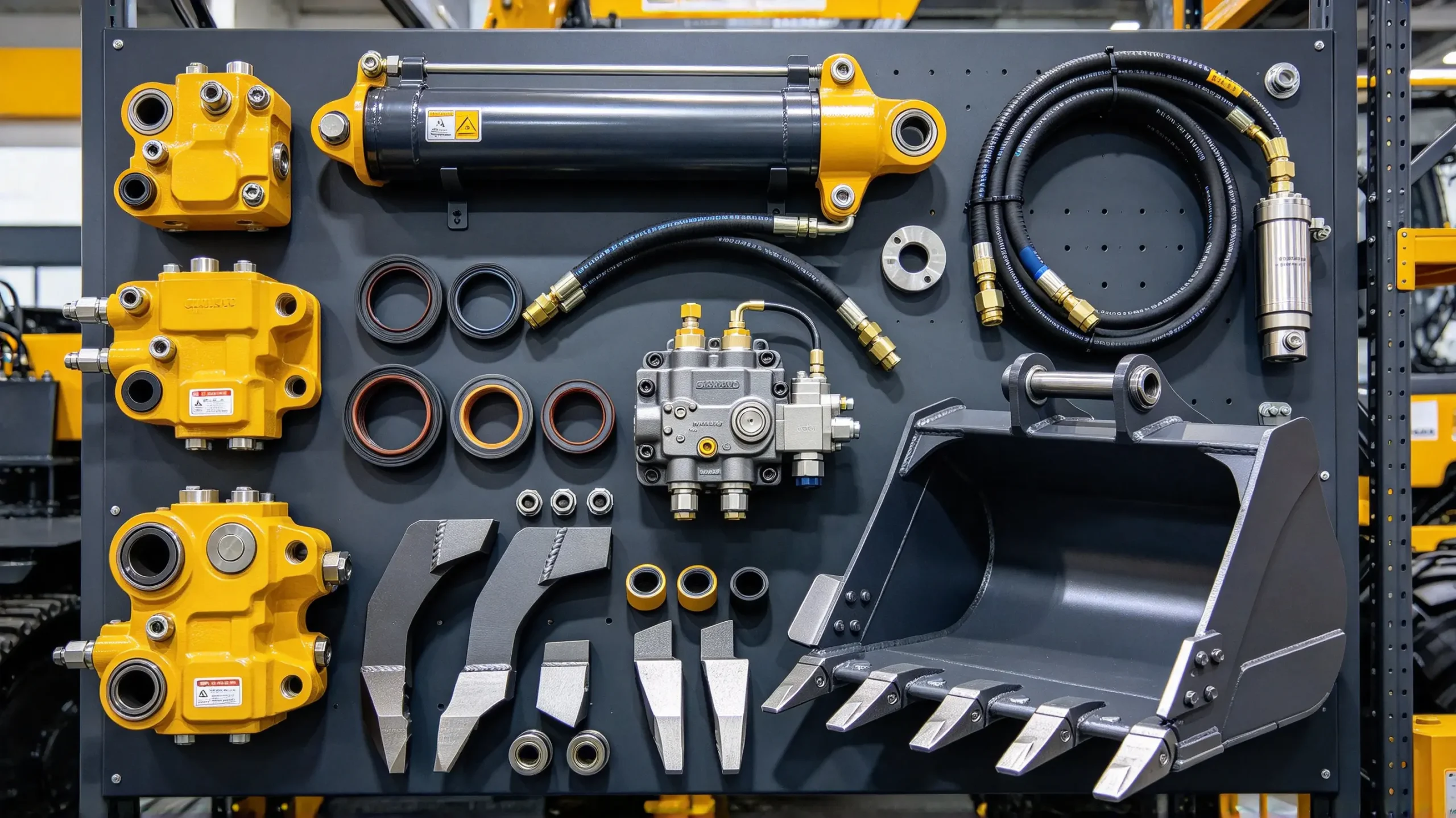
- Hydraulic systems.Hydraulic pumps, hydraulic motors, distributors and lifting cylinders. These components operate under high pressure (up to 20-25 MPa) and are sensitive to oil quality. Their failure paralyzes the operation of the loader. Replacing an assembled hydraulic unit is often more economically feasible than repairing it, and leasing makes this replacement accessible without large capital investments.
- Electronics and control systems.Traction controllers, displays, position sensors, CAN bus modules. Modern warehouse equipment is a computer on wheels. Electronic components are expensive, subject to power surges and require precise tuning. Leasing allows you to quickly update your electronics fleet, especially when moving to new security standards or integration with WMS (Warehouse Management System) systems.
- Rechargeable batteries and chargers.For electric forklifts, lithium-ion (Li-ion) batteries are the most expensive component. Their service life is 5-7 years, but the initial cost is high. Battery leasing allows you to use modern energy storage technologies without freezing millions of rubles in one asset. In addition, some leasing programs include a service for replacing degraded cells.
It is important to note the certification requirement. All spare parts supplied under leasing must meet quality standards. For the Russian and EAEU markets, this is the availability of GOST R certificates of conformity or TR CU declarations of conformity (Technical Regulations of the Customs Union). Lack of documents may cause the lessor to refuse financing or problems during customs clearance if the parts are imported. We always check the availability of quality passports and EAC certificates before signing a contract.
Comparison of financing models: Leasing vs. Loan vs. Purchase
To make an informed decision, you need to compare the available financing tools. Many managers mistakenly believe that a loan is more profitable due to a lower interest rate. However, when calculating the total cost of ownership (TCO) in detail, the picture changes. Let's look at the key parameters in the table below.
| Parameter | Spare parts leasing | Bank loan | Direct purchase (own funds) |
|---|---|---|---|
| Collateral requirements | The leased asset is the property of the lessor until the end of the term. Additional collateral is often not required. | A property pledge or surety is required. The bank evaluates the overall creditworthiness of the company. | Not required. Available funds are used. |
| Processing speed | High. The decision is made in 1-3 days, since the risk is provided by the asset itself (spare parts). | Low. Review of the application takes from 2 weeks to a month. The collection of a large package of documents is required. | Instant. It depends only on the availability of money in the account and the speed of the supplier. |
| Tax optimization | High. Payments are charged to cost, reducing income tax. Accelerated depreciation is possible. | Average. Interest on the loan is taken into account as expenses, but the body of the loan does not directly reduce the tax base. | Absent. Expenses are written off as they are worn out or immediately, but without the effect of financial leverage. |
| Impact on credit limit | Minimal. Leasing is often not reflected in the credit history as a debt load in full. | Significant. The loan reduces the available borrowing limit for other projects. | Positive. Maintaining credit lines for strategic investments. |
| Payment schedule flexibility | High. You can set up a seasonal schedule (for example, smaller payments in summer, larger payments in winter). | Low. The schedule is usually annuity or differentiated, strictly fixed. | Not applicable. |
The table shows that leasing wins in flexibility and speed. For a business where the speed of equipment recovery is important, this is a decisive factor. The loan is suitable for large capital investments with a long payback period, but for the purchase of spare parts it is too bureaucratic. Direct purchase is ideal only for companies with excess liquidity that do not find other ways to invest available funds with a return higher than the rate of inflation.
One of our clients, a large distributor of building materials, was faced with a situation where the bank refused a loan for the purchase of a batch of hydraulics due to deterioration in financial statements in the quarter. The leasing company approved the deal within 48 hours, as it assessed not only the balance, but also the liquidity of the spare parts themselves and the history of cooperation with the supplier. The equipment was restored, and the client did not lose the contract for shipping the winter batch of goods. This example demonstrates that leasing is not only a financial tool, but also an operational one.
Step-by-step guide: how to arrange leasing for forklift parts
The process for leasing spare parts differs from leasing equipment. Here, less attention is paid to the residual value of the asset and more to the reliability of the supplier and the technical justification for the need for replacement. Below are the steps to help you go through this process without any delays.
- Technical diagnostics and justification.Before contacting the lessor, prepare a defect inspection report. The engineer must clearly state why repair is not possible or practical and why a new part is required. Indicate the serial numbers of the forklifts, operating hours and operating conditions. This will show the lessor that you have a professional approach to asset management. Without this document, the transaction may be delayed due to additional requests.
- Selecting a supplier and receiving a commercial offer.Find a supplier that works with leasing companies. Not all sellers of spare parts are ready to ship goods to a third party (lessor) with subsequent leasing. Receive a proforma invoice with detailed specifications: name, article, quantity, price, delivery time. Make sure that VAT is shown separately on the invoice. Leasing companies work only with VAT payers.
- Submitting an application to the leasing company.Choose a lessor who specializes in industrial equipment or small check deals. Submit an application, attaching a defect report, a commercial proposal from the supplier and basic financial documents of the company (balance sheet, profit and loss statement for the last quarter). Specify the desired leasing term (usually from 6 to 24 months) and the amount of the advance (usually 10-20%).
- Evaluation and approval of the transaction.The lessor conducts a rapid analysis of your company and checks the supplier. At this stage, additional documents may be requested: charter, company card, confirmation of the signatory’s authority. It is important to respond to requests promptly. At the same time, the lessor agrees with the supplier on the terms of shipment. Typically, an agreement is concluded according to a “tripartite agreement” scheme or through a chain of sales and leasing agreements.
- Signing contracts and paying advances.Once approved, you sign a leasing agreement and a supply agreement (where the lessor is the buyer). You pay an advance payment. The lessor transfers 100% of the cost of spare parts to the supplier. It is important to control this stage: the money should go to the supplier, and not hang on transit accounts.
- Receipt of spare parts and commissioning.The supplier ships the spare parts to you (the lessee). You accept the goods, check the contents and compliance with the order. Sign the acceptance certificate. Spare parts are installed on loaders. The commissioning certificate is signed by your chief engineer. From this moment the accrual of leasing payments begins.
- Regular payments and completion of the transaction.You make monthly or quarterly payments according to the schedule. At the end of the leasing term and payment of the entire amount, the redemption payment (often symbolic, for example, 1000 rubles) is transferred to the lessor. Ownership of remaining spare parts (if any) or installed components passes to your company. In the case of spare parts that are already installed and worn out, the redemption stage is often formal in nature to close the balance sheet.
Please note a common mistake: trying to include installation work or delivery in the lease. Most leasing companies finance only the cost of the product itself (spare parts). Installation, repair and logistics services will have to be paid from your own funds. Include these costs in your budget in advance so that there is no cash gap when you receive the goods.
Risks and how to avoid them: the experience of practitioners
Parts leasing is a safe tool if you understand its limitations. The main risk is loss of the manufacturer's warranty. Some brands indicate that the warranty is only valid if purchased directly from an authorized dealer. When leasing, the leasing company is the buyer under the contract, and you are the user. It is necessary to check with the manufacturer or dealer in advance whether the warranty remains valid under such a purchase and sale scheme. In 95% of cases, the warranty is maintained, since the end user is identified by the serial number of the equipment, but it is better to have written confirmation.
The second risk is penalties for early termination. If the forklift is decommissioned or sold while the lease agreement is still valid, you will have to buy back the parts ahead of schedule. Conditions of early redemption may include penalties or a requirement to pay all future interest. Read the section “Early termination of the contract” carefully. We recommend including a clause on the possibility of early redemption without penalties after payment of 50% of the contract amount.
The third risk is the quality of spare parts. The leasing company is not responsible for the quality of the goods, it is responsible for financing. If you received a defective hydraulic pump, you file a claim with the supplier, not with the lessor. Leasing payments cannot be stopped in this case - this will lead to penalties and a damaged credit history. Therefore, choose only trusted suppliers with a reliable reputation and clear return conditions for defective items. The presence of ISO 9001 certificates from a supplier is a good indicator of the quality of processes.
There is also a risk of changes in legislation. Tax codes may change, affecting leasing benefits. However, the basic principles of accounting for lease payments as expenses have remained stable over the past 10 years. To minimize this risk, consult your accountant before signing long-term contracts exceeding 2 years.
How to choose a spare parts supplier for a leasing scheme
The success of the transaction depends not only on the lessor, but also on the supplier. Not every auto parts store is ready to work according to this scheme. You need a partner who understands the specifics of B2B and document flow. When choosing a supplier, pay attention to the following criteria:
- Experience working with leasing companies.Ask directly: “Have you worked with leasing?” If yes, then they have already set up processes for shipping to third parties, have contract templates and an understanding of document requirements. This will save you days of texting.
- Availability of warehouse and guarantee of availability.Leasing is often issued urgently. If the supplier says “4 weeks on order”, the leasing deal may become meaningless. Choose those who have 80-90% of items in stock in the Russian Federation. Having your own warehouse in Moscow, Yekaterinburg or Novosibirsk is critical for fast logistics.
- Pricing transparency.Avoid suppliers who hide the final cost until the invoice is issued. In leasing, the exact amount of the contract is important. The price must be fixed and include all necessary documents.
- Technical support.A good supplier will help you choose an analogue if the original part is no longer in production. He will provide drawings, diagrams and installation advice. This is especially important for complex hydraulic and electronic components.
We recommend asking the supplier for a reference list - a list of companies that have already purchased spare parts from them through leasing. Call two or three clients from this list. Ask them about shipping times and quality of documentation. Real reviews provide more information than any marketing brochure.
The role of a reliable partner in the supply chain: the case of Jinan Metallic Auto LLC
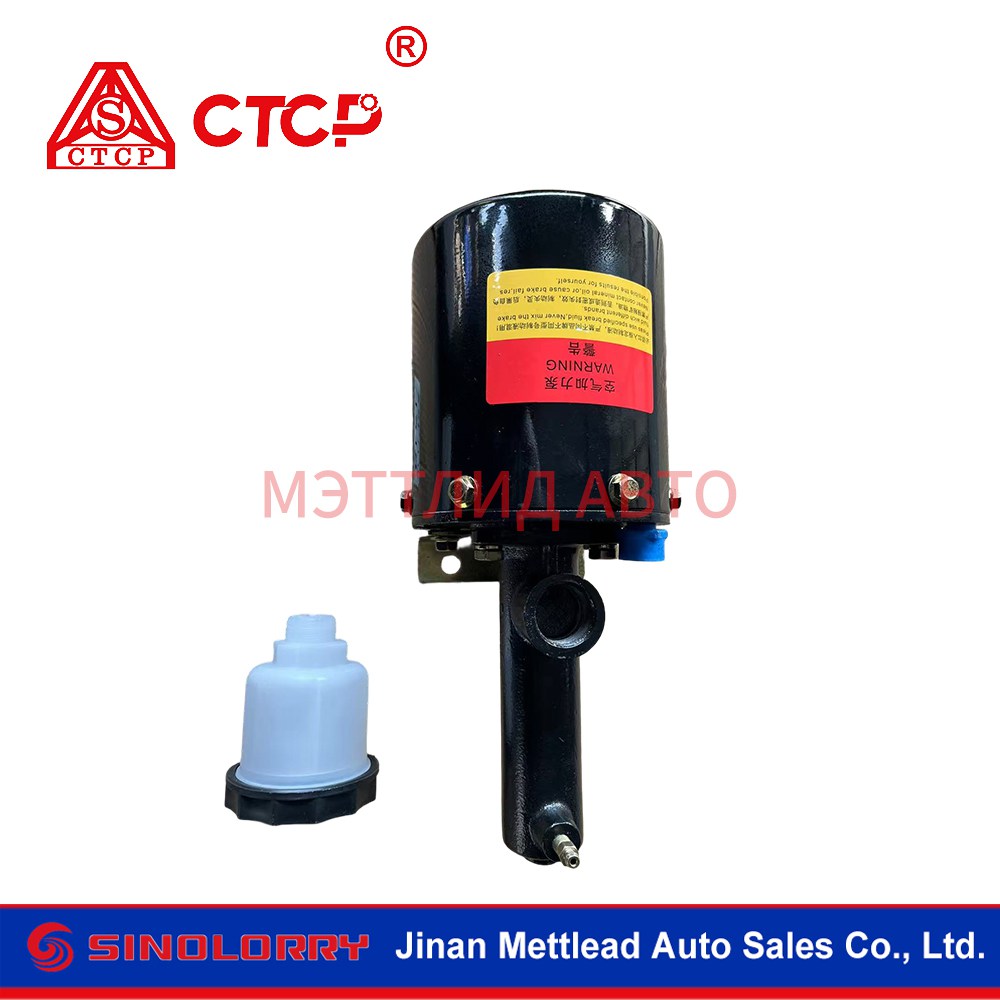
Selecting a supplier that can integrate into complex financial arrangements such as leasing is a critical success factor. A striking example of such a partner in the market isJinan Metallid Auto LLCis an industrial and trading enterprise based in Jinan, a famous automobile parts center in China.
The company specializes in the export of original and compatible spare parts for trucks, special equipment and buses made in China, including brands such asXCMG, Shantui, SDLG, Liugong, as well as heavy trucks SITRAK, HOWO, SHACMAN and others. This wide range makes Jinan Metallic Auto an ideal partner for Russian companies operating fleets of Chinese-origin vehicles, which are increasingly found in warehouses and construction sites.
For successful leasing, transparency and speed of document flow are key. Jinan Metallid Auto LLC implements a full supply cycle - from the selection of components and strict multi-level quality control to customs clearance and delivery. The company doesn’t just ship the goods, but provides a “butler-style” service: it initiates information about the progress of the order, provides comprehensive technical data, and flexibly customizes packaging and labeling to suit the partner’s needs. Such personalized support minimizes the risk of errors in specifications, which is extremely important when working with leasing companies that require exact compliance of the leased item with the contract.
The experience of the Jinan Metalled Auto team, which includes international sales specialists with over 10 years of experience and technical engineers with over 15 years of experience, allows us to accurately select components and avoid situations where products do not meet the stated parameters. Cooperation with customers in the Southern Urals, Central Siberia and dozens of other countries around the world confirms the company’s reliability as a supplier capable of ensuring uninterrupted supplies even in conditions of high market volatility. For a buyer using leasing, working with such a partner means guaranteeing that the parts paid for by the leasing company will be delivered on time and will fully comply with technical requirements, protecting the business from downtime and financial losses.
Frequently Asked Questions
Is it possible to lease used spare parts?
Theoretically yes, but in practice it is extremely difficult. Leasing companies require that the leased item be new or have a confirmed residual value. Used parts are difficult to value, their service life is unpredictable, and the risk of failure is high. Most lessors refuse to finance the purchase of used components. The exception is large units (engines, gearboxes) after major repairs with a new warranty from the repair plant. In this case, an independent appraiser's opinion will be required.
What is the minimum transaction volume for leasing spare parts?
The entry threshold depends on the leasing company. Large federal players rarely consider transactions less than 100,000 - 150,000 rubles due to high administrative costs for registration. However, there are specialized platforms and small leasing companies that work with checks from 30,000 - 50,000 rubles. For small purchases, it makes more sense to combine several orders into one leasing agreement or use corporate credit cards with a subsequent statement.
Does leasing parts affect the warranty of the forklift itself?
No, if the parts are certified and installed by qualified specialists. The equipment manufacturer does not have the right to refuse warranty for the entire forklift because one part was purchased on lease. The main thing is to follow the maintenance regulations and use parts that meet the manufacturer's specifications (OE quality). Keep all certificates of work performed and certificates for spare parts - this is your protection in case of controversial situations with the brand’s service department.
What happens to spare parts in the event of bankruptcy of the lessee?
Spare parts remain the property of the leasing company. They have the right to withdraw the leased item. However, if the parts are already installed on the forklift and are an integral part of it, removal is physically difficult. In such cases, the lessor usually requires the purchase of the residual value or includes the equipment in the bankruptcy estate under special conditions. For the lessor, this is a risk, so they carefully check the client’s financial condition before the transaction.
Conclusion: Take a step towards effective resource management
Forklift parts sales: leasing is not just a way to defer payments. This is a strategic tool for managing the efficiency of a warehouse complex. It allows you to maintain cash flow, optimize taxes and ensure uninterrupted operation of equipment through quick access to high-quality components. In conditions of high competition and economic instability, the one who knows how to flexibly manage resources wins.
Do not wait for the forklift to stop. Analyze your fleet of equipment, identify components that require attention in the next 6-12 months, and consider financing them through leasing. This will give you time to choose the best supplier and terms of the transaction, and not act in rush mode.
If you want to calculate an individual leasing scheme for your needs or get advice on selecting spare parts for specific forklift models, our experts are ready to help. We work with leading leasing partners and trusted suppliers to offer you the best solution.
Contact us todayto receive a free estimate and consultation on your fleet of equipment. Find out howleasing of spare parts for forkliftscan increase the profitability of your business in the next quarter.