
Oil seals for trucks: maintenance and selection guide
2026-04-01
This is a critical component in preventing oil leakage from key parts of the truck. Its quality directly affects the safe and stable operation of the vehicle.
It is widely used in major truck systems including transmission input shaft, differential, balance shaft, crankshaft and camshaft.
For each item there are corresponding technical specifications. Proper maintenance and selection reduces the risk of failure and extends the life of the component.
This saves truck owners and maintenance personnel on unnecessary maintenance costs.
This article details practical maintenance skills, troubleshooting and selection criteria, and offers professional advice.
1. Introduction to truck oil seal
First of all, it is necessary to understand its basic role. As a professional sealing component, it is installed between the moving and stationary parts of the truck.
Its main function is to prevent the leakage of lubricating oil, hydraulic oil and other important media.
It also prevents dust, impurities and water from entering components.
This prevents premature wear and damage caused by contamination. This small component is essential for a truck's power and transmission systems.
Common types include transmission input shaft seals, differential seals, balance shaft seals, crankshaft seals, and camshaft seals.
Among them, the most commonly used are transmission and differential input shaft oil seals. They are also the most prone to breakage.
They can withstand long-term operation at high speeds and under heavy loads. They are easily affected by oil quality, installation accuracy and operating conditions.
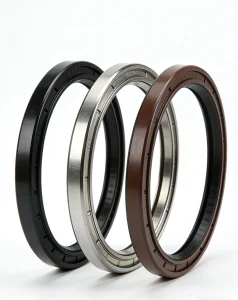
Oil seal for trucks (transmission input shaft/differential/balancer shaft)
2. Common malfunctions of truck oil seals and their elimination
2.1 Common fault conditions
The most common malfunction is an oil leak, which has obvious, easily recognizable signs. For example, oil stains appear around the transmission, differential, or balance shaft of your truck.
The oil level in the affected system decreases significantly over time. Excessive wear or damage may cause abnormal noise when the truck is operating.
This noise is usually accompanied by the smell of oil. It occurs due to insufficient lubrication and impurities.
2.2 Simple troubleshooting methods
If an oil leak is detected, first check the oil seal for obvious damage, wear, or deformation.
If it becomes hard, cracked or worn, replace it immediately. This will prevent further damage to the truck's components.
Also check related parts (such as the shaft surface) for scratches or wear. These problems also cause oil leakage and affect sealing.
For minor leakage caused by slight wear, clean the oil seal and shaft surface first. Then apply a small amount of professional sealant to temporarily fix the problem.
For professional advice, refer to our guide torepair of faulty oil seals of trucks.
3. Tips for daily maintenance of truck oil seal
Regular maintenance is the key to extending its life. During routine maintenance on your truck, inspect it regularly. Look for oil leaks, damage or wear.
Especially after long-distance transport or operation in harsh conditions (high temperature, humidity or dust), increase the frequency of inspections.
This helps identify potential problems at an early stage. Keep the seal and surrounding environment clean.
Avoid the accumulation of dust and dirt on its edge, which accelerates wear and reduces sealing.
Also, choose the right lubricating oil for your model and type of truck. Improper lubricating oil will reduce lubrication and cause corrosion.
This leads to premature wear and damage. Avoid overloading the truck for long periods of time. Excessive load increases pressure on it, causing deformation or wear.
For more information on choosing the right lubricating oil, please refer to our selection guidelubricating oils for trucks.
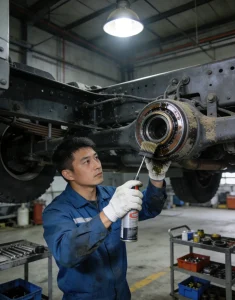
Daily maintenance of truck oil seals
In addition, when replacing, you should pay attention to correct installation. Excessive force or deviation during installation will easily damage the edge.
This affects the tightness. Follow standard installation steps and use professional tools. This will ensure installation accuracy.
For more maintenance tips,
Check out our Truck Maintenance Basics section.
4. How to choose a high quality truck oil seal
Selecting a high quality seal ensures tightness and service life. First, select products that match your truck model and installation location.
For example, transmission and differential input shaft seals have different characteristics. They cannot be mixed.
Secondly, pay attention to the material. High-quality products use nitrile or fluorine rubber.
These materials have excellent wear resistance, heat resistance and oil resistance. They are suitable for harsh truck operating conditions.
Also check the manufacturing process. A good oil seal has a smooth surface, uniform thickness and a tight connection between the lip and frame. This provides better sealing and longer service life.
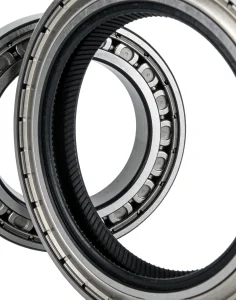
High quality oil seal for trucks
In addition, choose products from trusted and reliable manufacturers. Such manufacturers carry out strict quality control.
They guarantee consistent quality and impeccable after-sales service, thereby avoiding problems associated with the use of low-quality products.
If you're having trouble choosing, please contact our professional customer service team or use our truck oil seal selection guide.
5. Conclusion
It plays an indispensable role in the stable operation of the truck. Mastering the correct maintenance and selection skills will extend the life of your equipment.
This also reduces the risk of breakdowns and maintenance costs. This article provides comprehensive guidance for truck owners and maintenance personnel.
It covers basic concepts, troubleshooting, daily maintenance, and product selection.
For more professional truck maintenance knowledge, stay tuned to ourofficial website.