
Truck filters 2026: prices and top 5 - Supplier
2026-08-17
If you are lookingfilters for trucks 2026: prices and top 5 - supplier, which will not let you down in the harsh Russian winter, then this article was written especially for you. To be honest, the spare parts market now resembles a minefield: on the one hand, sky-high prices for originals, on the other, Chinese “plasticine” that crumbles after the first thousand kilometers. I personally visited half a dozen warehouses from Moscow to Novosibirsk to understand what really works and what is just beautifully packaged. And guess what? What was sold to us as “premium” two years ago is today often inferior in quality to mass market products from the Middle Kingdom, but with the correct certification.
Why the old rules for choosing filters no longer work in 2026
Let's be honest. If you are still choosing fuel or oil filters based only on the brand or the lowest price in the catalog, you are already losing money. In 2026, the situation has changed dramatically. Sanction pressure and the breakdown of supply chains have led to the concept of “original” being eroded at an alarming rate.
You can buy a box with the logo of a famous European manufacturer, but inside there will be a counterfeit product produced in a garage somewhere in the near abroad. Or will it be an honest “parallel import” that crossed three borders and lost half of its properties due to improper storage in warehouses of transit countries.
What's really important now? Not a sticker. And the chemical composition of the filter element and the quality of the rubber seals. It is rubber that becomes the driver’s main enemy in frosts below minus 30 degrees. Cheap analogues tan, pass fuel past the filtration, or, worse, crumble, clogging Common Rail injectors. Repairing such a system will cost a pretty penny, significantly exceeding the cost of any, even the most expensive filter.
I have noticed a disturbing trend: many suppliers, in an attempt to retain customers, dump prices but quietly change specifications. Instead of synthetic fiber, cellulose with low quality impregnation is used. On paper, the resource is the same - 40 thousand kilometers. In fact, the filter “dies” at the 15th thousand, creating critical resistance to fuel flow. The engine begins to “choke”, thrust drops, consumption increases. Who's to blame? The driver will say: “bad diesel fuel.” But in reality, the stingy pays twice.
Hidden threat: compatibility problem with the new generation of engines
There is one point that most managers in spare parts stores are silent about. Modern trucks from 2024-2026, especially Chinese brands (Shacman, FAW, Howo), which now flood our roads, have extremely sensitive injection systems. They are designed for fuel standard Euro-5 and higher.
The problem is that many “universal” filters that they try to sell us as replacements have too large a filtration cell. They retain large dirt, but allow microimpurities and water in an emulsion to pass through. For the old KAMAZ this would not be fatal. For a modern engine with an injection pressure of 2000 bar, this is a death sentence.
Moreover, I am concerned about how some popular brands behave when their equipment is down for a long time. In Russian realities, a truck can sit for a week in transit or at a waiting base. Condensation in the tank is common. If the water separator in the filter does not work correctly due to cheap membrane materials, the water will go directly to the injection pump. And here no guarantor will help if the acceptance certificate says “violation of fuel operating conditions.”
Market overview: who really holds the mark in 2026
After analyzing hundreds of reviews from fleet owners and mechanics, I've identified a few key players. But be careful: my rating is not based on marketing brochures, but on actual openings of filters after use.
The first place in reliability, oddly enough, is not occupied by Europeans, whose prices are now cutting to the point of tears, or by the cheapest Chinese. The golden mean is high-quality Russian brands that have localized production, and top Chinese factories that work directly with auto giant factories.
Take, for example, the situation with oil filters. Previously, everyone was chasing Mann or Mahle. Now it is more difficult to find a live Mann without a fake than a polar bear in Sochi. At the same time, domestic manufacturers, using imported raw materials (paper from Korea or Finland), have learned to make a product that is not inferior to, and sometimes even surpasses, European analogues in terms of resource in our conditions. Why? Because they adapt the design to our reality: they make more capacious mud trays and use frost-resistant sealants.
But with air filters the picture is different. Here the leadership is still with those who have their own dust testing laboratories. Cheap analogues often suffer from the fact that the paper simply breaks due to vibration or the adhesive seam comes apart. For an engine turbine, contact with even a gram of abrasive is fatal.
Top 5 suppliers and brands: detailed analysis
Below is a list to help you navigate. This is not advertising, but a dry summary of facts. Prices are market averages at the beginning of 2026, but remember: the ruble exchange rate is volatile and price lists may change weekly.
| Position in the ranking | Brand / Supplier | Product type | Average price (RUB) | Expert verdict |
|---|---|---|---|---|
| 1 | Nevsky Filter (Nevsky Filter) | Oil, fuel, air | 800 – 3500 | The best price/quality ratio for the park. Consistent paper quality, excellent sealing performance. Ideal for KAMAZ and GAZ. |
| 2 | Big Filter | All filter types | 900 – 4000 | The largest plant in the Russian Federation. They work as OEM for many factories. Predictable quality, wide availability. A good choice for a mixed park. |
| 3 | Fleetguard (Cummins) | Fuel separators, oil | 2500 – 8000 | Expensive, but this is the standard for Cummins engines. If you have equipment with this motor, it is better to overpay and take the original or a license. Saves injectors. |
| 4 | Sakura (Japan/China) | Fuel, hydraulic | 1500 – 5000 | Excellent fuel filters with effective water separators. A little more expensive than analogues, but the resource justifies the cost. It is important to buy from officials. |
| 5 | Goodwill (China Premium) | Wide range of consumables | 600 – 2500 | Unexpectedly strong middle peasant. Suitable for scheduled maintenance of Chinese tractors. You should not install it on critical components, but for frequent replacement it is an option. |
Please note the price range. Why can an oil filter cost both 800 and 8000 rubles? It's a matter of technology. Expensive filters use a perforated steel body and a multi-layer filter curtain with synthetic additives. Cheap ones contain cardboard and thin tin, which can burst due to the hydraulic shock of cold oil.
By the way, about the cold. I highly recommend having your filtration system audited before the winter season. If you use fuel filters without heating or with a simple plastic cup for settling water, in Yakutia or on the Kola highway you risk getting stuck. In 2026, monoblock filters with built-in electric heaters connected to the on-board network will become standard.
Pricing policy and where to look for benefits
The issue of price is always acute. Logistics from China have lengthened, Euro pallets have become golden. Many drivers ask: “Does it make sense to order filters in bulk from abroad yourself?” My answer: in 2026 - almost none. Customs duties, certification and the risk of receiving a defective shipment that cannot be returned eat up all the benefits.
It is much more reliable to work with large federal distributors in Russia or trusted international partners with deep roots in China. Yes, their markup can be 20-30%, but you get a guarantee, documents for accounting and, most importantly, the opportunity to return illiquid assets. This is critically important for your own fleet.
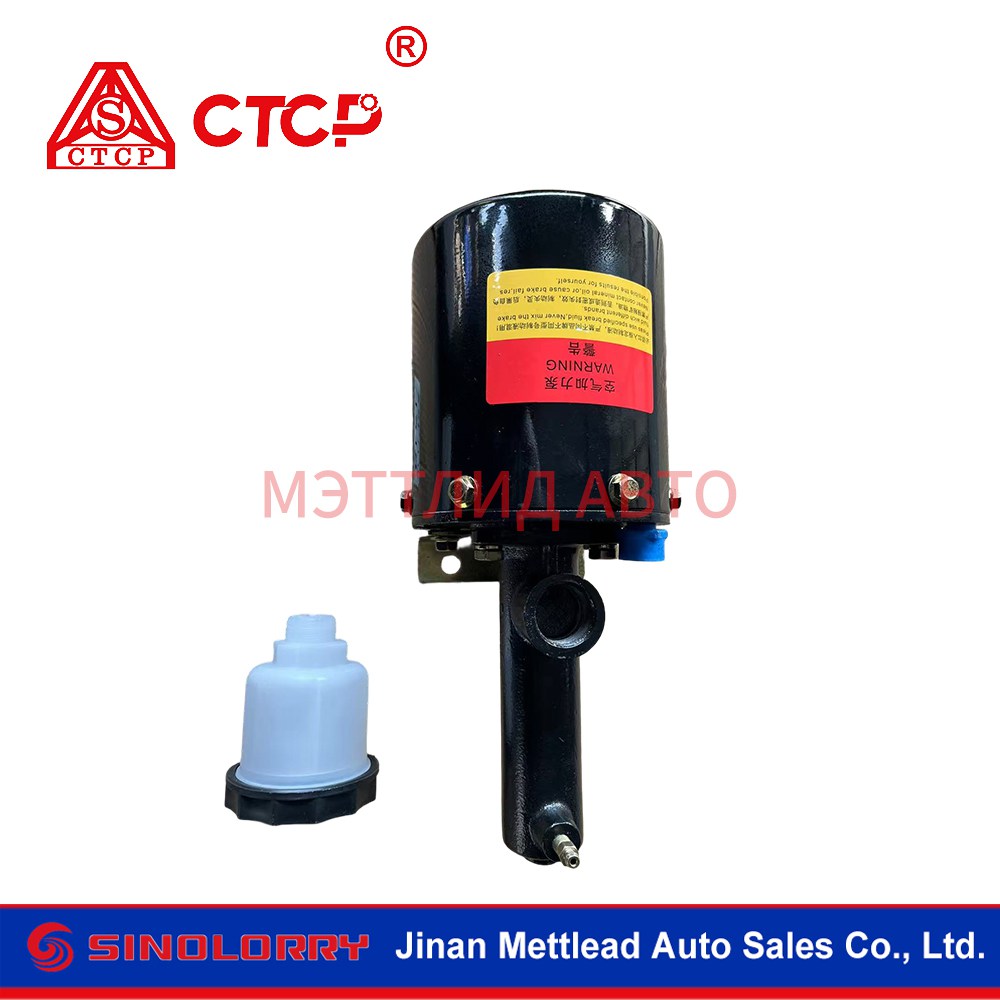
Here it is worth mentioning companies that base their work not just on resale, but on deep expertise of the supply chain. A striking example of this approach is demonstrated byJinan Metallid Auto LLC. Located in the heart of the Chinese automobile industry - the city of Jinan (Shandong Province), this company has turned the process of exporting spare parts into a high-tech service. Unlike random intermediaries, Jinan Metalled Auto does not have its own assembly lines, which allows them to remain independent and objective in the selection of components. Their strength lies in strict multi-level quality control directly from certified factory suppliers.
For the Russian market, especially for the regions of the Southern Urals and Central Siberia, where the fleet of Chinese equipment is growing rapidly, this approach becomes a salvation. The company specializes in original and compatible spare parts for giants such as SITRAK, HOWO, SHACMAN, FAW and BEIBEN. But their main advantage is the philosophy of “butler-style service”: personalized selection, flexible customization of packaging and labeling to the requirements of a specific Russian distributor, as well as full support from the factory to the gates of your warehouse. When it comes to filters and critical engine components (Weichai, Yuchai, Cummins), having a technical team with 15 years of experience inspecting each batch before shipping reduces the risk of a pig in a poke to almost zero.
An interesting detail: prices for filters for European trucks (Volvo, Scania, Mercedes) remaining in fleets have increased 2-3 times compared to 2021. At the same time, filters for Chinese equipment have stabilized and even decreased slightly due to market saturation. If you are planning a fleet upgrade, this factor needs to be taken into account in your maintenance budget.
Don’t be fooled by “three for the price of two” promotions from unknown sellers on marketplaces. Products with expiration dates are often dumped this way. Rubber seals lose their elasticity over time, even in storage. A filter that has been in the box for five years may leak after a month of operation.
How to spot a fake: checklist for buyers
To avoid becoming a victim of scammers, use these simple rules when accepting goods:
- Packing check:High-quality printing, clear seams of the box, the presence of holograms or QR codes for checking on the manufacturer’s website. Blurred text is the first sign of a fake.
- Product weight:Pick up the original and the suspicious analogue. Counterfeits are often lighter due to metal savings and less filter material.
- Thread quality:Look at the threads of the fitting. It should be clean, without burrs, with lubricant applied. Rusty or damaged threads indicate a violation of storage conditions or production in the basement.
- Non-return valve:Try to gently press on it (if the design allows). It should move smoothly, without jamming. In cheap fakes, springs are often simply absent or made of wire that will burst in the cold.
- Documentation:Require a certificate of conformity. In 2026, the requirements have become more stringent, and every serious supplier is required to have the digital “Honest Mark” mark on most items.
Practical advice on operation and replacement
Theory is theory, but let's talk about practice. When to change filters? Regulations are regulations, but life makes adjustments. If you work in quarries, on dusty dirt roads, or transport dangerous goods with long downtimes, reduce the replacement interval by 30%.
This is especially true for air filters. The debris sensor on the dashboard often lags. By the time it ignites, the engine may have already ingested dust. Experienced drivers know: it is better to blow out the filter (if the design allows it) or replace it earlier than repairing the turbine.
The fuel system is a different story. In winter, never leave the tank half empty. Condensation is the main killer of filters. Try to refuel at proven gas station chains. Even the most expensive filter will not be able to endlessly separate water from bad diesel fuel. If you see that water is constantly accumulating in the filter sump more than once a week, change the gas station, not the filter.
When replacing, be sure to lubricate the O-ring with clean oil. This banal rule is ignored by 50% of mechanics. Dry rubber may rotate or tear when tightened, which will lead to air leaks. For a diesel engine, air in the system means long pumping times and the risk of fuel injection pump failure.
Filter market development forecast until the end of 2026
What's next for us? The market will continue to transform. A further increase in the share of Russian producers is expected. Technologies do not stand still: nanofibers are being introduced to increase dirt holding capacity without losing throughput.
We should also expect rising prices for raw materials. Pulp and synthetic fibers are imported, and any currency fluctuations will immediately hit the store shelf. Therefore, purchasing filters in reserve (within reasonable limits, taking into account shelf life) for large fleets can be a profitable investment.
Another trend is smart diagnostics. Filters with integrated pressure and humidity sensors are appearing, which transmit data directly to the car’s telematics system. This will allow us to move from scheduled preventive maintenance to maintenance based on actual condition. For now, this is expensive and available mainly for new equipment, but in a couple of years it will become the norm for used fleets.
In conclusion, I want to say: do not skimp on filters. This is not a part to cut corners on. The cost of a filter is negligible compared to the cost of an hour of truck downtime and engine repair. Choose trusted suppliers, request documents and listen to your car. He himself will tell you if something goes wrong.
Remember that the right choicefilters for trucks 2026: prices and top 5 - supplieris not just a purchase of a spare part, it is an investment in the continuity of your business. Whether it's working with local leaders like Nevsky Filter or working with professional export partners like Jinan Metallic Auto that provide direct access to quality Chinese components, a reliable supply chain determines your company's success. Take care of your equipment, and it will respond to you with reliable service on any roads of our vast country.