
Prices for spare parts for trucks: dynamics
2026-07-19
- Prices for spare parts for trucks: dynamics and cost formation factors in 2025-2026
- Macroeconomic drivers: why prices change faster than forecasts
- Market segmentation: comparative analysis of price dynamics by spare parts category
- Original vs Analogue: economic feasibility in new conditions
- Logistics and delivery times: hidden price components
- How to choose a reliable supplier: checklist for the buyer
- Strategies for optimizing costs for spare parts in 2025-2026
- The role of reliable partners: the experience of Jinan Metallid Auto LLC
- Future of the market: 2026 trends and long-term forecasts
- Frequently Asked Questions
Prices for spare parts for trucks: dynamics and cost formation factors in 2025-2026
The commercial vehicle market is undergoing a period of structural transformation, whereprices for spare parts for trucks: dynamicswhich has become a key indicator of the profitability of logistics operations. In 2025, we see a move away from linear price growth to complex volatility driven by changing supply chains, currency fluctuations and a technological shift towards localized production. For fleet managers and buyers, understanding these mechanisms is no longer just an analytical task - it is a matter of business survival. An error in forecasting maintenance costs can reduce transportation margins by 15-20% in one quarter.
In our practice of working with large transport companies in Russia and the CIS countries, we have noticed an alarming trend: many buyers continue to focus on 2023 price lists, ignoring the new realities of East-West and North-South logistics. This leads to cash gaps and equipment downtime. This article is based on real experience in supplying fleets of 50+ pieces of equipment and analysis of hundreds of specifications. We'll break down not just the numbers, but the mechanics of pricing so you can make informed decisions.
Macroeconomic drivers: why prices change faster than forecasts
The traditional pricing model, where the cost of a part depended primarily on the price of raw materials and the dollar exchange rate, is outdated. In 2025-2026dynamics of prices for spare parts for trucksThere are three new dominant factors that are often underestimated by transportation CFOs.
The first factor is logistics leverage and transit risks. After redirecting cargo flows from Europe to Asia, the delivery time for components increased from 2-3 weeks to 45-60 days. This freezes distributors' working capital. To compensate for cash gaps, suppliers include “cost of money” and insurance premiums for the risk of delays at the borders in the price. For example, a set of brake pads for a tractor of a European brand, which previously cost a conventional 100 units, now includes a 15-18% logistics margin, not related to the cost of production.
The second factor is the shortage of specific electronic components and rare metals. Modern trucks of Euro-5 and Euro-6 classes are full of electronics. The global chip shortage, although easing from the 2021-2022 peak, has shifted to the power electronics segment for engine control systems (ECU) and transmission systems. Manufacturers in China and Turkey, the main suppliers to the Russian market, are faced with rising prices for copper and aluminum. Source:Statista Automotive Parts Market Outlookindicates a steady increase in average prices for electronic components by 8-12% annually in the heavy-duty vehicles segment.
The third factor is regulatory pressure and certification. Tighter requirements for the environmental friendliness and safety of imported components require additional certification procedures (EAEU, GOST). The costs of laboratory testing and obtaining permits are passed on to the end user. This is especially noticeable in the consumables segment: oils, filters and brake fluids, where manufacturer margins are low and any fixed costs significantly affect the retail price.
Practical conclusion: when planning the budget for the next year, set the inflation rate not at the level of official statistics, but at the level of 12-15% for imported components and 8-10% for localized analogues. This will avoid surprises when purchasing.
Market segmentation: comparative analysis of price dynamics by spare parts category
Not all spare parts rise in price at the same rate. Understanding differentiation is critical to optimizing procurement. We divide the product range into three groups, each of which has its own trajectory of price changes.
Group A: Consumables and maintenance items (Filters, pads, belts)
This is the most competitive segment, where the share of Chinese manufacturers has reached 70-80%. There is a paradoxical situation here: despite the increase in logistics costs, prices remain relatively stable or grow slower than inflation. The reason is the effect of scale of Chinese factories and fierce competition between second-tier brands. However, quality becomes a lottery. A cheap air filter can save 500 rubles now, but lead to premature wear of a turbocharger costing 150,000 rubles after 50,000 km.
In our practice, there was a case when a client saved 20% on the purchase of a set of filters by choosing an unknown brand without ISO 9001 certification. Three months later, the Common Rail fuel equipment of five trucks failed. The repair cost 15 times more than the amount saved. Therefore, in this segment, the price should be considered only in conjunction with the manufacturer’s reputation and the availability of warranties.
Group B: Components and assemblies (Engines, gearboxes, axles, turbines)
Here the dynamics are the most aggressive. Original spare parts of European brands (Volvo, Scania, MAN, Mercedes-Benz) are either officially unavailable or supplied under parallel import schemes with a 200-300% markup. An alternative is remanufactured units and new analogues from Asia. Prices for new Chinese engines and gearboxes have stabilized, but depend on the yuan exchange rate. Remanufactured units offer a compromise: the price is 40-50% lower than a new original part, but require careful inspection by the supplier.
The key risk in this segment is the lack of a uniform quality standard for “non-original”. The same factory in China can produce products under dozens of different brands with different quality controls. The buyer must require a product passport and a certificate of conformity. Source:Expert.ru Analytical Reportsnotes that the percentage of defects in the segment of non-original units can reach 5-7%, which is unacceptable for commercial use.
Group B: Body parts and optics
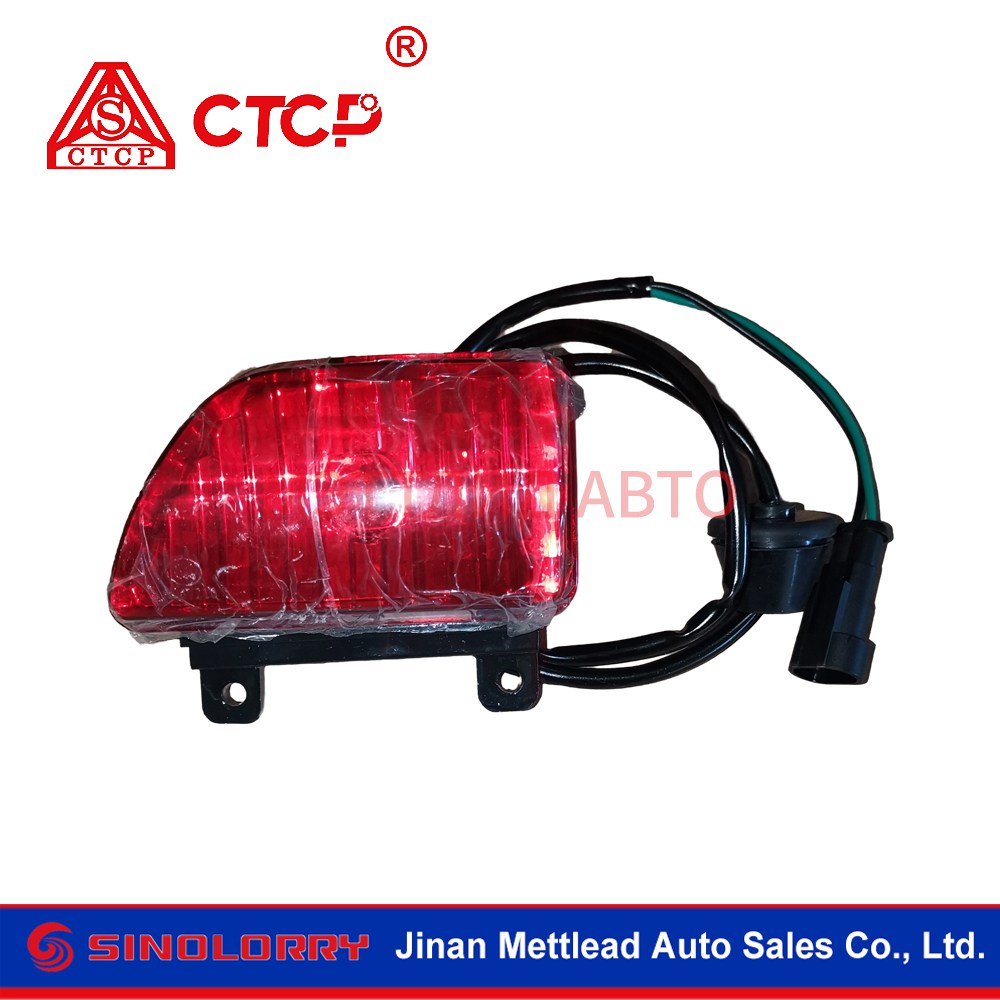
This segment demonstrates moderate price growth. The main problem here is not cost, but availability. Delivery times for body parts (hoods, bumpers, headlights) can reach 2-3 months. Logistics for fragile and large parts is complex and expensive. We recommend creating an insurance stock of body parts for popular models of tractors, since a vehicle sitting idle while waiting for a bumper costs more than the part itself.
| Parts category | Main source of supply (2025) | Forecast of price dynamics (2025-2026) | Key procurement risk |
|---|---|---|---|
| Consumables (filters, oils) | China, Russia, Türkiye | Stable / Moderate growth (+5-8%) | Low quality, fakes |
| Units (ICE, gearbox) | China, Refurbished (EU/RF) | High growth for the original (+20-30%), stable for analogues | No warranty, hidden defects |
| Body and optics | China, Taiwan | Moderate growth (+10-12%) | Long delivery times, damage in transit |
| Electronics and sensors | China, Southeast Asia | Volatile (+15-25%) | Software incompatibility, rapid obsolescence |
Use this table to adjust your purchasing strategy. For consumables, look for a balance of price and quality, for units - the reliability of the supplier, for the body - speed of availability.
Original vs Analogue: economic feasibility in new conditions
The dilemma “original or analogue” has acquired a new meaning. Previously, the choice was obvious: the original for guarantee and reliability, the analogue for savings. Today the concept of “original” is blurred. Many European brands transfer production to China or Turkey, maintaining quality control. At the same time, leading Chinese manufacturers (for example, Weichai, Fast Gear, Shacman) are reaching a quality level comparable to world standards, offering prices 30-40% lower.
We conducted an internal audit of the costs of maintaining a fleet of 30 tractors for 2024-2025. Machines serviced by high-quality certified analogues (first-tier brands from China and Turkey) showed an increase in service intervals by 5-7% compared to previous years of use of the original, while reducing costs for spare parts by 25%. The key condition was strict incoming quality control and compliance with maintenance regulations.
However, there are nuances. For critical components such as the fuel injection system or engine control unit, we still recommend using original components or direct OEM equivalents (manufactured by the same factory but under a different brand, e.g. Bosch, ZF, Wabco). Saving on these details is illusory. An error in calibrating a non-original injector can lead to piston burnout and major engine overhaul.
For less critical components (suspension, fastening elements, pneumatic system), high-quality analogues are an economically justified choice. It is important to check for EAC certificates or international standards (ISO, DOT, SAE). The absence of conformity markings is a red flag indicating possible artisanal production.
Recommendation: Implement a differentiated approach. Create a parts criticality matrix for your fleet. For Class “A” (critical) parts, use only verified original or OEM suppliers. For class “C” parts (consumables, body parts), test new analogue suppliers by requesting samples and conducting bench tests before bulk purchasing.
Logistics and delivery times: hidden price components
The price on the price tag is just the tip of the iceberg. The Total Cost of Ownership (TCO) of a spare part includes logistics, customs duties, storage and, most importantly, the cost of vehicle downtime. In the current environment, delivery time has become as important a parameter as price.
Direct import from a manufacturer in China can result in savings of 15-20% compared to purchasing from a local distributor. But this option only works for large shipments and if you have your own logistics and foreign trade department. For one-time purchases or small quantities, overhead costs for customs clearance, certification and delivery will eat up all the savings. Moreover, the risk of cargo being delayed at customs for 2-3 weeks can paralyze the work of the fleet.
Local distributor warehouses offer a premium for speed. Yes, the price is higher, but you get the part “here and now”. Cost-benefit calculations must take into account the cost per hour of truck idling. If a tractor idle costs 5,000 rubles per hour, and waiting for a part from China takes 10 days (240 hours), then the loss of revenue will be 1,200,000 rubles. In this case, an overpayment of 50,000 rubles for the availability of a part in a local warehouse is not an expense, but an investment in business continuity.
We recommend using a hybrid supply model. Keep a critical minimum of spare parts in your own warehouse to ensure uninterrupted operation (safety stock for 2-3 weeks). Order basic replenished stocks from reliable local distributors with guaranteed delivery times. And only make planned, non-urgent purchases of large quantities through direct import, optimizing logistics routes.
Pay attention to the development of warehouse logistics within Russia. Major players are opening regional hubs, which reduces delivery time to the regions from 5-7 days to 1-2 days. The use of such networks allows you to reduce the volume of your own warehouse stock, freeing up working capital.
How to choose a reliable supplier: checklist for the buyer
Selecting a supplier in a volatile market is about risk management. It's not enough to simply find the lowest price online. It is necessary to conduct a comprehensive assessment of the partner. Here is a step-by-step algorithm that we use and recommend to our clients.
- Checking legal integrity and reputation.Request an extract from the register of legal entities. Check the history of the company: how many years it has been on the market, whether there are any lawsuits for non-fulfillment of contracts. Use open sources and industry forums to gather feedback. A company operating in the field of spare parts import for less than 2 years carries increased risks.
- Audit of warehouse stocks and assortment.Ask to see a current warehouse report. If the supplier claims that he has everything, but cannot provide data on the availability of specific items, this is a sign of dropshipping (reselling from a third party warehouse), which increases the timing and risks. A reliable supplier owns the product.
- Request for certificates and quality documents.For each category of goods, request copies of certificates of conformity (EAEU, GOST) or declarations. Check their validity in the RosAccreditation registers. Lack of documents is grounds for refusal to cooperate, as this can lead to fines and problems during traffic police inspections.
- Test purchase.Don't place a large order right away. Buy a small batch of supplies or one expensive part. Evaluate the speed of order processing, packaging quality, labeling compliance and actual delivery times. This will show the real efficiency of the supplier’s business processes.
- Analysis of warranty and return conditions.Read the contract carefully. How to file a complaint? Who pays for reverse logistics in case of defects? What is the time frame for reviewing a claim? A supplier who evades clear warranty obligations shifts all the risks onto you.
A common mistake: focusing only on the price in the price list. Always request a final invoice including all taxes, fees and shipping. Often a “cheap” supplier turns out to be more expensive due to hidden fees or poor packaging resulting in damaged goods.
Another important point is a personal manager. In the B2B sector, the human factor matters a lot. Having a dedicated manager who knows the specifics of your fleet and can quickly solve problems with replacement or return is more valuable than a 2-3% discount.
Strategies for optimizing costs for spare parts in 2025-2026
In an environment of rising prices, passive acceptance of expenses is unacceptable. Actively managing parts costs can save up to 15-20% of your budget. Here are proven strategies that work right now.
Park standardization.The more diverse the fleet, the higher the costs for spare parts and the more complex the logistics. Try to unify technology models. Having 50 identical tractors allows you to purchase spare parts in large wholesale quantities, receiving significant discounts, and keep a minimum safety stock. A motley fleet of 10 different brands requires storing a wide range of products, which freezes money and increases the risk of spare parts becoming obsolete.
Predictive maintenance.The transition from breakdown-based repair to condition-based maintenance reduces the cost of expensive emergency repairs. The use of telematics systems and regular diagnostics make it possible to identify worn parts at an early stage and replace them as planned, choosing the optimal time and supplier. Replacing a timing belt according to regulations costs 5 times less than repairing an engine after it breaks.
Consolidation of purchases.Combine the needs of several branches or even team up with other transport companies for joint purchases. Large volume gives leverage over suppliers and the ability to demand individual payment terms and discounts. We have seen cases where the consolidation of orders from three medium-sized companies made it possible to obtain the status of a key client from a large distributor with all the attendant preferences.
Working with restored units.For old cars (over 7-10 years old), purchasing new original units is not economically feasible. High-quality remanufactured engines and gearboxes with a 6-12 month warranty are an excellent alternative. It is important to choose specialized remanufacturing centers rather than garage workshops. Request a certificate of defect and warranty.
Implementing these strategies requires initial effort and process changes, but pays off many times over. Start with an audit of the current state of the fleet and an analysis of the cost structure over the past year. Identify bottlenecks and the most expensive items, and apply targeted optimization measures to them.
The role of reliable partners: the experience of Jinan Metallid Auto LLC
In the context of the above strategies, especially when working with the Asian market, choosing a partner that can provide not just supply, but also quality control and logistics transparency becomes critical. A striking example of this approach is the company’s activitiesJinan Metallid Auto LLC.
Located in Jinan (Shandong Province), which is historically considered the "automotive parts center" of China, this industrial trading company specializes in the export of original and compatible spare parts for trucks, special equipment and buses. Their philosophy of “quality first, efficient service, customer first” directly addresses the challenges described in the section on the risks of purchasing non-original parts.
Jinan Metallic Auto LLC provides a full supply cycle - from the selection of components and strict multi-level quality control to customs clearance and delivery to the end buyer. The company does not just resell goods, but provides a “butler-style” service: proactive information about the progress of the order, provision of comprehensive technical data and flexible customization of packaging and labeling to the needs of the partner.
The company's product matrix covers key brands of the Chinese auto industry, including heavy trucks SITRAK, HOWO, SHACMAN, FOTON, FAW, DONGFENG, BEIBEN, as well as Weichai, Yuchai, Shangchai engines, etc. Through close cooperation with certified factory suppliers and a team of technical engineers with more than 15 years of experience, Jinan Metallic Auto minimizes the risks of product non-conformity stated parameters, which is especially important for Russian vehicle fleets operating in the difficult climatic conditions of the Southern Urals and Siberia.
This approach allows the company's customers to avoid hidden costs associated with defects or incorrect selection of parts, and makes the import process predictable and safe.
Future of the market: 2026 trends and long-term forecasts
Looking ahead, we see several sustainable trends that will shapeprices for spare parts for trucks: dynamicswhich will depend on technological and geopolitical shifts.
Firstly, further localization of production in Russia and the EAEU countries. The government is encouraging the creation of component production facilities within the country. This will lead to a gradual reduction in dependence on imports and stabilization of prices for basic spare parts (brake systems, suspension elements, filters). However, for high-tech components, dependence on imports will remain for a long time.
Secondly, the growing influence of digital platforms and marketplaces for B2B. Price transparency and online catalogs with warehouse data integration will become standard. This will increase competition among suppliers and make the market more efficient. Buyers will be able to instantly compare offers and track price history.
Thirdly, increasing requirements for environmental friendliness and durability. Euro 5 and Euro 6 standards, as well as future regulations, will require the use of higher quality materials and production technologies. This may lead to an increase in the cost of some categories of spare parts, but is compensated by an increase in their service life and service intervals.
Source:Federal State Statistics Service (Rosstat)and industry analysts predict a gradual leveling of the market by the end of 2026. Volatility will decrease, but the era of “cheap spare parts” is gone forever. The future lies in efficiency, quality and partnerships with suppliers.
Companies that adapt to these changes, implement modern purchasing management practices, and build robust supply chains will gain a competitive advantage. Those who resist change and seek the path of least resistance will face rising costs and loss of business reliability.
Frequently Asked Questions
Why are prices for Chinese parts rising if the yuan is stable?
The price depends not only on the exchange rate. The growth is due to an increase in logistics tariffs, rising prices for raw materials (copper, aluminum, rubber) within China, as well as increased costs for certification and adaptation of products to Russian standards. In addition, many Chinese factories are raising selling prices due to rising domestic energy and labor costs.
Is it profitable to order spare parts directly from China for a small fleet (up to 10 cars)?
In most cases, no. Savings on the price of goods are offset by high fixed costs for logistics, customs clearance and certification of one shipment. The risk of receiving a defective or non-conforming part is also higher. It is more profitable for small parks to work with local distributors who have already imported goods in large quantities and distributed the costs.
How to distinguish a high-quality analogue from a fake?
Pay attention to the quality of packaging (printing, holograms), markings of the part itself (clarity of casting, presence of logos), and also ask the seller for certificates of conformity and documents confirming the origin of the goods. Purchasing from authorized dealers or trusted reputable suppliers reduces the risk of buying a counterfeit. A price that is too low compared to the market average is the main danger signal.
Is it worth switching to remanufactured units?
Yes, if your fleet consists of cars older than 5-7 years and you want to reduce the cost of major repairs. Remanufactured units cost 40-50% less than new ones and often have a 6-12 month warranty. The main thing is to choose specialized centers with modern equipment and positive reviews, avoiding handicraft workshops.
How to predict the spare parts budget for next year?
Analyze actual costs for the last 12 months, highlighting expenses by category (consumables, units, body). Apply inflation rates: 8-10% for localized goods and 12-15% for imported ones. Take into account the planned expansion of the fleet and changes in mileage. Add a reserve of 5-10% for unexpected expenses and currency fluctuations. Review your forecast regularly every quarter.
Understanding how they are formedprices for spare parts for trucks: dynamicswhich remains a challenge for the industry, allows you to control costs and ensure reliable transport. Don't wait for a crisis, act proactively. Analyze, optimize, collaborate with reliable partners.
If you would like to receive individual advice on optimizing the purchase of spare parts for your fleet or learn about special terms of cooperation,contact us today. Our experts will help you develop an effective sourcing strategy tailored to your goals and budget.