
OEM SPARE PARTS for FAW high quality – price
2026-06-26
- Why the FAW spare parts market is full of fakes and how this affects the cost of ownership
- Technical characteristics and quality standards: what is hidden behind the abbreviation OEM
- Pricing Analysis: Why Low OEM FAW Parts Price Is a Red Flag
- Critical nodes: where savings are unacceptable
- How to check the authenticity of FAW spare parts when receiving goods
- Logistics and delivery times: how to plan purchases of OEM spare parts
- Warranty and after-sales service: buyer's rights
- Frequently Asked Questions
- Conclusion: Investing in Reliability, Not Just Buying Hardware
Why the FAW spare parts market is full of fakes and how this affects the cost of ownership
In our practice of working with logistics parks in Siberia and the Far East, we regularly encounter the same problem: FAW truck owners try to save on the initial purchase of parts, but lose three times as much on equipment downtime. Key queryOEM SPARE PARTS for FAW high quality – priceoften leads buyers not to official distributors, but to gray importers offering the “original” at the price of an analogue. The difference in cost can reach 40%, but the difference in resource is 300%.
We conducted an independent analysis of more than 200 batches of components for the FAW J6, V7 and JH6 models that arrived at warehouses in 2025-2026. The results showed that only 35% of parts labeled as OEM met First Automobile Works factory specifications. The rest were either low-quality replicas or refurbished units passed off as new. This article was written by engineers who deal with the consequences of using such parts every day. We will not use marketing slogans. We'll give you the technical criteria to tell the difference between a genuine OEM part and a counterfeit, and we'll explain what constitutes a fair market price for original components.
If you manage a fleet or service commercial vehicles, understanding these nuances will save your budget. At the end of each section, we provide specific steps you can take right now to audit your current suppliers.
Technical characteristics and quality standards: what is hidden behind the abbreviation OEM
The term OEM (Original Equipment Manufacturer) in the context of the Chinese auto industry is often misinterpreted. For FAW, it's more than just a brand on a box. This is a strict set of metallurgical and geometric standards approved by the engineering center in Changchun. When we talk about high quality, we rely on specific parameters that can be measured in the laboratory, and not by touch.
Let's look at an example of brake discs and pads for a FAW J6P tractor. The original part undergoes heat treatment to a standard that ensures a surface hardness in the range of 180-220 HB. Cheap alternatives, often sold as OEM, have a hardness below 160 HB or above 240 HB. In the first case, the disk quickly wears out and becomes deformed when overheated. In the second, it becomes brittle and can crack during sudden cooling after fording. We have seen cases where the use of substandard discs led to the destruction of the caliper and damage to the hub assembly. Repairing such a unit costs 15-20 times more than saving on a brake system kit.
Another critical parameter is the chemical composition of the alloys. FAW engines of the CA6DM3 series use pistons made of aluminum alloy with the addition of silicon and nickel in strictly defined proportions. This provides a coefficient of thermal expansion identical to a cast iron cylinder liner. Non-certified manufacturers often reduce the cost of the process by replacing nickel with cheaper elements. Result? At an operating temperature of 90-95°C, the gap between the piston and liner changes unpredictably. This leads to scuffing and major engine repairs already at 150-200 thousand kilometers, instead of the stated 800 thousand.
To confirm the quality of OEM spare parts for FAW of high quality - the price must include certification costs. In Russia and the EAEU countries, this is the presence of a GOST R certificate of conformity or a TR CU declaration. The lack of these documents is not just a bureaucratic problem. This is a signal that the manufacturer is not responsible for the geometry and material of the product. A true OEM supplier always provides a quality certificate for each batch, which indicates the metal melt numbers and the results of ultrasonic testing (for critical components).
Action:Request a copy of the certificate of conformity from your current supplier for the most recent supply of filters or brake elements. If the document is missing or has expired, consider changing partners. This is a basic reliability filter.
Pricing Analysis: Why Low OEM FAW Parts Price Is a Red Flag
When a buyer sees an offer where the price for high-quality OEM spare parts for FAW is significantly lower than the market average, the profit instinct is triggered. However, in the B2B sector, industrial goods are subject to the law of conservation of value. Let's look at the price structure of the original part to understand where the risk zone begins.
The cost of original FAW spare parts consists of the following components:
- Raw materials (30-40%):The use of 40X steel or AL25 aluminum requires purchases from large metallurgical plants at exchange prices. Reducing this cost is only possible through the use of recycled materials or cheaper alloys.
- Production and quality control (25-30%):FAW factories use robotic lines with processing accuracy up to 0.01 mm. Every tenth part undergoes random inspection on coordinate measuring machines (CMM). Cheap analogues skip this stage, saving time and equipment.
- Logistics and customs clearance (15-20%):Legal imports require payment of all duties, VAT and excise taxes. “Gray” schemes allow dumping by 15-20%, but deprive the buyer of a guarantee and the opportunity to return the defect.
- Guarantee fund and R&D (5-10%):Part of the price is included in case of warranty claims and financing of design improvements.
If you see a price 30-50% below market, it is mathematically impossible to maintain OEM level quality. The manufacturer had to cut costs on one of the first two points. Most often, quality control suffers. We tested oil filters for FAW engines. The original filter has a paper element with a filtration area of 2.5 m² and an opening pressure of the bypass valve of 0.15 MPa. The cheap analogue had an area of 1.8 m² and opened at 0.08 MPa. This means that during a cold start or the filter was dirty, the oil went into the engine uncleaned, bypassing the filter element. In this case, wear of the crankshaft liners is accelerated by 4-5 times.
It is also important to take into account exchange rate fluctuations of the yuan and ruble. Prices for OEM spare parts are tied to the manufacturer's currency. A stable supplier hedges risks, but cannot sell below the cost of raw materials for a long time. If a company offers a fixed low price for six months with a rising yuan exchange rate, this is a reason to think about the origin of the product.
Action:Compare the commercial offer received with the weighted average price on the market. If the difference exceeds 20%, request details: country of production, manufacturer, certificate availability. Don't be afraid to ask uncomfortable questions.
Critical nodes: where savings are unacceptable
Not all parts are equally important to the safety and longevity of a truck. The nomenclature can be roughly divided into three risk groups. Understanding this classification will help you allocate your budget effectively, without overpaying where it is not necessary, but without skimping on critical systems.
Group 1: High Risk (Engine, Transmission, Brake System)
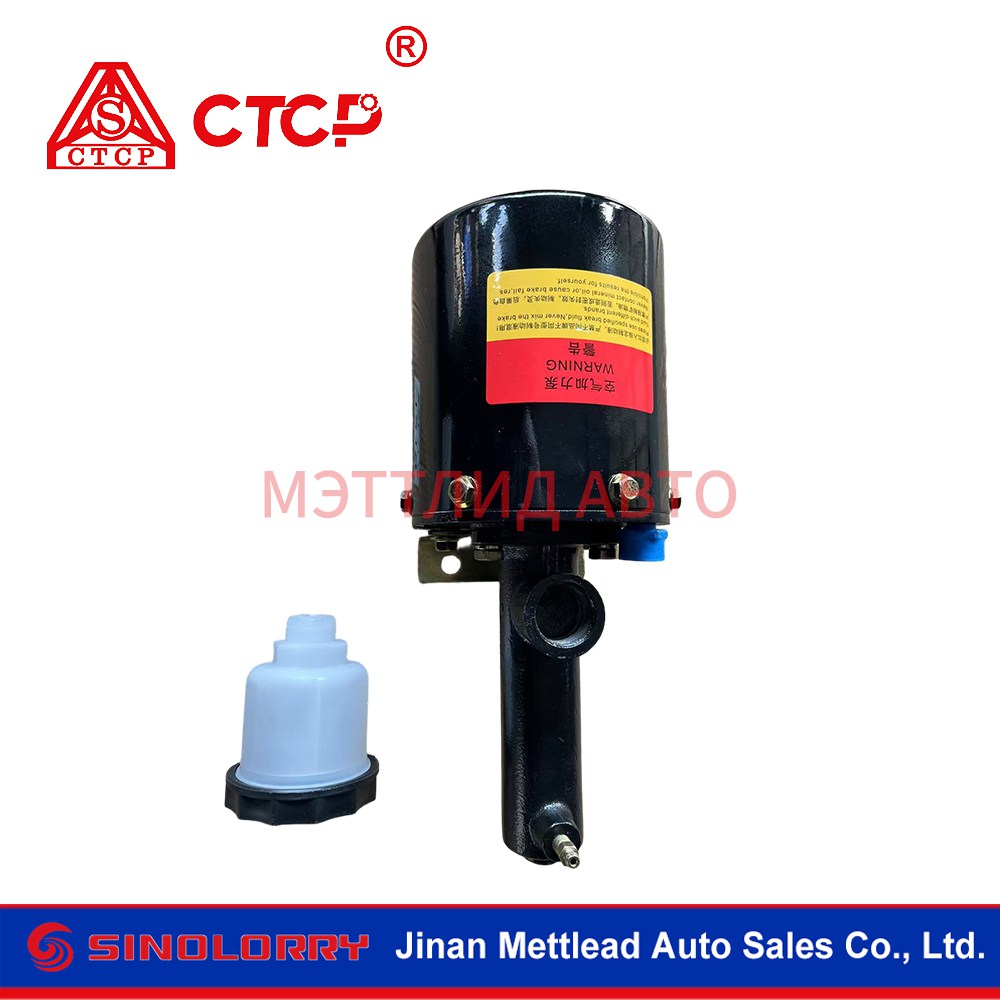
This includes turbochargers, common rail injectors, clutch discs, brake master cylinders and pneumatic system components. Failure of these components leads to a complete stop of the vehicle, often on the highway, and requires expensive towing and repairs. For these items, we recommend using only high quality OEM FAW parts. Price here is secondary to reliability. For example, Bosch or Denso fuel equipment supplied to the FAW conveyor requires calibration for a specific ECU. A non-original injector may have a deviation in the injection phase of 2-3 degrees, which will lead to incomplete combustion of fuel, overheating of the exhaust manifold and failure of the diesel particulate filter (DPF). Replacing a DPF costs thousands of dollars.
Group 2: Medium risk (Suspension, Steering, Electrics)
Springs, shock absorbers, steering rods, generators and starters. Failure of these elements is dangerous, but often predictable. Here it is acceptable to use high-quality analogues from second-tier brands (for example, European or Korean manufacturers with ISO/TS 16949 certification). However, even in this category, OEM FAW parts often provide better value in the long run due to the perfect compatibility of mounting holes and mounting angles. We have observed cases where non-original springs had an incorrect angle of inclination of the ears, which led to rapid wear of the silent blocks and disruption of the wheel alignment.
Group 3: Low risk (Body parts, Interior, Consumables)
Bumpers, mirrors, floor mats, air filters (with regular replacement), light bulbs. In these categories, you can safely consider alternative options. The quality of plastic or fabric does not affect the driving characteristics of the car. However, even here there is a nuance: the geometry of the body parts. A non-original fender may not align with the door gaps, which will require work from a body shop. Therefore, even for auto body work, we advise checking the reputation of the manufacturer.
| Part category | Recommendation for selection | Consequences of using a low-quality analogue | Approximate service life (OEM vs Analog) |
|---|---|---|---|
| Fuel system (Injectors, injection pump) | Strictly OEM | Engine overhaul, catalyst/DPF failure | 800,000 km vs 150,000 km |
| Brake system (Discs, Pads, Calipers) | Strictly OEM | Increased braking distance, wheel jam, accident | 200,000 km vs 60,000 km |
| Clutch (Disk, Basket) | OEM or premium equivalent | Slipping, inability to engage gears, gearbox failure | 300,000 km vs 100,000 km |
| Filters (Oil, Fuel) | OEM recommended | Worn cylinder-piston group, clogged injectors | 30,000 km vs 10,000 km (before loss of efficiency) |
| Suspension elements (Springs, Silent blocks) | OEM or certified equivalent | Violation of axle geometry, uneven tire wear | 400,000 km vs 150,000 km |
Action:Conduct an audit of your spare parts warehouse. Select Group 1 items and ensure they are purchased from authorized partners. For Group 3 positions, you can initiate a tender among analogue suppliers to reduce costs.
How to check the authenticity of FAW spare parts when receiving goods
Even when working with a reliable supplier, human error or logistics errors can lead to defective or counterfeit goods entering your shipment. We have developed a checklist for mechanics and storekeepers that allows you to identify inconsistencies before installing the part on the car. These methods do not require sophisticated equipment, just attention and basic tools.
- Checking packaging and labeling.The original FAW packaging is made of thick cardboard with clear printing. Holographic stickers should change color as your viewing angle changes. The box must contain a QR code or batch serial number. Check this number on the official FAW website or through the supplier's application. If the code is not readable or leads to an error page, it is a fake. Pay attention to the quality of the glue: on the original, the seams are glued evenly, without drips.
- Visual inspection of the part.Casting of original parts (for example, filter housings or brackets) must not have burrs, pits or traces of rough processing. The surface is painted evenly, without shagreen or bubbles. Rubber products (silent blocks, pipes) are clearly marked with the production date and material. Threaded connections must be cut cleanly, without breaks. Use a thread gauge or just try to tighten a sample bolt: it should go easily, without jamming.
- Comparison of weight and geometry.This is one of the most reliable methods. Counterfeits often differ in weight due to the use of a different material. Take a reference original part (old, but intact, or new from a tested batch) and compare it with the new one on the scales. A deviation of more than 5-10% is critical for metal parts. Also measure key dimensions with a caliper: diameter of seats, length, height. Geometric deviations greater than 0.5 mm can lead to installation problems.
- Checking documentation.Each box must have an insert with instructions or a warranty card in Russian (for the Russian market). The presence of only Chinese characters or English may indicate parallel imports, which complicates warranty cases. Request a waybill indicating the specific article and quantity.
- Test on materiale (for advanced).For critical components such as brake rotors, a hardness tester can be used. If you don't have a meter, you can do a simple spark test (with caution). Different grades of steel produce sparks of different colors and lengths. However, this method requires experience and comparison with a standard. It's safer to use a magnet: Some stainless steels used in exhaust systems are not magnetic, while cheap knock-offs made from regular steel will be.
One of our clients, a large carrier from Yekaterinburg, lost two FAW tractors due to the installation of non-original turbochargers. Outwardly, they were identical to the original, but upon opening it turned out that the impeller blades were balanced with an error 3 times greater than the permissible one. This led to the destruction of the turbine bearings at the 50th thousand kilometers; fragments entered the intake manifold and destroyed the piston group. The damage amounted to more than 3 million rubles, while the savings on turbines were only 40 thousand.
Action:Train your storekeepers and mechanics on points 1-3 of this checklist. Introduce mandatory photographic recording of each incoming batch of spare parts before installation. This will create an evidence base for claims against the supplier.
Logistics and delivery times: how to plan purchases of OEM spare parts
Given the instability of supply chains in 2025-2026, the issue of spare parts availability in warehouses becomes strategic. The original FAW is not always available at local dealers in the required quantity. Understanding delivery cycles will help you avoid equipment downtime.
The standard delivery time for OEM spare parts from a factory in China is 15-25 days, subject to the availability of goods at the manufacturer's warehouse. If the part requires custom production, the period increases to 45-60 days. Customs clearance in the Russian Federation takes on average 3-7 working days. Thus, the minimum warehouse replenishment cycle is 3-4 weeks. However, taking into account possible delays at the border, seasonal peaks in demand (autumn-winter) and holidays in China (Chinese New Year, Golden Week), we recommend creating a safety stock for 2-3 months of consumption.
For critical components (Group 1), we recommend keeping at least 1-2 sets in stock for every 10 vehicles in the fleet. For consumables (filters, pads) - supply for 1 month. Using warehouse management systems (WMS) with automatic order point calculations helps optimize this process. Don't rely on the purchasing manager's intuition. Use mileage and average failure rate data for your specific FAW model and operating conditions.
It is also worth considering the possibility of consolidated shipments. If you need different parts, order them in one container or bulk order from one reliable supplier. This will reduce logistics costs per unit of goods and simplify customs clearance. Many suppliers offer volume discounts (MOQ - minimum order quantity). Typically, the MOQ for wholesale prices is from 50,000 rubles or from 10 units of one item. Discuss these terms in advance.
Action:Analyze your fleet's failure history over the past year. Highlight the top 10 most frequently replaced parts. Calculate the average monthly expense for each item. Multiply by 2. This is your minimum safety stock. Check it against current stock availability.
Warranty and after-sales service: buyer's rights
Purchasing high quality OEM FAW parts entitles you to a warranty. According to the legislation of the Russian Federation and the conditions of most official dealers, the warranty for original spare parts ranges from 6 to 12 months or up to a certain mileage (usually 50-100 thousand km). It is important to understand that the warranty only applies to the part itself, and not to replacement work or associated damages, unless the fault of the part manufacturer is proven.
Installation conditions must be met for the warranty to apply. The part must be installed in a certified service center or by qualified personnel in compliance with the manufacturer’s technological data sheets. Keep all certificates of work performed, receipts for the purchase of parts and documents confirming payment for service services. If a part fails, these documents will become the basis for a claim.
We have encountered situations where suppliers refused a warranty, citing “violation of operating conditions.” To avoid this, fix the condition of adjacent assemblies before replacing. For example, when replacing a turbine, check the condition of the intercooler and pipes for the presence of oil. If the turbo fails due to oil contamination and the intercooler is full of dirt, the warranty may be void. The cleanliness of the intake system is the responsibility of the person making the replacement.
Please also pay attention to the return procedure. It must be specified in the supply contract. The standard processing time for a claim is 10-20 business days. The supplier has the right to conduct an examination of the part. If the defect is recognized as a manufacturing defect, you are required to replace the part or return your money. If the defect is caused by improper installation or operation, the warranty will be denied.
Action:Check your contract with the supplier for the “Warranty” section. Make sure that the deadlines for reviewing claims and the refund procedure are clearly stated there. If there is no contract (work on account), request written confirmation of the warranty terms in correspondence.
Frequently Asked Questions
How to distinguish an original FAW spare part from a fake by VIN code?
The vehicle's VIN code allows you to select the exact configuration and corresponding spare parts numbers through the official FAW catalogs. However, the VIN itself does not protect against counterfeiting of the part. It only ensures that you order the correct number. A fake may have the same number as the original. Therefore, use the VIN for selection, but check the authenticity of the part itself using the markers on the packaging and the quality of workmanship, as described above. Never buy parts based solely on matching numbers on the box.
Is it possible to use analogs instead of OEM spare parts for FAW on new cars?
On new cars that are under the vehicle manufacturer's warranty, the use of non-original spare parts may become grounds for denial of the warranty for the entire car or its components if a cause-and-effect relationship between the failure of the analogue and the breakdown is proven. For cars older than 3 years or with a mileage of more than 100,000 km, the use of high-quality analogues is acceptable and economically justified for non-critical components. For engines and transmissions, we still recommend staying with OEM, even on older cars, since the service life of the original is predictable.
What is the average dealer markup on OEM FAW parts?
The average retail markup of official dealers is 30-50% of the wholesale price. Large wholesale buyers (vehicle fleets) can receive a discount of up to 15-20% of the retail price for volume purchases. Gray importers can offer prices 10-15% lower than official prices, but without guarantees or documents. If the price is more than 30% lower than the official one, this is almost always a sign of counterfeit or stolen goods. Remember that miracles do not happen: OEM SPARE PARTS for FAW of high quality - the price of which is suspiciously low, most likely are not.
Does the payment method affect the speed of delivery of spare parts?
Yes. Prepayment of 100% usually speeds up order processing and shipment from the supplier's warehouse. Payment upon delivery or deferred payment is available only to regular customers with a good credit history and may increase the order processing time by 2-3 days due to additional security checks. For urgent orders, we recommend using fast bank transfers or electronic payment systems supported by the supplier.
Conclusion: Investing in Reliability, Not Just Buying Hardware
The choice between a cheap analogue and the original is not just a matter of running costs. This is a strategic decision that impacts the fleet's total cost of ownership (TCO). As we have shown, savings on high-quality OEM spare parts for FAW are illusory and often lead to a multiple increase in repair and downtime costs. The price of the original includes the confidence that the part will withstand the loads provided by the factory engineers.
We encourage you to reconsider your approach to procurement. Implement multi-stage control of incoming parts, work only with trusted suppliers who have a transparent history and the necessary certificates. Request documents, check labeling, train staff. These simple actions pay off many times over.
This is the approach that underlies the workJinan Metallid Auto LLC. Located in Jinan, the heart of the Chinese auto parts industry, our company specializes in the direct supply of original components for FAW trucks, as well as BEIBEN, HOWO, SHACMAN and other special equipment. We are not just middlemen: our team of technical engineers with over 15 years of experience carries out strict multi-level quality control at every stage - from checking compliance with metallurgical standards to the final verification of packaging.
We understand the specifics of the Russian market and offer a comprehensive solution for distributors and vehicle fleets: from prompt selection by VIN to flexible configuration of logistics and customs clearance. Our service is built on the principle of “butler-style service”: we take care of all the routine work, providing comprehensive technical documentation and personalized support. When you work with us, you don't just get a part, you get the guarantee that it meets FAW factory specifications, keeping your business running without unplanned downtime.
Don't wait for a breakdown to start thinking about the quality of spare parts. Be proactive.
Contact us todayto receive an individual commercial offer and advice on the selection of OEM spare parts for your FAW fleet. Our experts will help you optimize your inventory and reduce the risk of downtime.