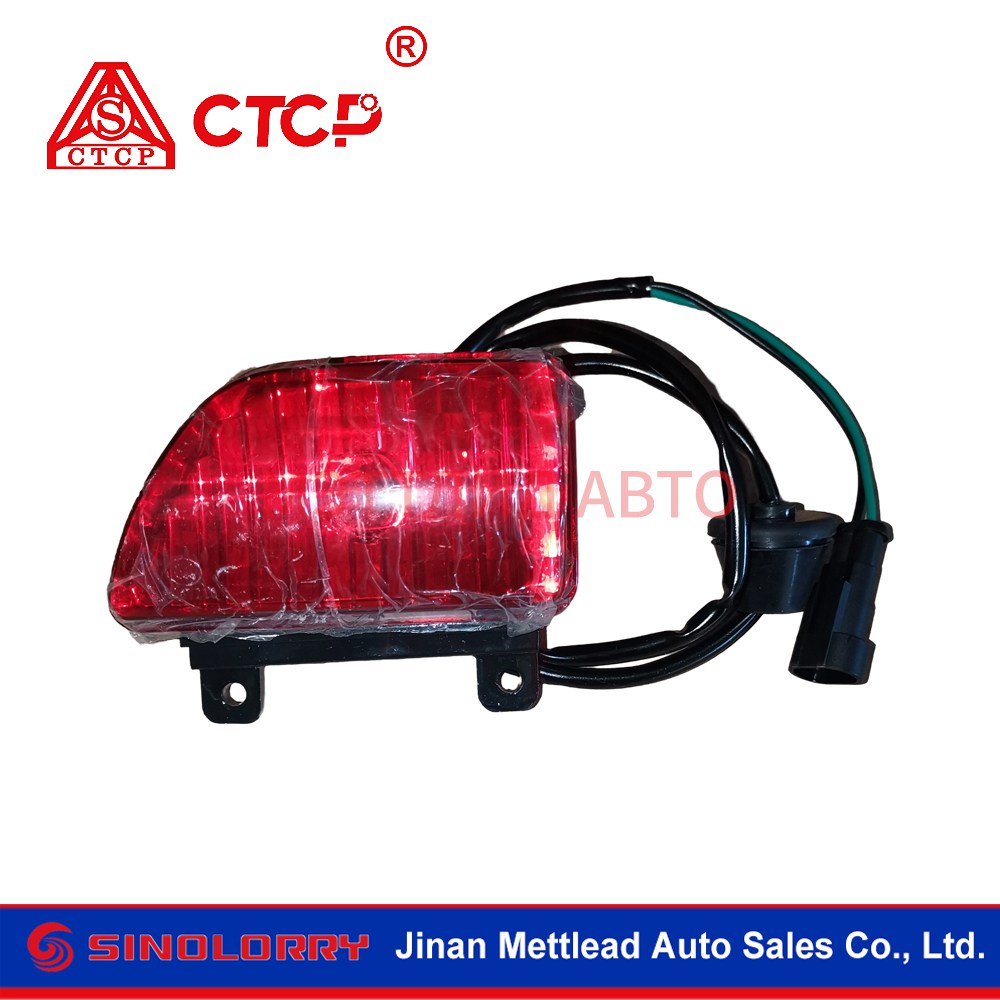

SPARE PARTS for FOTON 1852: fan
2026-07-12
- SPARE PARTS for FOTON 1852: fan - critical part of the cooling system
- Technical characteristics and types of fans for Foton 1852
- How to Diagnose a Fan Failure: Symptoms and Tests
- Risks of purchasing low-quality analogues: analysis of real cases
- Fan Replacement Process: Step-by-Step Guide
- Logistics and procurement: how to avoid problems with supplies to the Russian Federation
- Frequently Asked Questions
- Conclusion: An investment in the reliability of your fleet
SPARE PARTS for FOTON 1852: fan - critical part of the cooling system
In our practice of servicing heavy equipment, we regularly encounter a situation where the downtime of a Foton Auman 1852 truck (or similar models of the EST/ETX series) is caused not by engine failure, but by the failure of seemingly minor components. One of these components is the cooling system fan.SPARE PARTS for FOTON 1852: fan- this is not just a plastic impeller or a metal casing. This is an element on which the thermal operating conditions of a Weichai or Cummins diesel engine installed on the chassis directly depend. Overheating of the cylinder head (cylinder head) can lead to deformation of the contact plane and the need for major engine repairs, the cost of which is tens of times higher than the price of a high-quality fan.
Many buyers and mechanics mistakenly believe that all fans are interchangeable. However, differences in blade pitch, material (nylon versus aluminum) and hub mounting profile can lead to cavitation, vibration and destruction of the pump bearings after just 5,000 kilometers. In this guide, we will analyze in detail the technical features of selection, signs of wear and quality criteria for spare parts for the Foton 1852 model, based on real operating experience in the harsh climatic conditions of Russia and the CIS.
If you are currently assessing the condition of your vehicle fleet or preparing a supply request, understanding these nuances will save you budget for unscheduled repairs. Let's look at why original specifications are more important than low price in the market.
Technical characteristics and types of fans for Foton 1852
The Foton 1852 truck, often equipped with an engine power of 350 to 400 hp, requires intensive heat dissipation, especially when operating in heavy traffic or during the summer. The cooling system here works under high load. The fan is the active element of this system, creating a directed air flow through the radiator and intercooler.
When searching for a querySPARE PARTS for FOTON 1852: fan, you will encounter several designs. Understanding the differences between them is critical to making the right choice.
Blade material: nylon (composite) vs aluminum
This is the first thing you need to pay attention to. At the Foton factory, fans are most often installed from glass fiber reinforced nylon (polyamide). Why? Because composite blades have better aerodynamics and, more importantly, they are less traumatic for the radiator in case of contact. If an unbalanced aluminum blade touches the radiator honeycomb, it will pierce them instantly, requiring replacement of the entire heat exchanger. The nylon blade will most likely simply melt or break on its own, leaving the radiator intact.
However, there is a nuance. Cheap Chinese analogues made of low-quality plastic lose their rigidity at temperatures above 90°C. The blades begin to “walk”, changing the angle of attack, which reduces the efficiency of the airflow by 15-20%. Genuine Foton parts use a high temperature composite that maintains geometry up to 120°C. When purchasing a non-original product, always check the temperature range of the material.
Hub design and drive type
The Foton 1852 fan can be rigidly mounted on the water pump shaft or connected through a viscous coupling (viscous coupling). Most modern 1852 configurations use a viscous coupling. It allows the fan to idle when the engine is cold, reducing the load on the motor and speeding up its warm-up, and to turn on at full speed when the temperature rises.
The fan hub must have an exact match with the viscous coupling seat. Even a deviation of 0.1 mm in the diameter of the central hole or a mismatch in the spline profile will lead to runout. Runout transmits vibration to the viscous coupling bearing, causing its premature failure. We have recorded cases where replacement of a low-quality fan was required along with replacement of a working viscous coupling due to the destruction of its seals by vibration.
Blade diameter and pitch
For the 1852 model, the standard fan diameter is usually between 650 and 720 mm (depending on year of manufacture and cabin type). The pitch of the blades determines the volume of air pumped. A pitch that is too small will not keep you cool in traffic or on a climb. Too much pitch will create excess drag on the engine, increasing fuel consumption and stressing the drive belt.
Below is a comparison table of the main parameters that must be checked before ordering:
| Parameter | Original Foton/OEM High Quality | Cheap analogue (No-name) | Impact on Operation |
|---|---|---|---|
| Material | PA66 + GF30 (Polyamide 66 with 30% glass fiber) | Recycled plastic, low filler content | Risk of deformation due to overheating, imbalance |
| Balancing | Dynamic balancing on a bench, residual imbalance < 5 g cm | Absent or static “by eye” | Vibration, noise, wear of pump bearings |
| Blade thickness at the root | Reinforced, smooth transitions | Thin, sharp corners (stress risers) | Cracks at the base of the blade after 20-30 thousand km |
| Marking | Clear part number, logo, casting date | Missing or blurred | Impossibility of identifying a batch if defective |
ChoosingSPARE PARTS for FOTON 1852: fan, always ask the supplier for a photo of the markings and, if possible, a balance certificate. This will weed out 80% of garage junk.
How to Diagnose a Fan Failure: Symptoms and Tests
Before placing an order for new spare parts, you need to make sure that the problem is in the fan and not in the thermostat, radiator or viscous coupling. In our service practice, we use a clear diagnostic algorithm that allows us to avoid unnecessary costs.
The first sign is increased noise levels. A working fan emits a uniform hum, proportional to engine speed. If you hear rhythmic clicking, whistling, or strong vibrations transmitted into the cab, this indicates an imbalance in the impeller. This often occurs due to the chipping of one of the blades from a stone hit or due to the accumulation of dirt and ice in an uneven layer.
The second symptom is engine overheating in stationary mode or when driving at low speed. If on the highway at a speed of 80 km/h the temperature remains normal, but in a city traffic jam it creeps up, the problem may be in the efficiency of the fan. However, it is important to avoid contamination of the radiator. Remove the fan and inspect the blades. The presence of cracks, especially at the base (at the point of attachment to the hub), is a critical defect. The operation of such a fan is prohibited, since the separation of the blade at high speeds can destroy the casing and damage other components under the hood.
The third, less obvious sign is touch marks. Inspect the inner surface of the protective casing (diffuser). If there are abrasions or melting on the plastic, it means that the fan axis has play, or the impeller itself is deformed. This often happens after impacts to the front of the car or improper installation of a previous part.
Checking the play: Try rocking the fan by hand (with the engine off). There should be no play in the vertical and horizontal planes. If there is one, the problem may be in the water pump bearing or in the fan hub itself if it is integrated. For models with a separate viscous coupling, check the play on the coupling shaft.
We recommend visual inspection of the fan every 20,000 km or at every seasonal maintenance. This is a simple operation that takes 15 minutes but can prevent costly repairs.
Risks of purchasing low-quality analogues: analysis of real cases
The spare parts market for Chinese trucks is oversaturated with offers. The difference in the price of a fan for Foton 1852 can reach 300-400%. The question arises: is it worth overpaying for the brand or can you take “the same thing” without a sticker? Our experience suggests the opposite: saving on a fan often leads to a chain reaction of breakdowns.
Let's consider a real case from the practice of one of our clients, a transport company from the Sverdlovsk region. In order to save the budget, we purchased a batch of 10 fans from an unverified supplier at a price 40% lower than the market price. Externally, the parts looked identical to the original. However, after three months of operation, three trucks returned with overheated engines.
The autopsy revealed the following:
- The plastic of the fans has lost its rigidity due to constant thermal cycling. The blades changed the angle of inclination, which reduced airflow performance by 25%.
- Due to poor balancing, vibration occurred which destroyed the water pump seal. The antifreeze began to leave, which aggravated the overheating.
- In one case, a piece of a blade fell into the gap between the radiator and the fan, deforming the honeycomb of the air conditioner radiator, which was installed closely.
The total cost of repairs (replacement of the pump, flushing the system, repair of the air conditioner radiator, evacuation and downtime) exceeded the cost of the original fans by 5 times. In addition, the downtime of three cars for a week damaged the carrier’s reputation with the customer.
This case illustrates an important point: a fan is a precision component. Its geometry is calculated by engineers taking into account the aerodynamic flows of a particular body and the location of radiators. Artisanal copying of a form without adherence to casting and balancing technology is unacceptable.
Another risk is chemical resistance. High-quality nylon is resistant to antifreeze, oils and ozone. Cheap plastics can react with vapors from technical fluids, becoming brittle. We have seen fans that crumble in our hands after two years of use precisely because of material degradation, and not mechanical shock.
Therefore, choosingSPARE PARTS for FOTON 1852: fan, pay attention not only to the price, but also to the reputation of the component manufacturer. Preference should be given to factories that supply products to the Foton conveyor or have ISO 9001 and IATF 16949 certificates.
Fan Replacement Process: Step-by-Step Guide
Replacing a fan on a Foton 1852 is a procedure of average complexity. It requires a certain set of tools and compliance with safety precautions. Below is an algorithm of actions tested by our technical specialists.
Required tools:
- Set of spanners and sockets (main sizes: 13, 17, 19 mm).
- Hex keys (for some types of housing fastenings).
- Torque wrench (critical for tightening hub bolts).
- Clean rags and degreaser.
- A new set of fasteners (bolts and nuts), if the old one has traces of corrosion or elongated threads.
- Preparation and safety.Place the car on a level surface and lock the parking brake. Wait until the engine cools down completely. Working with a hot cooling system is dangerous due to burns and rupture of pressure hoses. Open the hood and remove the trim panels if they interfere with access to the top of the radiator.
- Removing the protective casing (diffuser).The fan shroud usually consists of two or four parts, held together by bolts or plastic clips. Carefully unscrew the fasteners. Pay attention to the location of the rubber seals between the casing parts. If they are torn or have lost elasticity, they must be replaced, otherwise air will flow past the radiator, reducing cooling efficiency. Remove the casing parts, being careful not to damage the plastic guides.
- Fixing the viscous coupling and unscrewing the nut.This is the most difficult stage. The nut securing the fan to the viscous coupling is often tightened with a large torque and may have a left-hand thread (attention: check the thread direction for the specific Weichai/Cummins engine model! Most often the thread is right-handed, but there are exceptions). To unscrew the nut, it is necessary to fix the viscous coupling shaft. Use a special key holder or, as a last resort, carefully insert a screwdriver into the technological holes of the viscous coupling flange (do not damage the seals!). Using a sharp but controlled force, remove the nut.Warning: Do not use impact wrenches without securing the shaft, this is guaranteed to destroy the viscous coupling bearing.
- Removing the old fan and cleaning the surfaces.Remove the fan from the slots. Thoroughly clean the seat on the viscous coupling shaft from dirt, rust and remnants of old fixing paste. The surface must be perfectly clean and dry. Inspect the splines for wear. If the splines are “licked”, replace the viscous coupling, otherwise the new fan will slip or dangle.
- Installing a new fan.Place the new fan onto the shaft, aligning the splines. Make sure it is seated all the way and evenly. Apply a thin layer of copper grease or a special non-stick compound to the threads of the nut (this will make the next replacement easier and prevent souring). Tighten the nut to the manufacturer's recommended torque (usually 80-120 Nm, check your manual). Be sure to use a torque wrench. Over-tightening can break the threads on the aluminum viscous coupling body; under-tightening will lead to self-unscrewing.
- Housing installation and inspection.Reinstall the shroud parts, making sure that the gap between the fan blades and the shroud walls is the same all around (tolerance is usually ±2-3 mm). Misalignment of the casing will cause noise and vibration. Secure all bolts. Start the engine and let it idle. Listen to extraneous sounds. Make sure the fan rotates smoothly and without beating. Check for any antifreeze leaks from the pump that could have occurred due to manipulation.
After replacement, it is recommended to conduct a test drive while monitoring the engine temperature. If the temperature arrow behaves stably, the work is completed successfully.
Logistics and procurement: how to avoid problems with supplies to the Russian Federation
In the current economic conditions, the purchase of spare parts for Chinese equipment requires careful attention to logistics and customs clearance. OrderingSPARE PARTS for FOTON 1852: fan, consider the following factors to ensure the smooth running of your fleet.
Firstly, delivery times. Direct deliveries from China now take from 15 to 30 days, depending on the method of transportation (road delivery is faster, railway delivery is cheaper). If you buy from a warehouse in Russia, make sure that the product is actually in stock and not listed as “to order”. Ask the seller to provide a photo of the specific part with markings before shipping. This will protect you from over-grading.
Secondly, certification. For commercial vehicles, it is important that spare parts have the appropriate documentation. Although individual components do not always require a TR CU certificate of conformity, the presence of a declaration of conformity or refusal of certification is necessary for accounting purposes and justification of costs. Work with suppliers who provide a complete package of documents.
Thirdly, packaging. The fan is a large and fragile part. Plastic blades break easily if handled carelessly. Request your supplier to use reinforced cardboard containers with locking inserts. If the fan comes in soft packaging or simply wrapped in film, the risk of damage is more than 50%. Always inspect the cargo upon receipt in the presence of the courier or driver. Take photographs of the package before opening. In case of damage, draw up a report immediately - it will be impossible to prove it to the transport insurance company later.
We recommend creating an insurance stock of spare parts. For a fleet of 10 Foton 1852 trucks, it is advisable to have 1-2 sets of fan assemblies and 2-3 separate impellers in stock. This will allow you to quickly respond to breakdowns during a flight, without waiting weeks for delivery.
Why supplier reliability is as important as part quality
Choosing a reliable supply partner becomes a critical success factor in uncertain logistics environments. A striking example of this approach is the companyJinan Metallid Auto LLC. Located in Jinan, a recognized automotive parts center in China, this industrial trading company specializes in the export of original and compatible parts for trucks, special equipment and buses.
The philosophy of Jinan Metallid Auto is based on the principles of “quality first, efficient service, customer first.” The company does not just send goods, but provides a full supply cycle: from careful selection of components by engineers with 15 years of experience to logistics, customs clearance and delivery to the end buyer. Thanks to close cooperation with certified factory suppliers, each batch undergoes multi-level quality control. This minimizes the risk of defects, which is especially important for such sensitive components as cooling system fans.
For Russian customers, especially in the Southern Urals and Central Siberia, Jinan Metallic Auto offers a “butler-style” service: transparent order support, provision of comprehensive technical data and flexible packaging customization. This approach ensures that what you orderSPARE PARTS for FOTON 1852: fanwill arrive in perfect condition, meeting your fleet's exact specifications.
Frequently Asked Questions
Can I use a fan from another Foton model on the 1852?
It is strictly not recommended without first checking the catalog numbers. Even if the diameter is the same, the blade pitch and mounting profile may differ. Using the wrong fan will result in ineffective cooling or vibration. Always check the vehicle's VIN and official parts catalogue.
How to distinguish an original Foton fan from a fake?
The original part is clearly marked, not blurred, with the part number, Foton logo or manufacturer brand (for example, Weichai). The plastic is uniform in color, without burrs or traces of rough casting processing. The blades are symmetrical. A fake is often characterized by the smell of cheap plastic, the presence of flash (excess plastic) on the edges of the blades and the absence of markings. Also pay attention to the weight: the original has a strictly defined weight; a deviation of more than 5-10% indicates a violation of the technology.
Do I need to change the viscous coupling when replacing a fan?
Not necessary if the viscous coupling is working properly. Check its condition: whether there are any leaks of silicone fluid, whether there is any play, whether it reacts correctly to heat (resists rotation on a hot engine). If the viscous coupling is older than 5 years or has a mileage of more than 500,000 km, preventive replacement along with the fan may be justified, since the service life of these components is comparable.
Does fan material affect fuel consumption?
Yes, indirectly. A properly balanced fan with optimal blade pitch creates the necessary air resistance with minimal engine energy consumption. Imbalance or incorrect geometry causes the engine to waste more power spinning, which increases fuel consumption by 1-3%. In terms of the truck's annual mileage, this is a significant amount.
What is the service life of a cooling fan?
Service life depends on operating conditions. On average, a high-quality fan lasts 3-5 years or 300,000 – 500,000 km. However, exposure to ultraviolet radiation, temperature changes and mechanical damage (stones, high pressure washing) can shorten this period. Regular inspection can identify microcracks before catastrophic failure.
Conclusion: An investment in the reliability of your fleet
Selecting quality cooling system components is not an expense, but an investment in business continuity.SPARE PARTS for FOTON 1852: fanplay a key role in maintaining optimal engine thermal conditions. Saving on the quality of this part is illusory and is fraught with high risks of downtime and major repairs.
We encourage fleet owners and mechanics to use a balanced approach to the selection of spare parts. Check certificates, require photo markings, follow installation technology and do not neglect regular diagnostics. Only such an integrated approach will ensure long and reliable service for your Foton equipment.
If you need advice on the selection of spare parts, help in filling out an application, or you want to find out about the availability of original fans and premium analogues, our specialistsJinan Metallid Auto LLCready to help. Our team has many years of experience working with Foton equipment and will select the optimal solution for your budget and objectives, ensuring fast delivery and full documentary support.
Buy spare parts for Foton 1852 with delivery throughout the Russian Federation
Contact us today