
WABCO receiver: air reserve
2026-07-18
- WABCO air tank: the critical role of compressed air reserves in truck pneumatic systems
- Physics of the process: why air volume and purity are more important than pressure
- Technical characteristics and types of WABCO receivers
- Typical problems and troubleshooting
- Replacement and Installation Procedure: Step-by-Step Guide
- How to choose a supplier and avoid counterfeiting
- Economic justification for investing in quality receivers
- Global approach to quality: experience of Jinan Metallid Auto LLC
- Frequently Asked Questions
- Conclusion: Reliability starts small
WABCO air tank: the critical role of compressed air reserves in truck pneumatic systems
In our practice of servicing commercial vehicles, we regularly encounter situations where drivers and mechanics underestimate the importance of such a component asWABCO receiver: air reserve. Many people perceive it simply as a metal cylinder that “hangs there somewhere” under the frame. However, this element is the heart of the pneumatic system, ensuring safe braking, operation of the suspension and auxiliary mechanisms. The lack of a sufficient supply of compressed air or its contamination leads not just to breakdown, but to a direct threat to life on the road.
Systems from WABCO (now part of the ZF Group) set the standard for reliability in the global automotive industry. But even the most advanced pressure control system will not be able to compensate for the physical lack of energy storage volume or critical corrosion of the receiver walls. In this article we will analyze the technical nuances of selecting, operating and replacing WABCO receivers, based on real experience of working with vehicle fleets in the Russian climate and road loads. We will show why saving on the quality of this component results in losses that exceed the cost of the product itself by tens of times.
Physics of the process: why air volume and purity are more important than pressure
System pressure is just one of the parameters. It is much more important to understand the conceptenergy reserve. The receiver acts as a buffer. When the compressor pumps air, it does not go directly into the brake chambers instantly. First it accumulates in the receiver. This reserve is necessary so that the driver can make several emergency brakes in a row, even in the event of a compressor failure or a broken drive belt.
In our practice, there was a case where the pressure regulator on a mainline tractor failed. The compressor has stopped pumping air into the system. Thanks to working WABCO receivers with a capacity of 40 liters each (there are usually three or four of them in the system), the driver was able to safely stop the car and park on the side of the road, using up the entire accumulated supply. If the receivers were smaller or had internal leaks due to corrosion, shutdown would not be possible. This is a clear example of howWABCO receiver: air reservesaves the situation.
In addition to volume, air purity is critically important. Primary cooling and condensation of moisture occurs inside the receiver. The oil coming from the compressor mixes with water and settles at the bottom. If the receiver does not have an effective drain valve or its walls are covered with rust, this emulsion goes further into the system: into the control valves, into the EBS (electronic braking system) modulators and into the air suspension. The result is valve sticking in winter and corrosion of expensive components.
We recommend checking the condition of the internal walls of the receiver at least once every two years, especially for vehicles operated in regions with high humidity or frequent temperature changes. A visual inspection from the outside does not provide any information about what is happening inside. Using an endoscope through the opening of the drain valve allows you to identify areas of corrosion at an early stage.
Technical characteristics and types of WABCO receivers
The WABCO product line includes various types of receivers, adapted to specific applications. Understanding the differences between them is necessary for the correct selection of spare parts. An error in choosing the type of receiver can lead to mismatched fasteners or insufficient throughput of the fittings.
Standard cylindrical receivers
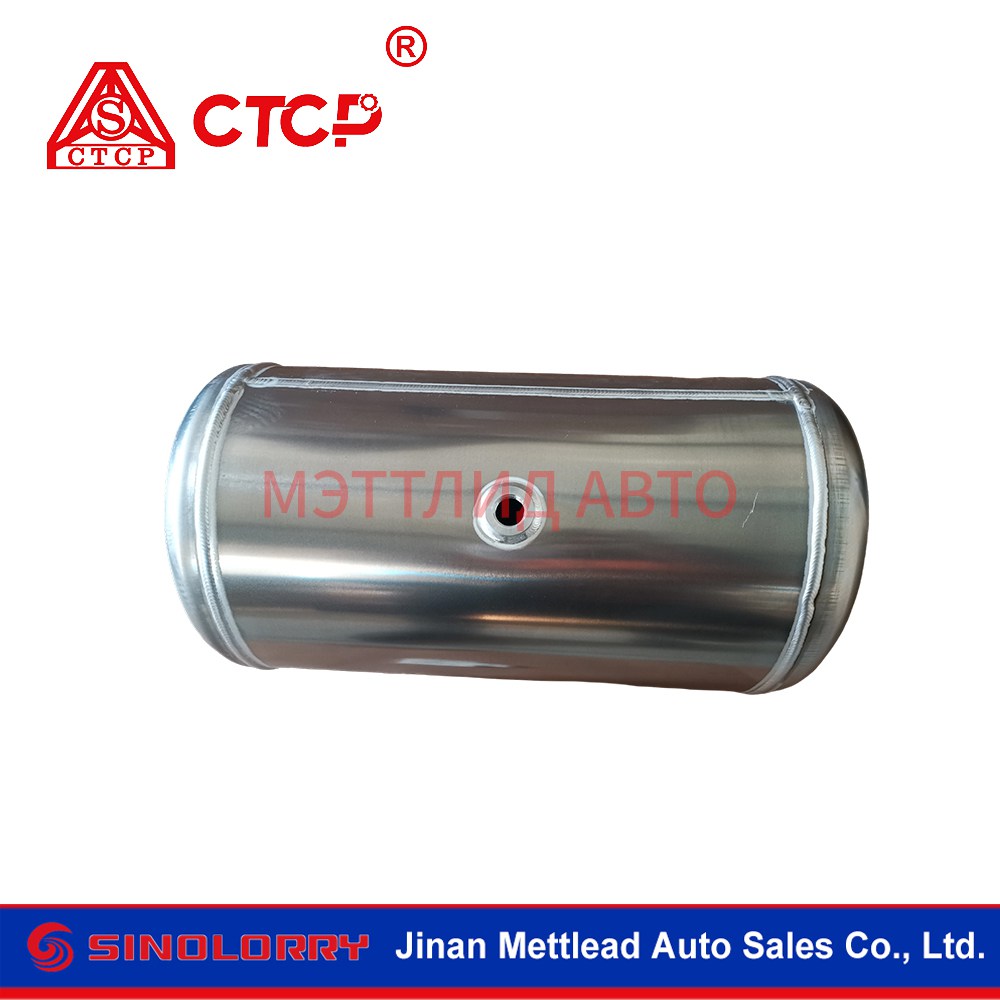
This is the most common type used to store the main supply of air. They are made of steel with anti-corrosion coating or aluminum. Steel receivers are cheaper, but heavier and susceptible to corrosion if the outer layer is damaged. Aluminum alternatives, such as the WABCO Alu-Line series, do not rust, are 40-50% lighter and have a longer service life, but are more expensive. For modern Euro tractors, we strongly recommend aluminum options, as they reduce the overall weight of the vehicle, which directly affects fuel efficiency and payload.
Receivers with integrated filters and valves
Some models are equipped with built-in four-circuit safety valves or filter driers. Such solutions save space on the frame and reduce the number of pneumatic connections, which reduces the risk of leaks. However, they require more qualified maintenance. Replacing the filter element in such a block is more difficult than in a separate module. When choosing this design, make sure that you have access to original consumables.
Compact receivers for auxiliary systems
Small volumes (5 to 15 liters) are used to power air suspension, transmission control or trailer auxiliary braking systems. The key parameter here is the rate of filling and depressurization. The threaded connections in these receivers are often made to metric or inch thread standards, and confusion is unacceptable.
| Parameter | Steel receiver | Aluminum receiver (WABCO) | Composite/Plastic |
|---|---|---|---|
| Weight | High (steel 3-5 mm) | Low (Al alloy) | Minimum |
| Corrosion resistance | Medium (requires painting) | High (does not rust) | Absolute |
| Cost | Low | Medium/High | High |
| Application | Budget segment, old equipment | Modern long-haul tractors | Specific units, light commerce |
| Service life | 5-7 years (depending on care) | 10+ years | Depends on UV resistance |
When replacing, always check the markings on the old receiver with the ZF/WABCO catalogue. Please note the operating pressure: the standard is 10-12 bar, but some systems require up to 15 bar. Installing a receiver with a lower rated pressure is strictly prohibited by the technical operating rules.
Typical problems and troubleshooting
Even reliable components fail. In our diagnostic practice, we have identified three main groups of problems associated with receivers that lead to a violation of the air supply.
1. Corrosion and loss of tightness.This is the most insidious problem. The external appearance of the receiver may look perfect, especially if it has been recently painted. However, condensation accumulates inside, at the bottom. Over time, the steel becomes thinner and microcracks appear. Symptoms: constant hissing of air from below the car, the need for frequent pumping with a compressor. If you hear hissing but can't find the source in the pipes or connections, check the bottom of the receiver with soapy water. Often the crack is located in the welding area of the bottom or mounting brackets.
2. Contamination of the internal volume.If the car owner ignores replacing the air dryer filters and does not drain the condensate manually (in the absence of automatic valves), thick, oily dirt will form inside the receiver. This mass clogs the inlet and outlet openings. In winter, this mixture freezes, completely blocking the air supply to the brake circuits. We have seen cases where, when disassembling an old receiver, up to 200-300 grams of solid rust and slag spilled out of it. Such “debris” inevitably gets into sensitive pneumatic valves, causing them to jam.
3. Mechanical damage to the brackets.The receiver is attached to the frame with clamps or welded brackets. Vibration and impacts from stones can cause fastenings to loosen or break. A loose receiver is a ticking time bomb. During sudden braking or maneuvering, it can come off, breaking the pneumatic lines. In this case, the loss of air occurs instantly, and the car loses control. Regular visual inspection of fasteners should be part of the daily pre-trip inspection.
To diagnose the integrity of the internal volume, professional services use ultrasonic thickness gauging. This method allows you to determine the residual wall thickness without dismantling and drilling holes. If the wall thickness is less than 70% of the nominal thickness, the receiver must be replaced immediately, regardless of its appearance.
Replacement and Installation Procedure: Step-by-Step Guide
Replacing the receiver seems like a simple operation, but a violation of the installation technology leads to rapid failure of the new component. Below are instructions based on manufacturer standards and our experience.
- Preparation and safety.Completely release pressure from the pneumatic system. Open all drain valves and press the brake pedal several times to ensure that there is no compressed air left in the circuits. Working under pressure of even 2-3 bar can cause injury when unscrewing fittings. Wear safety glasses and gloves.
- Removing the old receiver.Disconnect the pneumatic tubes. Be prepared for dirty condensation to leak from them. Place the container. Unscrew the fastening clamps. If the threaded connections are soured, use a penetrating lubricant, but avoid using too much force to avoid stripping the fittings on the receiver itself if you plan to reuse them (which is not recommended).
- Cleaning the seat.This is a critical step that is often ignored. Clean the frame where the new receiver is mounted from dirt, rust and old paint. Apply fresh anti-rust compound to the frame brackets. Installing a new, clean receiver on a rotten bracket is pointless - vibration will quickly destroy the connection.
- Installation of a new WABCO receiver.Secure the receiver with clamps. Tighten the bolts evenly using a torque wrench. Excessive tightening can deform the housing (especially aluminum), and weak tightening can lead to vibration. Make sure the drain valve faces down and is accessible for service. If the design provides for automatic draining, check the free movement of its mechanism.
- Connecting pneumatic lines.Use new copper or nylon tubing if the old ones show signs of wear. When cutting tubes, use a special cutter to avoid the formation of chips inside the channel. Chips are the main enemy of the pneumatic system. Apply sealant to threaded connections only if specified in the instructions (for tapered threads, sealant is not needed, correct tightening is sufficient). Avoid getting sealant into the system.
- Initial inspection and testing.Start the engine. Keep an eye on the pressure gauges in the cockpit. Check all new connections with soapy water for leaks. Wait until the compressor switches off when the maximum pressure is reached. After this, turn off the engine and leave the car for 15-20 minutes. The pressure drop should not exceed 0.5 bar over this period (according to most maintenance standards). If the pressure drops faster, look for a leak.
Please note: After replacing the receiver, it is recommended to replace the air dryer filter of the entire system. An old filter, saturated with moisture and oil, will instantly contaminate a new, clean receiver. This is good practice in air repair and will save you money in the long run.
How to choose a supplier and avoid counterfeiting
The truck parts market is saturated with fakes. The WABCO brand is copied more often than others due to high demand. A counterfeit receiver may look identical to the original, but have critical defects: thin walls, poor-quality seam welding, incorrect fitting geometry. Using such a part is a high-stakes lottery.
What to look for when purchasing:
- Marking.The body of the original WABCO receiver must be clearly, indelibly marked with the part number, production date and logo. Missing or unclear markings are a red flag.
- Coverage quality.The paint should lie flat, without streaks or bubbles. The internal surface (if it is possible to inspect through the hole) must be clean, free of scale and rust.
- Certificates of conformity.Request from the supplier certificates of compliance with GOST or EAC standards. For imported parts, a customs union declaration is required. Lack of documents means that the origin of the goods is unknown.
- Price.There are no miracles. If the price of a WABCO receiver is 30-40% lower than the market average, it is almost guaranteed to be a fake or a used part, cleaned and repainted. Original ZF/WABCO products have a strict pricing policy.
We advise purchasing pneumatic components only from authorized distributors or trusted suppliers with a long history of work in the market. Ask the seller about the possibility of returning the product if defects are found during installation. A reliable supplier always goes the extra mile because he is confident in his product.
The choice between the original and a high-quality analogue depends on the budget and age of the car. For new machines and equipment under warranty, the choice is clear - only WABCO originals. For cars older than 10 years operating in difficult conditions, it is permissible to use certified analogues from well-known European or Turkish manufacturers, but only subject to strict quality control upon acceptance.
Economic justification for investing in quality receivers
Many fleet owners try to save money by purchasing the cheapest receivers. Let's calculate the real cost of such a solution. The cost of a typical low quality steel receiver can be around $30-40. The original WABCO aluminum receiver costs 2-3 times more. It would seem that the savings are obvious.
However, let's consider the hidden costs. A cheap receiver begins to corrode after 1-2 years. Replacement requires not only the purchase of a new part, but also payment for the work of a mechanic, vehicle downtime (loss of revenue for the trip), and the cost of a tow truck if the breakdown occurs on the road. In addition, corrosion products from a cheap receiver damage the trailer brake control valve, ABS/EBS modulators and suspension pneumatic cylinders. Repairing one EBS modulator can cost $500-$800. Thus, saving $50 on a receiver could result in a loss of $1,000 or more.
In addition, idle trucks on the line are expensive. The average earnings of a mainline tractor can be 200-300 dollars per day. A 3-day downtime for repairing a pneumatic system due to low-quality parts means a loss of 600-900 dollars in income. A high-quality WABCO receiver lasts 5-7 years or more, requiring no attention other than periodic draining of condensate. This is an investment in business continuity.
It is also worth considering the safety factor. Accidents caused by brake failure due to loss of air can result in huge fines, lawsuits and loss of reputation for the carrier. Insurance companies may refuse to pay if it is proven that maintenance was carried out in violation of standards and uncertified spare parts were used. In this context, the cost of the original receiver becomes negligible compared to the risks.
Global approach to quality: experience of Jinan Metallid Auto LLC
The issue of component reliability goes beyond choosing a specific brand and concerns trust in the supplier. With the globalization of the auto parts market, it is important to work with partners who provide supply chain transparency and strict quality control. A striking example of this approach is the activityJinan Metallid Auto Co.,Ltdis an industrial and trading enterprise based in Jinan, known as the center of automobile parts in China.
Specializing in the export of original and compatible spare parts for trucks, special equipment and buses, the company adheres to the philosophy of “quality first, customer first.” Although Jinan Metallic Auto Co., Ltd. does not have its own assembly lines, it implements a multi-level quality control system at all stages: from checking technical specifications and labeling to final packaging verification. Each batch undergoes individual testing, which minimizes the risk of receiving non-conforming products.
The company's experience shows that the reliability of pneumatic systems (including receivers, valves and modulators) for brands such as SITRAK, HOWO, SHACMAN, FAW and others directly depends on the thoroughness of incoming inspection. A professional team of engineers and purchasers with more than 15 years of experience ensures accurate selection of components, eliminating compatibility errors. For Russian customers, especially in the regions of the Southern Urals and Central Siberia, Jinan Metallic Auto LLC offers a “butler-style” service: full order support, flexible logistics settings and personalized support. This integrated approach ensures that every part, be it a WABCO receiver or a component for a Chinese tractor, will meet the stated standards of safety and durability.
Frequently Asked Questions
How often should condensate be drained from the receiver?
If your vehicle is equipped with manual drain valves, it is necessary to drain the condensate daily, preferably at the end of the work shift, when the system is still under pressure. This will ensure that moisture is released along with the air flow. If automatic drain valves are installed, their operation should be checked weekly. In winter, the frequency of inspections should be increased, since frozen condensate can block the valve.
Is it possible to weld or repair a burst receiver?
Absolutely not. The receiver is a vessel operating under high pressure. Any intervention in its structure (welding, soldering, installing patches) violates the integrity of the metal and removes the factory guarantee of strength. Attempting to repair the crack will cause the balloon to rupture the next time it is inflated, which is tantamount to a bomb exploding. The only correct action is to replace it with a new certified component.
What is the difference between a brake reservoir and a suspension reservoir?
Physically, these may be the same cylinders, but the difference lies in the volume and location in the circuit. The brake system requires a larger supply of air and priority filling (via a four-circuit valve). Suspension receivers are usually smaller in volume and are powered from a separate circuit. It is possible to use a brake receiver for suspension if the dimensions and mountings allow, but vice versa, it is not recommended, since the suspension receiver may not provide the necessary volume for emergency braking. Always follow the vehicle manufacturer's diagram.
Why does oil appear in the receiver?
A small amount of compressor oil is normal on older style piston compressors. However, excess oil indicates worn compressor piston rings or a malfunctioning oil separator. If you find a lot of oil in the receiver, the problem is not in the receiver, but in the compressor. It is necessary to diagnose and repair the compressor, otherwise oil will quickly fill the entire pneumatic system, damaging the rubber seals and valve membranes.
Conclusion: Reliability starts small
The pneumatic system of a modern truck is a complex organism where every element is important.WABCO receiver: air reserve- this is not just a metal can, it is a guarantor of your safety and efficiency of transportation. Investments in high-quality original components, timely maintenance and careful diagnostics pay off many times over due to the absence of downtime and emergency situations.
Don't wait for the pressure to drop on the highway in cold weather. Test your receivers today. Inspect the fastenings, drain the condensation, listen to the sounds of the system. If you doubt the condition of your air springs, it is better to replace them preventively. Remember that there is no room for compromise when it comes to your braking system on the road.
To select original WABCO receivers and consult on technical specifications, please contact our specialists. We will help you choose the optimal solution for your fleet, ensuring a balance of price and reliability.
Catalog of pneumatic systems for trucks
Contact us today